
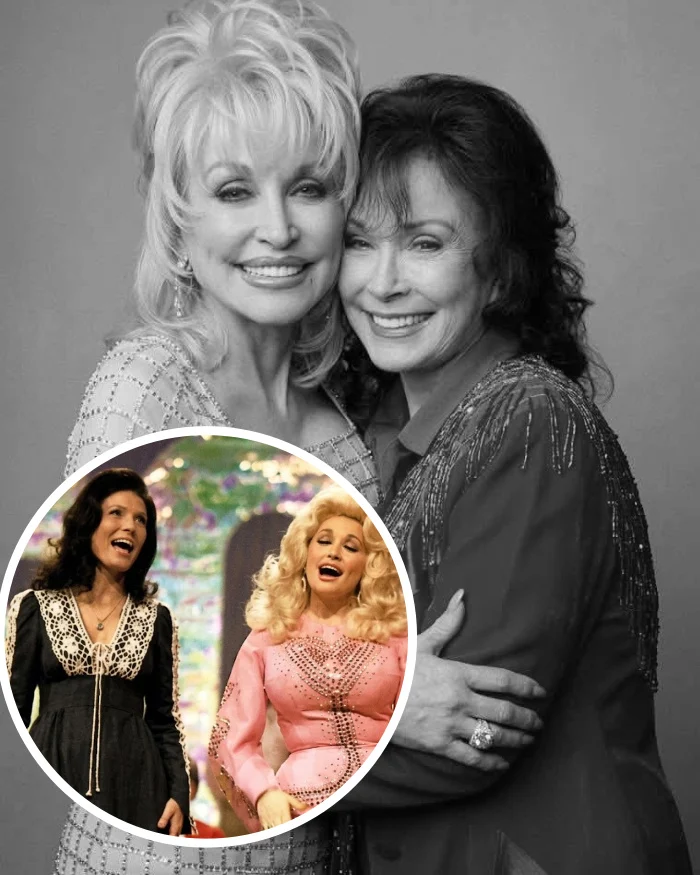
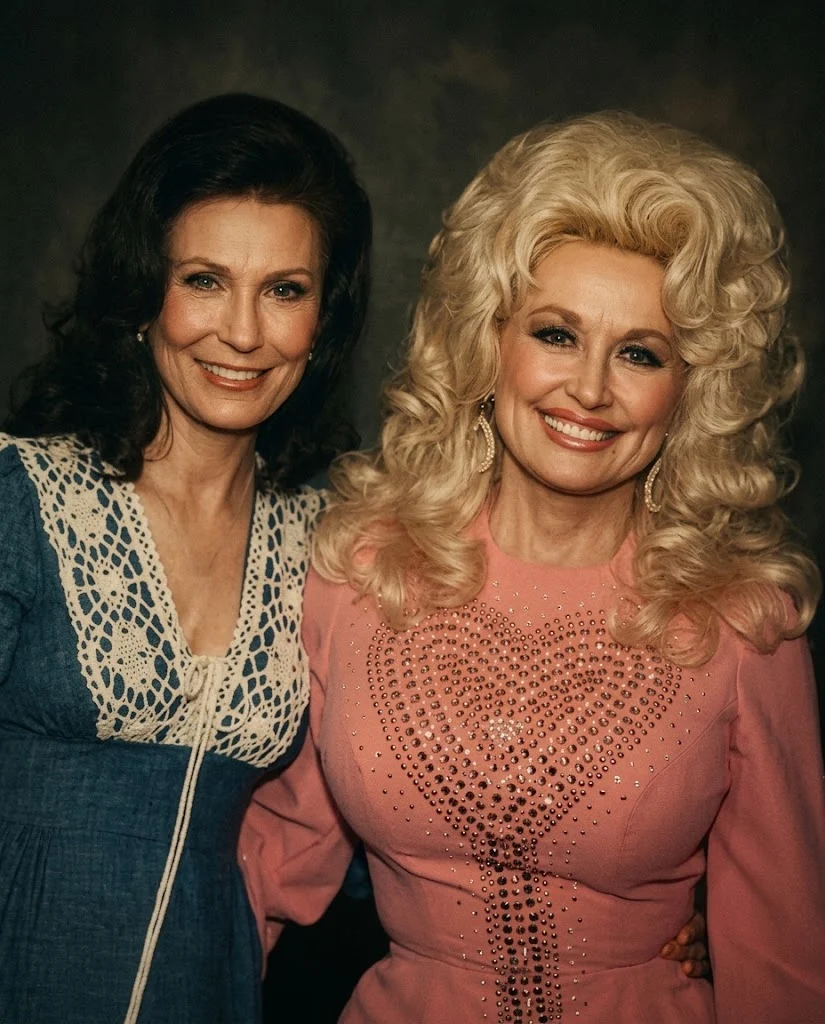
The most dangerous move Dolly Parton and Loretta Lynn ever made was not stepping into the spotlight. It was walking away from the men who thought they controlled it.
Long before the rhinestones and the global fame, two girls from Appalachian poverty arrived in Tennessee with little more than notebooks and nerve. Loretta Lynn came from a coal mining camp in Butcher Hollow Kentucky. Dolly Parton grew up in a one-room cabin deep in the Great Smoky Mountains. They brought songwriting and a fierce will to survive.
Nashville in the 1960s did not greet them as visionary solo artists. It handed them the same narrow role. They became the girl singers on established television programs. Lynn stood beside the Wilburn Brothers and smiled through their syndicated show. A few years later Parton was paired with Porter Wagoner and asked to soften his image and lift his ratings.
Music Row had an unwritten rule for women. See each other as threats. Radio stations limited how many female voices could play back to back. Executives pitted female singers against one another and treated their chart presence like a limited novelty.
Parton and Lynn saw something else. Behind the heavy makeup and the towering hair they recognized a shared language. They knew rural poverty. They knew the pressure of smiling for powerful male bosses. They leaned on each other in a business that wanted them to sing harmony, look beautiful and cause no trouble.
They chose to act like sisters when the industry wanted them to act like enemies.
That bond became a foundation for the fights ahead. Both women made the risky decision to leave the men who controlled their early careers. Leaving those television programs was not a simple change of managers. It meant professional and legal warfare.
Lynn fought a bitter battle with the Wilburn Brothers over her publishing rights. After leaving their show to take charge of her career she had to fight their company Sure-Fire Music to regain control of songs she had pulled from her own life. Parton faced her own punishing exit. Her push for pop crossover independence from Wagoner led to a $3 million breach-of-contract lawsuit in 1979. Both women had to buy their way out of their mentors’ grip and risk everything to own their futures.
They did more than survive courtrooms and industry backlash. They rewrote the rules of American music. Lynn wrote boldly about the harsh realities of being a woman in the rural South. She confronted controversial topics and double standards and dared radio stations to silence her. Parton expanded far beyond country music. She demanded absolute creative control over her catalog and turned her name into a global brand.
Through every massive transition their friendship stayed grounded. They never had to explain the isolating pressure of international fame because both remembered what it was like to have nothing. The system was built to keep them in the background. Instead they took over the entire stage.