
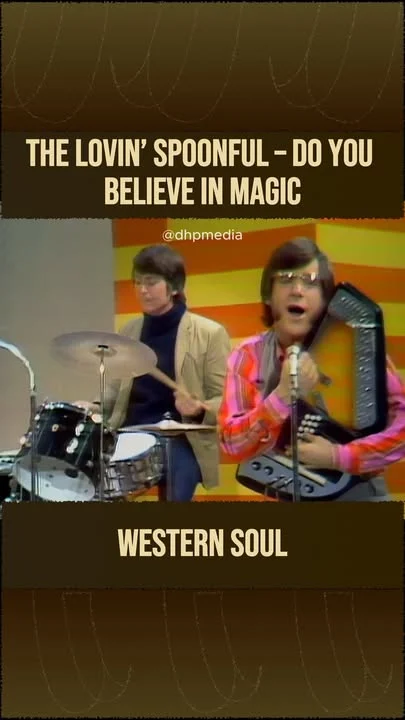
There are songs that capture a time and place, and then there are songs that seem to exist outside of time entirely. Do You Believe in Magic belongs to the latter category. From its very first chord, a sparkling autoharp arpeggio, the listener is transported to a world where music is not just heard but felt in the bones. It is a world where joy is contagious and the simple act of listening becomes an act of liberation. This track, the title piece from The Lovin’ Spoonful’s 1965 debut album, remains a masterclass in how folk, rock, and pop can blend into something that feels both entirely familiar and utterly fresh. It is the sound of a generation discovering its own exuberance, and it still has the power to make you smile before you even realize you have started.
The album arrived at a pivotal moment for American music. Folk was evolving, shedding its purely acoustic skin to embrace the energy of rock and roll. The Lovin’ Spoonful, led by the charismatic John Sebastian, were at the heart of this transformation. Their debut LP was not just a collection of songs but a statement of intent. It was nostalgic yet forward-looking, built on acoustic textures and storytelling lyrics that reflected the everyday joys and wonders of life. The success of the album rested squarely on the shoulders of its opening track, a song that became an anthem of the 1960s. It symbolized youthful optimism and unrestrained creativity, a testament to the band’s belief that music could be a force for happiness and unity.
The magic of the song is no accident. It is carefully constructed from a deceptively simple interplay of instruments. Sebastian’s autoharp provides the initial spark, its crystalline ring setting a bright, almost whimsical tone. This is not a sound that demands your attention; it invites it. The jangly electric guitar that soon joins in adds a breezy, carefree rhythm, bridging the gap between traditional folk and the emerging rock sensibility. The rhythm section, with Steve Boone’s buoyant bass and Joe Butler’s crisp, understated drumming, keeps the momentum flowing without ever overwhelming the melody. Every note feels purposeful, each instrument playing its part in a greater whole. It is a celebration of simplicity, an arrangement that leaves room for the lyrics and the voice to take center stage.
The voice, of course, belongs to Sebastian, whose warm and earnest delivery captures the essence of the song’s message. He sings not as a performer but as a storyteller, inviting you to believe. The lyrics are a joyous ode to the transformative power of music itself. Sebastian does not try to explain it; instead he acknowledges that it is something felt, not described. As he sings,
It’s like trying to tell a stranger about rock and roll
, he captures the ineffable nature of musical connection. The words are imbued with wonder, a reminder that music is a natural, unforced phenomenon that can lift the spirit and bring people together. The chorus is an invitation to join in, to surrender to the enchantment. It is this universal appeal that has allowed the song to transcend its era and remain a cultural touchstone for listeners of all ages.
For anyone enchanted by this track, the 1960s offer a treasure trove of similarly joyful and innovative music. The Beatles captured a similar sunny disposition with Good Day Sunshine from the Revolver album. The Byrds blended folk roots with rock instrumentation on Turn Turn Turn, a quintessential folk-rock anthem. The Lovin’ Spoonful themselves followed up with Daydream, a laid-back whimsical tune that complements the magic of their debut hit. The Mamas and the Papas offered wistful yet uplifting harmonies on California Dreamin, while The Turtles delivered carefree joy with Happy Together. These songs, like Do You Believe in Magic, remind us that music can be both simple and profound, a source of pure, uncomplicated happiness.
More than half a century after its release, Do You Believe in Magic remains an enduring testament to the unifying power of music. It is a blend of folk and rock, of heartfelt lyrics and infectious melody, that feels as fresh today as it did in 1965. The song is not just a piece of history; it is a living invitation. It asks us to believe in the magic that can set us free, to tap our feet and let the music carry us away. For fans of oldies or newcomers exploring the roots of folk-rock, this track is essential listening. Its magic lies not in complexity but in its ability to remind us of the simple, transformative joys that music can bring. And if you let it, that magic will still find you.
Now for the words themselves, the lyrics that have inspired generations to believe:
Do you believe in magic in a young girl’s heart
How the music can free her whenever it starts
And it’s magic if the music is groovy
It makes you feel happy like an old-time movie
I’ll tell you about the magic and it’ll free your soul
But it’s like trying to tell a stranger about rock and roll