
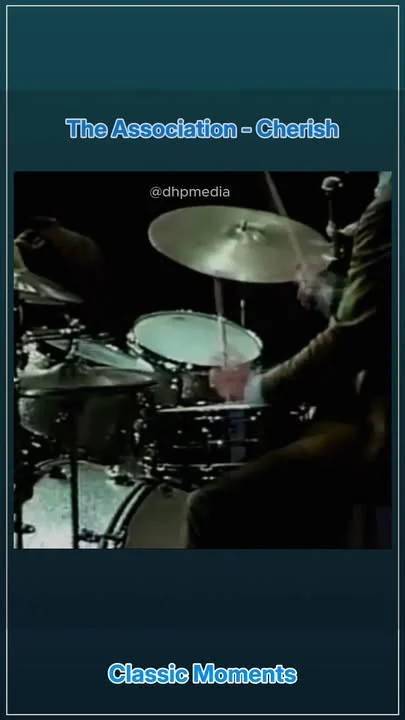
In a pop landscape that often equates intensity with volume, one 1966 ballad quietly teaches a masterclass in restraint. “Cherish” by The Association did not arrive with fireworks. Instead, it slipped into the cultural bloodstream with a gentle, slow-burning melody and never let go. Written by founding member Terry Kirkman and produced by the visionary Curt Boettcher, the song reached No. 1 on the Billboard Hot 100 in September 1966, holding the top spot for three weeks and earning a Gold certification. It also topped the Canadian charts. This tender moment remains the defining track of the band’s debut LP “And Then… Along Comes the Association,” a record that forever changed the sound of sunshine pop.
The album itself arrived on Valiant Records in July 1966 and peaked at No. 5 on the U.S. charts. It housed two major hits: the Top 10 “Along Comes Mary” and its emotional centerpiece, “Cherish.” While the former provided the initial splash, it was the latter that cemented the band’s reputation. Rhino Records calls the LP a milestone, noting that “Cherish” proved how a slow-dance jewel could eclipse even the most energetic singles. The record blended folk-rock, baroque pop, and Boettcher’s signature production aesthetic, which layered harmonies in bright yet transparent mixes and wove classical chamber textures into accessible pop songcraft.
Boettcher’s genius lies in the details. The recording of “Cherish” features a small orchestra of session musicians playing celesta, vibraphone, chimes, piano, and brushed drums. Each instrument serves a narrative purpose. The celesta adds a glassy, childlike glow around the vocal phrases. The vibraphone underlines cadences with a gentle bloom. The chimes mark emotional hinges, like cinematic cutaways. The rhythm section moves in almost suspended animation, allowing the ear to focus on timbre and chord color. The arrangement includes two bridge sections, the second of which modulates the key up a whole step. That lift is not a cheap trick but the harmonic analog of a deep breath before a vulnerable admission. The single mix was slightly sped up and edited for radio, but Boettcher famously left the label reading “3:00″—a wink to programmers who cared more about feel than stopwatch precision. Instrumental tracks were cut at Gary S. Paxton’s converted garage studio, while vocals were recorded at Columbia’s Hollywood rooms, a split that reflected the era’s studio logistics.
As a vocal group, The Association possessed a chamber-choir precision. In “Cherish,” lead singer Terry Kirkman carries the melody with soft insistence, but it is the stacked backing parts that sketch a halo around him. These harmonies amplify doubt, hope, and the bittersweet self-interrogation of the lyric. Where many ballads lean on ornament and melisma, The Association builds emotional velocity by widening intervals in the background parts and staggering entries. Nothing is complex for complexity’s sake. Everything serves the lyric’s ambivalence, the tension between wanting and loving, attachment and devotion.
The lyric refuses an easy declaration. It is a song of hesitation, of living inside uncertainty without resolving it prematurely. The protagonist questions whether his feeling is love or simply yearning sharpened by scarcity. The production honors that uncertainty by keeping the performance clean and unforced. No belted climaxes appear, just a carefully tended slow burn that trusts restraint above all else.
Quiet can be the most daring dynamic in a world that mistakes noise for passion.
More than fifty years later, “Cherish” endures because it makes fine choices at every level. Its dynamic floor is low, giving the listener room to lean in. Its timbral colors are distinct, so repeated listens reveal new details. Its narrative stance of honest uncertainty is evergreen. From a modern listening perspective, remasters handle the upper transients of celesta and chimes differently. Some tame the sparkle while others let it breathe. A good pair of headphones can make the difference between “pretty” and “present,” especially during the bridges where the modulation and backing vocal voicings do the heavy emotional lifting.
Key facts: The album “And Then… Along Comes the Association” on Valiant Records introduced the band’s signature sound and houses both “Along Comes Mary” (U.S. No. 7) and “Cherish” (U.S. No. 1). Instrumentation on “Cherish” includes guitars, bass, piano, celesta, vibraphone, chimes, and a restrained rhythm section under Curt Boettcher‘s production. The single mix was slightly sped up and edited for radio. These specifics are not trivia. They form the scaffolding on which this understated classic rests.
If you have always treated “Cherish” as background music, give it one focused spin with attentive ears. You will hear not just a nostalgic slow-dance but a carefully constructed emotional architecture whose balance still feels modern today. For those who want to explore further, try The Association’s “Never My Love,” “Windy,” and “Everything That Touches You.” The Mamas and the Papas’ “Monday, Monday” and the Beach Boys’ “God Only Knows” offer parallel mastery of stacked vocals and soft-focus orchestration. Great records do not merely survive their era. They teach future listeners how to hear.