
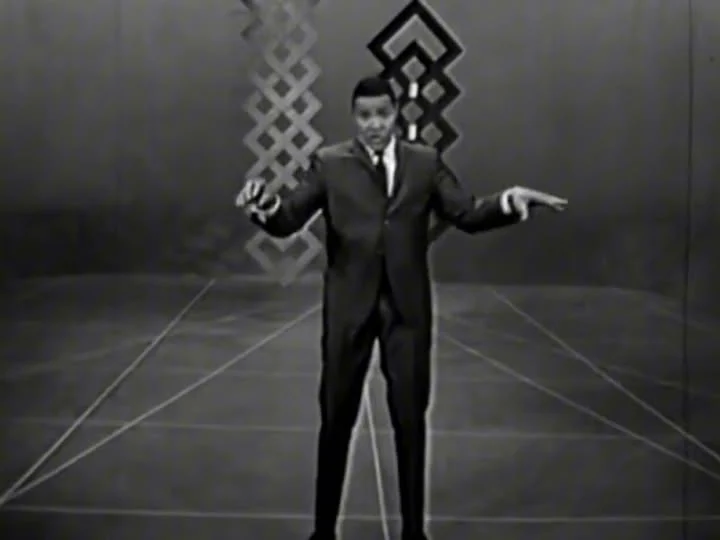
The limbo stick, that humble broom handle or makeshift pole, has never failed to weave a spell. At a wedding reception last summer, the DJ dropped a familiar beat—the unmistakable, propulsive rhythm of “Limbo Rock”—and within seconds, a winding line of guests, from toddlers to grandparents, was shimmying under an imaginary bar with collective abandon. The song achieved what decades of musical evolution could not: it united generations in a single, joyful act of physical comedy. This is the enduring power of Chubby Checker’s 1962 masterpiece, a track that remains less a piece of music and more a universal invitation to play.
The early 1960s were a fever dream of dance crazes. At the center stood Chubby Checker, a performer who traded in kinetic energy and mass participation. Before the British Invasion rewired pop’s DNA, he delivered one last command performance: a dance song built not for solo gyrations but for communal limbo. “Limbo Rock” seized the airwaves in late 1962 and rode the charts deep into 1963, peaking at number two in the United States and earning a respectable showing in the United Kingdom. It was the final, glorious gasp of an era when a simple drum beat and a call to “how low can you go” could define a generation’s idea of fun.
The song’s origins are delightfully accidental. The melody was first sketched by session guitarist Billy Strange, a future Wrecking Crew stalwart who worked with Nancy Sinatra. He reportedly wrote it on a bet for one hundred dollars, aiming to prove he could craft a tune better than whatever was dominating the radio. He called it “Monotonous Melody.” The instrumental version was cut by The Champs in 1961, but it was Checker’s cover for Parkway Records that turned the infectious ba-dum-bum rhythm into a phenomenon. The lyrics—instructional couplets like “Jack be limbo, Jack be quick / Jack go under limbo stick”—were penned by Checker’s manager, Kal Mann, using the pseudonym Jon Sheldon. Mann, alongside Bernie Lowe, oversaw the clean, compressed production that characterized the Parkway sound. The result was a single engineered for maximum jukebox impact, every element calibrated to sell a dance move.
Sonically, “Limbo Rock” is a marvel of sparse efficiency. Its architecture rests on three pillars: a snapping, militaristic drum beat, Checker’s theatrical vocal delivery, and a blend of Caribbean calypso with Philadelphia rock and roll. The drums cut with a dry, aggressive backbeat that leaves no room for swing; they demand precise, rhythmic compliance. A reedy saxophone riff cycles relentlessly, while the piano offers bright, staccato chordal punctuation. The bass provides a steady anchor, like the two poles of the limbo stick itself. Checker’s voice is commandingly playful—full of shouts, monologues, and that famous high-pitched cackle that punctuates the chorus. The whole track feels airless, close-miked, and unadorned. Anyone streaming it on modern home audio equipment will immediately notice its compression and clarity, a snapshot of AM radio’s urgency.
What made the limbo different from the Twist? The Twist celebrated individual freedom on the dance floor. The limbo was a group dare, a test of coordination and nerve. Checker didn’t invent the dance—it had Caribbean roots—but he converted it into a mainstream American craze. The song’s relentless, driving rhythm does not allow for passive listening.
“The relentless, driving rhythm of ‘Limbo Rock’ demands not passive listening, but active, joyful compliance.”
It was a phenomenon perfectly timed: as the first tremors of Beatlemania began to shake the pop landscape, “Limbo Rock” stood as a final, emphatic statement from the American side of the Atlantic.
In a way, Checker’s reign was destined to be finite. Dance crazes burn bright and fast. “Limbo Rock” became his last American Top Ten hit. He followed it with “Let’s Limbo Some More,” which charted respectably, but the cultural attention was already shifting from dance steps to songwriting and band images. The British Invasion changed the rules. Yet Checker’s genius—translating motion into melody—left an indelible mark. The song’s longevity owes less to musical complexity and more to cultural potency. Decades later, it remains shorthand for pure, unadulterated early-1960s exuberance. It appears in films and commercials, at backyard barbecues and garage sales. A brittle 45 rpm single found in a dusty crate can transport a listener back to a time when a song could launch a phenomenon with just a drum kit and a catchy lyric.
For music aficionados, the track offers a premium audio experience of clarity and punch, a lesson in how simple elements can create timeless joy. The limbo itself is about bending backward, testing your limits, and laughing at the attempt. Chubby Checker had the whole world leaning with him for a few fleeting months in 1963. And the beat is still waiting.