
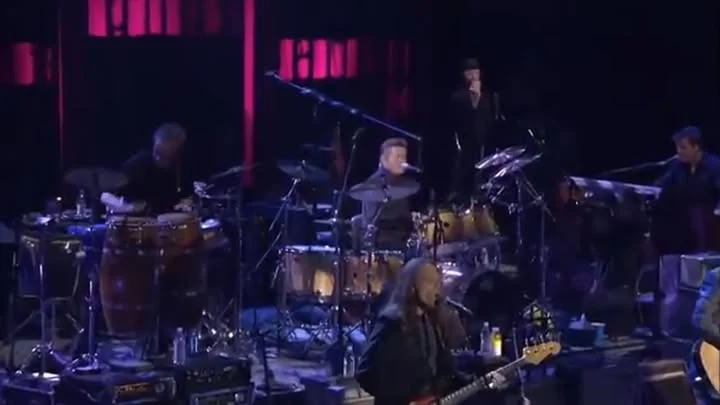

There is a special kind of ache in the opening notes of the Eagles’ “New Kid in Town” — a warm, clean guitar melody that feels like a sigh. It is a song that knows exactly how it feels to be replaced, to watch someone new walk into the spotlight and take your place. And yet, it manages to deliver that bittersweet truth with a beauty that has lingered for decades, making it one of the most emotionally intelligent tracks on the legendary Hotel California album.
Released in December 1976, Hotel California was far more than a collection of songs. It was a cultural document — a snapshot of a band at the peak of its powers, exploring the glitter and shadow of success in 1970s America. Alongside the iconic title track and the raw energy of “Life in the Fast Lane,” “New Kid in Town” stands as a delicate counterpoint, a quiet meditation on fame’s fleeting nature. The album itself was a masterwork of layered production, with Bill Szymczyk behind the board, ensuring every vocal harmony and instrumental line shimmered with clarity and emotional weight.
The instrumentation of “New Kid in Town” is a study in subtle power. It begins with a gentle interplay between acoustic and electric guitars, setting a reflective mood that never feels rushed. The piano enters softly, adding warmth, while Don Henley‘s drums provide a steady, understated heartbeat. The bassline is precise yet unobtrusive, anchoring the song without overwhelming it. What truly lifts the track into the sublime, however, are the vocal harmonies. Glenn Frey leads with a voice that is both smooth and vulnerable, and when the others join in, the chorus becomes a lush, ethereal embrace. The pedal steel guitar — a nod to country music — infuses the track with a nostalgic, almost mournful quality, perfectly capturing the sense of longing and impermanence at the song’s core.
Lyrically, “New Kid in Town” is a story of transience and the human hunger for recognition. Co-written by Glenn Frey, Don Henley, and J.D. Souther, the song uses the metaphor of a newcomer to explore themes of jealousy, change, and the quiet sadness of being forgotten. Lines like “Where you been lately? There’s a new kid in town” ache with both admiration and resentment, while the chorus resigns itself to the inevitable cycle of replacement. The lyrics capture a universal truth — no matter how bright your star burns, there will always be someone new ready to take your place.
There’s talk on the street, it sounds so familiar
Great expectations, everybody’s watching you
People you meet, they all seem to know you
Even your old friends treat you like you’re something new
The production of the track is impeccable. The arrangement builds gradually, with subtle uses of reverb and echo that create a dreamlike atmosphere. The dynamic shifts from the intimate, almost whispered verses to the soaring, harmonically rich choruses are executed with a precision that feels effortless. Every instrument has its own space in the mix, allowing the listener to discover new details with each listen — a subtle piano flourish here, a shimmering guitar bend there.
If “New Kid in Town” resonates with you, there are other songs that capture a similar blend of introspection and melodic sophistication. “Take It Easy” by the Eagles offers a laid-back country-rock vibe with equally reflective lyrics. “Tequila Sunrise” shares the mellow acoustic arrangement and poignant storytelling. “Fire and Rain” by James Taylor brings the same emotional depth and acoustic beauty. “Lyin’ Eyes” weaves a narrative with lush harmonies, and “Country Roads, Take Me Home” by John Denver evokes that same nostalgic connection to simpler times. Each of these tracks, like “New Kid in Town,” proves that the most lasting music is often the one that speaks most honestly about the human condition.
What makes “New Kid in Town” stand out even among the Eagles’ own catalogue is its perfect balance of lyrical depth, instrumental finesse, and emotional honesty. It is a song that does not shout its brilliance; rather, it invites you in gently and then stays with you long after the last note fades. Its themes of change and the passage of time remain as relevant today as they were in 1976. As part of the Hotel California album, it serves as a reminder of what happens when masterful songwriting meets impeccable musicianship — a timeless piece of art that continues to inspire new generations of listeners.
In the end, “New Kid in Town” is not just a song about being replaced. It is a mirror held up to every one of us who has ever felt the sting of fading relevance, the bittersweet realization that the spotlight never stays in one place. And yet, through its gentle melodies and aching harmonies, it offers a kind of solace — a reminder that even when we are no longer the new kid, our stories, our songs, still have the power to resonate.