
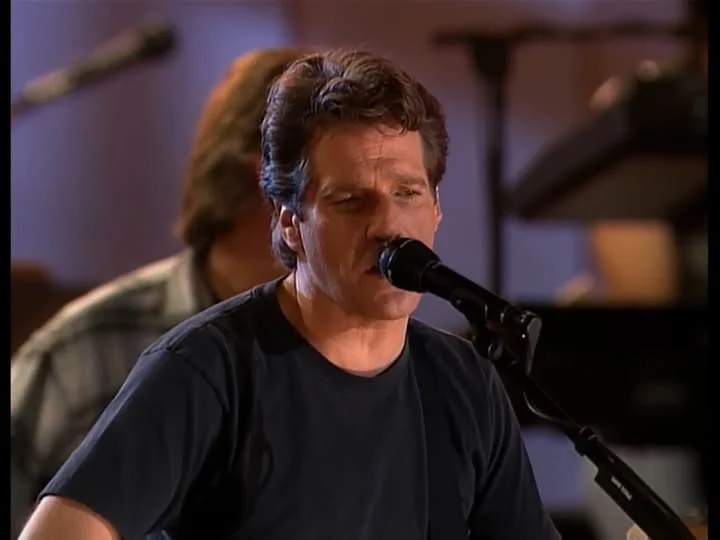
The first time you hear it, the whole world seems to slow down. A simple acoustic guitar strum, a voice that feels like an old friend, and suddenly you are driving down an open highway with the windows rolled down. That is the magic of “Take It Easy” by The Eagles. More than fifty years after its release, this song remains a masterclass in musical restraint and emotional resonance. It is not just a track on a debut album; it is a philosophy set to melody, a gentle reminder to let go of the things we cannot control.
The story of this enduring anthem begins with two songwriters who would both become legends. Glenn Frey of The Eagles collaborated with Jackson Browne to craft a narrative that feels both deeply personal and universally relatable. The lyrics, filled with vivid imagery of running down roads and standing on corners in Winslow, Arizona, capture a moment of searching and self-discovery. The song’s opening line, “Well I’m a-running down the road tryin’ to loosen my load,” sets the stage for a journey that is as much internal as it is physical.
“Don’t let the sound of your own wheels drive you crazy”
That line, delivered with a warm drawl by Frey, has become one of rock’s most enduring bits of advice. It speaks to the anxiety of modern life with a simplicity that is almost poetic. The song was the perfect lead single for The Eagles’ self-titled debut album, released in 1972. Produced by Glyn Johns at London’s Olympic Studios, the record was a bold statement of intent. It wove together rock, country, and folk into a tapestry that felt both fresh and familiar. Tracks like “Witchy Woman” and “Peaceful Easy Feeling” complemented the lead single, but “Take It Easy” was the key that unlocked the door to stardom.
Musically, the song is a masterclass in subtlety. The acoustic guitar drives the rhythm, but it is the interplay between instruments that elevates it. Bernie Leadon adds a banjo, injecting a pure country flavor that grounds the track in its roots. The electric guitar solo, brief and tasteful, punctuates the bridge without breaking the spell. Beneath it all, a piano gently supports the arrangement, adding warmth and texture without ever stealing the spotlight. The result is a sound that feels both effortless and meticulously crafted.
The vocal harmonies are perhaps the song’s most distinctive feature. Frey leads with a smooth, inviting tone, but it is the blend of voices from Don Henley, Leadon, and Randy Meisner that creates a sense of unity. Their layered harmonies wrap around the melody like a comforting blanket, turning a simple tune into an anthem of camaraderie. This collective spirit became The Eagles’ signature, and it is on full display here.
The impact of “Take It Easy” extended far beyond the charts, where it peaked at number 12 on the Billboard Hot 100. It became a cultural touchstone, forever linked to the laid-back California lifestyle. In Winslow, Arizona, a statue and mural now commemorate the line about standing on a corner, cementing the song’s place in American folklore. Decades later, it continues to find new audiences, its message of living in the moment as relevant as ever.
For those who love the easygoing charm of this track, there are others that capture a similar spirit. “Peaceful Easy Feeling” from the same album shares its relaxed vibe. Jackson Browne’s own “Doctor My Eyes” explores similar themes of introspection and hope. Pure Prairie League’s “Amie” offers gentle acoustic instrumentation and heartfelt lyrics. America’s “Ventura Highway” evokes the same road-trip energy, while Crosby, Stills & Nash’s “Southern Cross” blends rich harmonies with a nautical twist. Each of these songs carries a piece of what makes “Take It Easy” so enduring.
In the end, this song is more than a piece of music history. It is a companion for moments of quiet reflection, a soundtrack for the winding road of life. Whether you are hearing it for the first time or the thousandth, “Take It Easy” reminds us to embrace the journey, to let the wind carry us forward, and to always, always take it easy.