
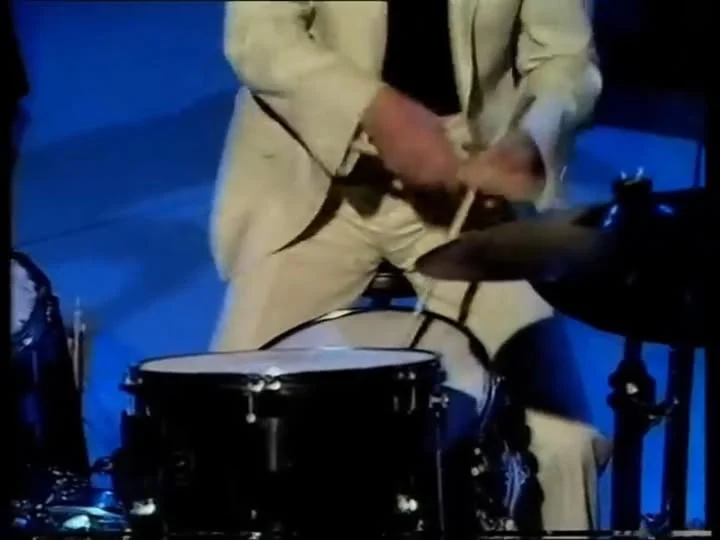
A single drum fill. It arrives with the weight of a thunderclap, signaling a shift not just in tempo, but in ambition. The year was 1979. The landscape of British pop was a volatile and thrilling maelstrom. Punk had settled into the jagged edges of New Wave. Disco continued to thrum beneath the charts. And into this swirling vortex stepped The Shadows, a band many had wrongly assumed was a relic of an older decade. They were about to stake a claim to a new kind of legacy with a single epic track.
The song they chose was not a new composition. It was a cowboy lament from 1948, a standard written by Stan Jones and worn smooth by countless country greats. The Shadows looked at this classic and saw not a quaint piece of history, but a canvas for a sweeping cinematic reinvention. They took the ghost riders out of the campfire and placed them squarely into the late twentieth century. The band retreated to the studio to record their 1979 album, String of Hits for EMI/Parlophone. The album was, true to its name, largely a collection of inventive covers.
Brian Bennett unleashed a towering, reverberant drum crash that seemed to echo from the walls of a canyon. A hypnotic bassline locked everything into a tense, relentless groove. Then came Hank Marvin. His guitar no longer sounded like a clean 1960s relic. Layered with flanger and sustain, his Stratocaster took on an uncanny, spectral quality. It became the voice of the ghostly rider, carrying the entire narrative weight of the song.
The arrangement swelled with a confidence that defined their late-career peak. Lush, Morricone-esque strings rose and fell in sweeping arcs. A staccato brass section punched through the mix, mimicking the pounding hooves of the spectral herd. Underneath it all, an electric piano provided a warm, melancholic anchor. The keys added a layer of gothic texture, grounding the soaring guitar in a world of minor-key tension. It was a rich, premium sonic experience crafted for the best home stereo systems of the era.
The band made a bold choice by leaning into a contemporary beat. The track was driven by a distinct four-on-the-floor pulse, a subtle nod to the disco era that could have felt jarring. Instead, it injected a sense of desperate momentum. It mirrored the relentless chase of the song’s ghostly legend. The tension between the rock classicism of Marvin’s playing and the modern studio sheen gave the track its unique, enduring texture. It sounded like a band completely trusting their own instincts.
When the track charted in the UK in early 1980, it was more than a commercial success. It was a validation for instrumental music itself. In a market dominated by superstar vocalists, it proved that pure musicality and masterful arrangement could still sell records. For the trio of Hank Marvin, Bruce Welch, and Brian Bennett, it confirmed their belief in their own production skills. They did not need outside influence. They had mastered the art of turning a simple vocal narrative into pure, dramatic instrumental storytelling.
The Shadows took a fifty year old tale of eternal pursuit and cloaked it in the electrifying, dramatic sonic language of the late twentieth century.
The track endures because of its perfect balance of rawness and sophistication. The melody at its heart is straightforward and powerful. Yet the arrangement is dazzling in its intricacy. The dynamic shifts are executed with meticulous precision. The verses build tension, and the chorus explodes into a massive, orchestrated swell. Listening to it today on a pair of studio headphones reveals a masterclass in building a complete world out of sound.
If the dramatic instrumental take on Riders In The Sky resonates with you, a whole world of similar ambition awaits. The Ventures captured a foundational space age sound in Telstar. Booker T and the MGs offered a masterclass in groove and rhythm section authority in Green Onions. Duane Eddy showed how a guitarist could give a melody a spoken quality with heavy tremolo in Because Theyre Young. Jeff Beck proved the guitar could be a soulful vocalist in Cause Weve Ended As Lovers. Mike Oldfield expanded the instrumental canvas into a complex epic with Tubular Bells. The Alan Parsons Project fused rock instrumentation with slick dramatic production in Sirius. Each track shares the DNA of fearless, instrumental storytelling.