
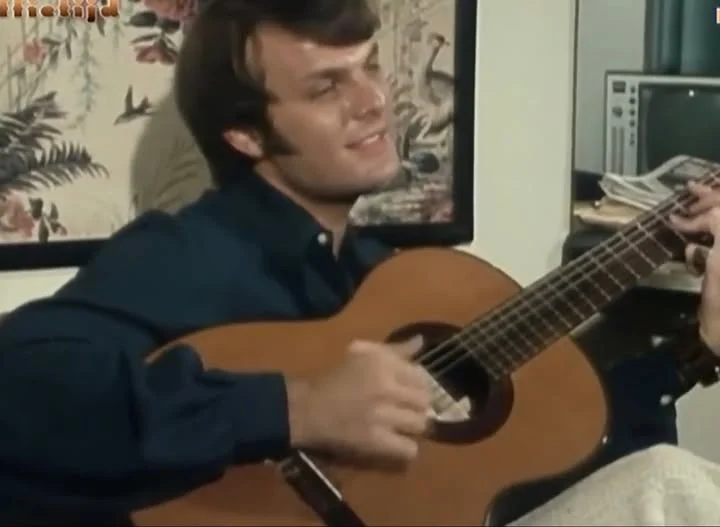
There is a moment in every good day that arrives without warning. You are walking down a sunlit block, and a song takes over. The opening drumbeat snaps. The bass starts to walk. Then the strings begin to rise, and suddenly the world tilts in a pleasant way. That is the promise of “Dizzy.” It is not just a song. It is a mechanism for happiness, a key change machine that has been turning for more than fifty years.
The man behind the voice was Tommy Roe, a singer from the early sixties who had already tasted success with “Sheila,” “Sweet Pea,” and “Hooray for Hazel.” By 1969 he was ready for a new kind of pop, and “Dizzy” gave it to him. Released on ABC Records, the song became his signature tune, a transatlantic smash that proved he was more than a teen idol. He was a pop craftsman.
The track came from a collaboration between Roe and Freddy Weller, a writer whose pop instincts matched Roe’s sunny melodic sense. It was issued as a single and later appeared on an album of the same name. The song sat at the crossroads of Roe’s career, blending the directness of sixties teen pop with the polished studio techniques that were changing the sound of chart radio. Some listeners call it bubblegum, but that word undersells the craft. This is a confection made by someone who cared about every layer.
From the first beats, the record establishes its world. A crisp rhythm section snaps into place. The bass walks with cheerful confidence while the drums hold a light kick and snare heartbeat. A tambourine flickers at the edges of the mix. Then come the strings, drawing circular arcs that rise and recede. An organ whirls in the background like a carousel. The song keeps ascending through a series of key changes, each one nudging the chorus higher. It is a staircase that never seems to end. The effect is momentum without muscle. The arrangement pushes forward without ever raising its voice.
Roe’s voice is a crucial part of the magic. He does not belt. He lilts. He sings with a flirty clarity that stays charming without turning cloying. When he lands on the word “dizzy,” you can hear a smile in the phrasing. The production is clean enough to let the small gestures shine through. The piano doubles and decorates. The guitar ticks in muted strokes. The strings remain light and airy. The result is a song that sounds weightless, even as its architecture is carefully plotted.
One of the great pleasures of late sixties pop is the balance between gloss and grit. “Dizzy” leans into the gloss, but it is not an airbrushed fantasy. The drums have a real attack. The bass has a tangible finger feel. There is a breathable space around each instrument. That combination of sheen and touch is why the song still sounds good on modern speakers. It also helps that the lyrics stay focused on the dizzy feeling of infatuation. The words are light, which frees the music to do the emotional work. The song becomes a parable about making complexity look easy.
As a career milestone, “Dizzy” stands at the top of Tommy Roe’s catalog. It reached number one in the United States and also topped the charts in the United Kingdom. The song’s later life included a UK number one cover by Vic Reeves and the Wonder Stuff in the early nineties, a version that leaned into the comic potential of all those rising key changes. That cover was affectionate satire, and its success only confirmed the strength of the original.
Picture a late-night drive on a quiet road. You scan the radio and land on an oldies station. The first chorus pops like a dome light flicked on. The upward key shift arrives, and the roadside blurs. A passenger seat sits empty, but the song fills the space with a strange kind of company. Or picture a campus quad in early spring. Someone insists on “Dizzy” and a few eyes roll at its cheerfulness. Then the first climb happens, and someone laughs at the audacity of those key changes. By the final chorus, everyone leans in. Happiness can be architecture, and this song knows the blueprint.
The song is built like a well-crafted toy. Simple on the surface, ingenious underneath. There is no brute-force crescendo, just a steady cheerful rise. The band never hits harder. It simply goes up. The strings trace gentle spirals. The organ keeps the carousel turning. The vocal floats above the mix like a helium balloon. The producer, arranger, and players all lock into the same brief. Let the hook do the heavy lifting and keep the performance weightless.
In 1969, rock was getting heavier and folk was moving toward country rock. Soul was deepening its political voice. That a bright pop single could dominate the same airwaves says something about the pluralism of the time. Not every hit needed a fuzz guitar or a philosophical statement. Some songs exist to remind us that joy deserves an anthem. “Dizzy” endures because it solves a simple problem. It engineers a feeling that renews itself every minute.
Pop isn’t the absence of depth. It’s the presence of light, carefully aimed.
If you want to revisit the record with fresh ears, try two ways of listening. First, play it on a small kitchen radio. The mix translates beautifully in mono-like conditions, and the hooks snap into focus. Then play it on a clean stereo system. You will hear the strings swell and the organ shimmer as each modulation arrives. Walk down a sunlit street with the song playing, and let the key changes map themselves onto the sky. There is no wrong way to hear “Dizzy.” The song keeps climbing, and each step makes the day a little lighter.
For listeners who want to explore the same neighborhood, start with the Archies and their 1969 hit “Sugar, Sugar.” It shares the pastel glow and handclap energy of “Dizzy.” The Turtles’ “Happy Together” from 1967 offers orchestral swirl and a chorus that stays in the memory. Tommy James and the Shondells delivered “I Think We’re Alone Now” with a chipper pulse and radio-friendly polish. The Foundations brought brass-fueled exuberance to “Build Me Up Buttercup.” The Monkees contributed “I’m a Believer” with sunlit melody and airtight studio craft. And Ohio Express bottled the bubblegum template on “Yummy, Yummy, Yummy.” Each of these songs understands something that “Dizzy” knows in its bones. Joy can be engineered, and that engineering is its own kind of art.
There is a reason this song refuses to fade. It was made with restraint, even at its most exuberant. The instruments behave like polite party guests who still manage to dance on the furniture. The climaxes are planned but never smug. That balance is rarer than it sounds. In a year famous for ambition, Roe delivered a masterclass in proportion. He knew that a well-placed half step could lift a listener’s mood more than any thunderous chorus. He knew that a tambourine in the right spot could feel like a wink. And he knew that a voice, smiling through the word “dizzy,” could make the whole world feel lighter.
Listening to “Dizzy” again is like finding an old friend at a crowded party. You thought you knew every corner of the song, but somehow it still surprises you. The strings still rise. The organ still whirls. The key changes still land with that perfect, tilting rush. It is the kind of record that demands to be played again, not because it is complicated, but because it is honest. It admits that happiness does not need a reason. It just needs a staircase.
So start it over. Let the room tilt a little. The staircase is waiting.