
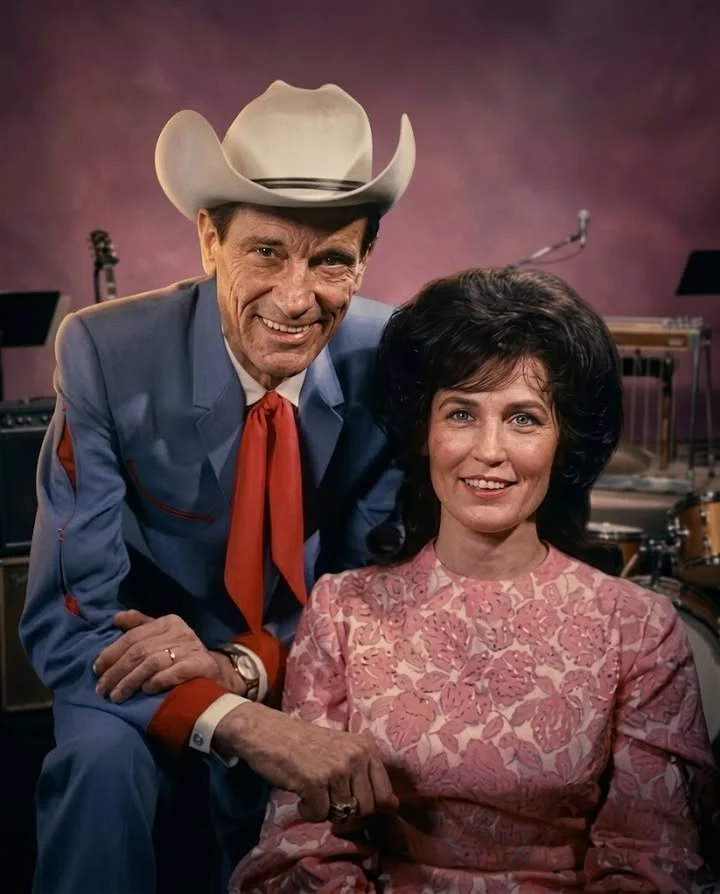
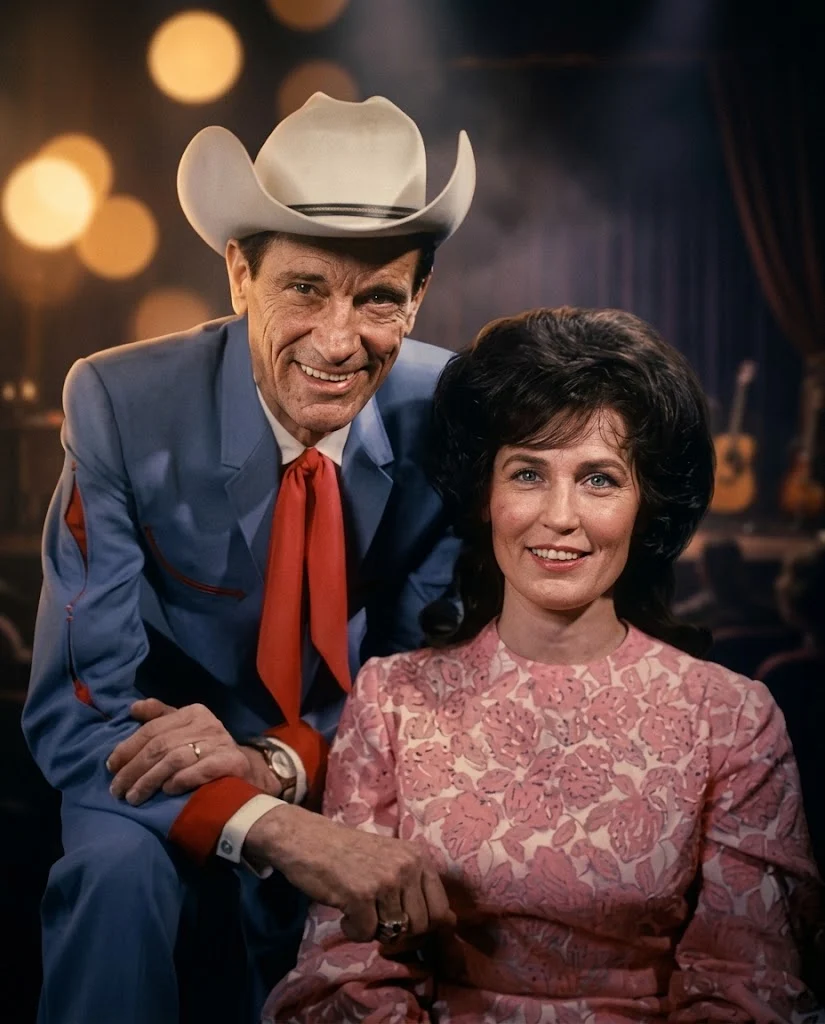
When Loretta Lynn became the Queen of Country Music, Ernest Tubb did not step forward to claim credit. He smiled, tipped his white hat, and faded into the shadows. The man who had once ruled Nashville’s golden era had already done his most enduring work by handing his microphone to a terrified coal miner’s daughter from Kentucky.
By the early 1960s, Tubb was already a towering institution in country music. Known everywhere as the Texas Troubadour, he held absolute authority at the Grand Ole Opry and commanded deep respect as one of the genre’s patriarchs.
Loretta Lynn was a nervous young woman from Butcher Holler, Kentucky, arriving in a town that rarely offered second chances. The relentless male-dominated machinery of Nashville overwhelmed her, and she was trying desperately to make her voice heard.
Tubb did not guard his territory. He built a bridge. He used his massive influence to invite Lynn onto his prestigious Midnite Jamboree, the live radio broadcast that aired directly after the Opry from the stage of his Ernest Tubb Record Shop on Broadway.
By standing beside her on that stage, he introduced an unknown singer to a conservative traditional country audience that trusted his word and his taste. Their trust became her doorway.
That pivotal introduction grew into a historic musical partnership. Between 1964 and 1969, the pair recorded a string of successful duet albums for Decca Records, including Mr. and Mrs. Used to Be, Singin’ Again, and If We Put Our Heads Together.
The deeper story lived inside producer Owen Bradley’s legendary Quonset Hut studio. When the red recording light came on, Nashville’s elite session musicians could intimidate a newcomer into sanding away her edge. Tubb became a calm anchor in the booth. He guided her early studio pacing and showed her how to project her raw unvarnished Appalachian phrasing over heavy steel guitars without losing her natural identity.
He taught her to blend her vibrant piercing vocals with his own road-tested Texas honky-tonk baritone. The result was seamless and commanding, a sound that pushed her straight onto the Billboard charts and cut years from the grueling rejection that usually marked a newcomer’s climb.
Off the microphone, Tubb was more than a duet partner. For a young mother navigating a cutthroat business, he became a protective father figure. At a time when female artists were often exploited, underpaid, or pushed aside, he sheltered Lynn from the industry’s traps. He took her on the road with his legendary Texas Troubadours and made sure she received the same professional respect he commanded.
Eventually the nervous girl from Kentucky broke through to become the definitive Queen of Country Music, able to command any stage in the world on her own. When she reached that peak, Tubb simply smiled and stepped back into the shadows. He never demanded credit for building her foundation.
His voice helped build an entire genre. His willingness to stand beside a frightened young singer built a legend.
History remembers the solo artists under the brightest lights. The true character of a country gentleman is proven by the talent he chooses to champion when no one else is watching.