
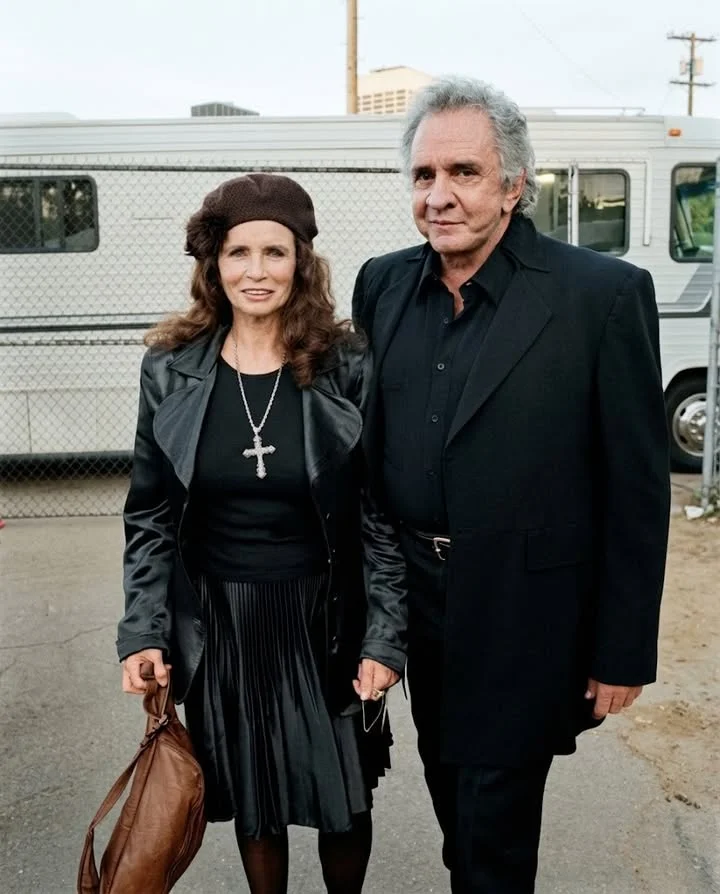
Behind a locked door Johnny Cash trembled on the floor while June Carter fought to keep him alive.
That private act of courage mattered more than the famous 1968 proposal in London Ontario when the Man in Black stopped a show to ask for her hand.
To the world Johnny Cash and June Carter were country music royalty. Their story is stitched into the Grand Ole Opry and the Ryman Auditorium where they first crossed paths in 1956. Johnny was rising fast and June had just returned from touring. Their spark felt immediate yet the music business was already pushing him toward a dark edge.
Amphetamines and barbiturates became a heavy grip on his life. The endless touring and the pressure around fame made him reckless and isolated. He was not simply struggling with stage nerves. He was moving toward a quiet devastation.
When Johnny hit rock bottom June did not step away. Her parents Ezra and Maybelle Carter did not protect their own names. The family moved into his house. They gathered his pills and flushed them away. They locked the doors. They stayed with him through violent agonizing withdrawal days. June loved him when he was trembling in the dark not only when he shone under spotlight.
Long before she became his wife June feared the pull she felt toward him. He was still married and deeply addicted. The danger frightened her. Driving aimlessly one night in the early 1960s she realized she was falling into a fire that could consume her.
That terror helped create one of the most famous songs in country music. June sat down with songwriter Merle Kilgore and shaped Ring of Fire. It was not a tender romantic vow at first. It was a raw confession from a woman afraid of a love she could not control.
She wrote about the feeling as a descent into a literal pit of fire and knew the flame would not be easy to extinguish.
The song was first recorded by June’s sister Anita. Johnny later heard it and felt it belonged to him. He dreamed of adding mariachi horns to the arrangement. That bold sound turned June’s private fear into a global anthem and one of his career defining hits.
Johnny never hid the cracks in his soul. Audiences believed his songs about redemption because he knew what it meant to be saved. Their 1968 union was a public seal on a bond forged in fear addiction and survival.
They spent three decades side by side and built a legacy that stretched beyond individual fame. By 1994 Johnny wrote a letter for June’s 65th birthday. He told her they had grown old together. He said they read each other’s minds. He called her the only earthly reason for his existence.
When June died in May 2003 that letter became a painful proof. The man who had survived hell could not survive a world without her. He followed her four months later. His records will remain part of American history. Yet his survival was June’s greatest work and their true vow was made far from applause.