
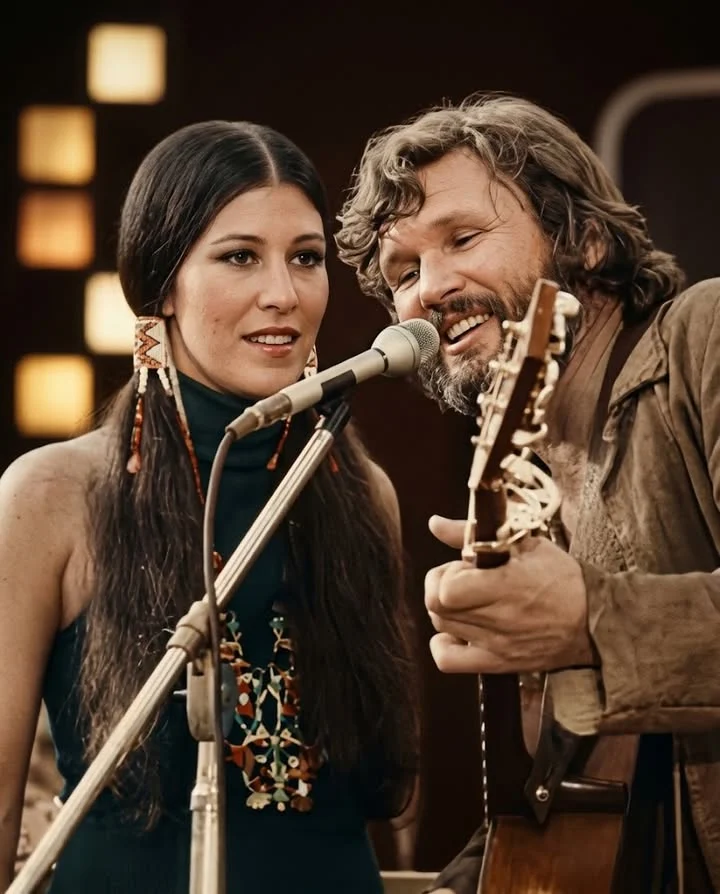
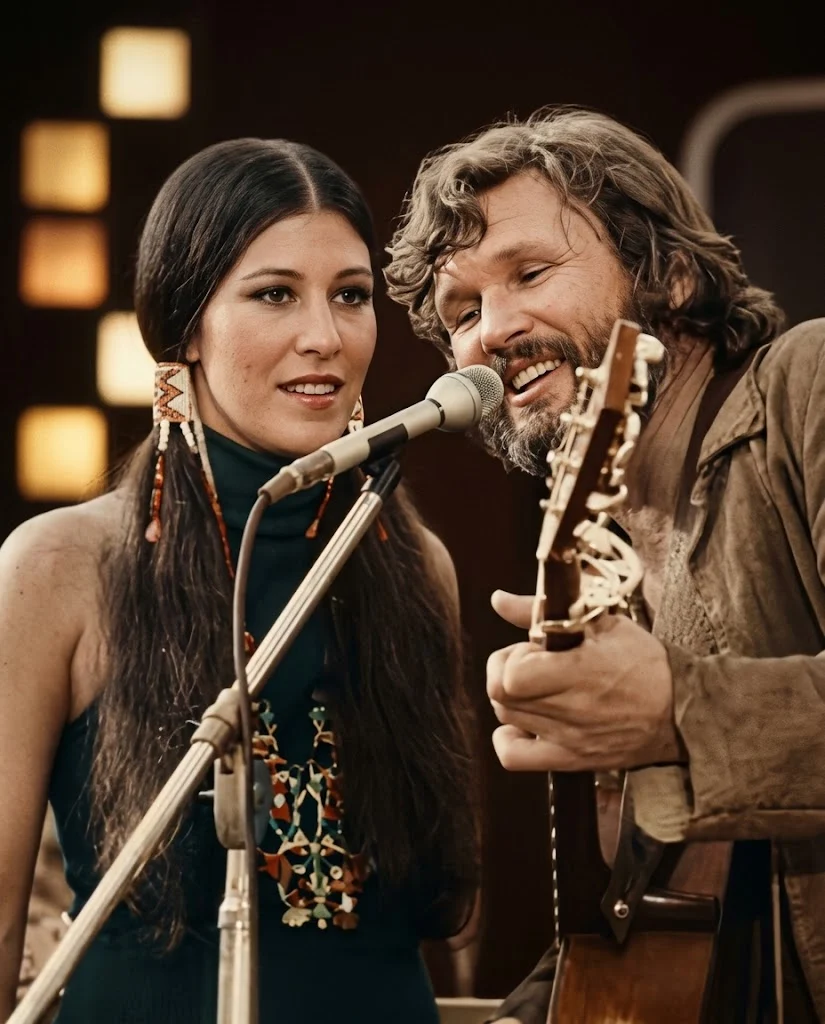
It was supposed to be just another flight. Kris Kristofferson and Rita Coolidge boarded a plane from Los Angeles to Memphis in the autumn of 1971, both running on exhaustion from the road and expecting nothing more than a quiet seat. But by the time the plane touched down in Tennessee, neither wanted to leave the terminal alone. The pull between them was immediate and undeniable. Instead of continuing toward their separate scheduled commitments, they quietly dropped their itineraries to spend the next several days walking the streets together, talking through the unspoken fatigue of touring and discovering an unhurried ease in each other’s presence.
Coolidge was already a sought-after backing vocalist for Joe Cocker, Eric Clapton, and Leon Russell, steadily working toward her own solo debut. Kristofferson was navigating the sudden explosion of his songwriting fame following breakthrough covers by Johnny Cash, Ray Price, and Janis Joplin. Yet those career achievements faded into the background as their connection deepened.
Their domestic life soon took root in coastal California, centered in a quiet home in Malibu overlooking the Pacific. Enamored by her presence, Kristofferson began writing directly from the clarity she brought him, shaping love ballads around her.
I would pick up my guitar and pour my feelings into songs written solely for her,
he later reflected. On August 19, 1973, they made their partnership official in an understated ceremony inside their living room. There was no Hollywood guest list or promotional fanfare. An ordained minister officiated while a small circle of family members and close musical peers stood as witnesses.
That intimate connection translated onto magnetic tape almost immediately. Later that same year, they entered Sunset Sound in Los Angeles with producer David Anderle to track their first collaborative full-length album, Full Moon. The pairing was an unlikely musical match on paper. Kristofferson’s weathered, conversational baritone sat in stark contrast to Coolidge’s pristine, gospel-trained vocal control. Yet across acoustic arrangements supported by players like guitarist Stephen Bruton and keyboardist Mike Utley, their voices found a compelling balance. Full Moon climbed directly to the top of the Billboard country albums chart and reached gold status. In early 1974, their recorded version of Kristofferson’s composition From the Bottle to the Bottom earned the couple their first Grammy Award for Best Country Performance by a Duo or Group.
The collaborative momentum continued as they took their show on the road. Throughout the mid-1970s, Kristofferson and Coolidge maintained a grueling international touring schedule, playing major halls, outdoor amphitheaters, and sprawling European festivals. Backed by Kristofferson’s road ensemble, their live shows were structured to highlight both individual catalogs and their collaborative duets. On stage, the chemistry remained conversational rather than theatrical. Even when facing tens of thousands of ticket buyers, they routinely pivoted their microphones inward, singing face-to-face across the stage as if tracking a live vocal in an empty room.
In 1974, the couple released their second duet project, Breakaway, followed by the birth of their daughter, Casey. Two years later, their upbeat treatment of the Billy Swan track Lover Please earned them a second Grammy Award in the same duo category, confirming their place as one of the decade’s defining crossover acts. Their third and final collaborative LP, Natural Act, arrived in 1978, supported by another ambitious international tour that included headlining dates across Japan, Australia, and North America.
By the end of that decade, the unrelenting demands of separate touring schedules, Kristofferson’s expanding Hollywood film commitments, and the personal strains of heavy road life began to erode the marriage. They divorced in 1980, parting ways after eight years of shared life and music. The split remained amicable, and both continued to speak of their time together with deep personal respect.
Over three studio albums and hundreds of stages worldwide, Kristofferson and Coolidge captured a rare musical convergence—a chapter where raw poetry and refined warmth met on the same microphone, leaving behind recordings that documented two artists singing directly to the person standing right in front of them.