
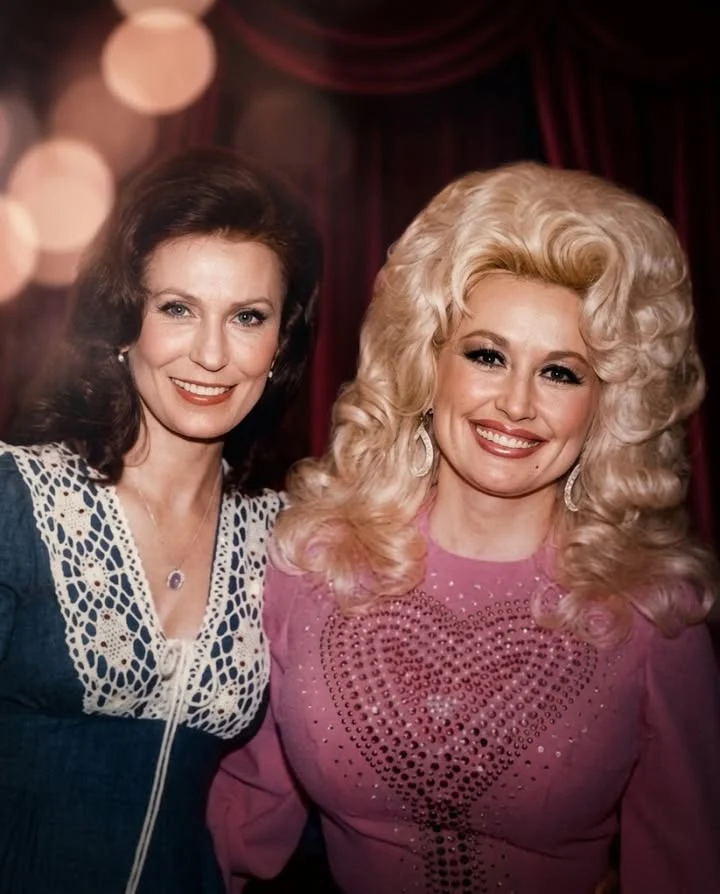
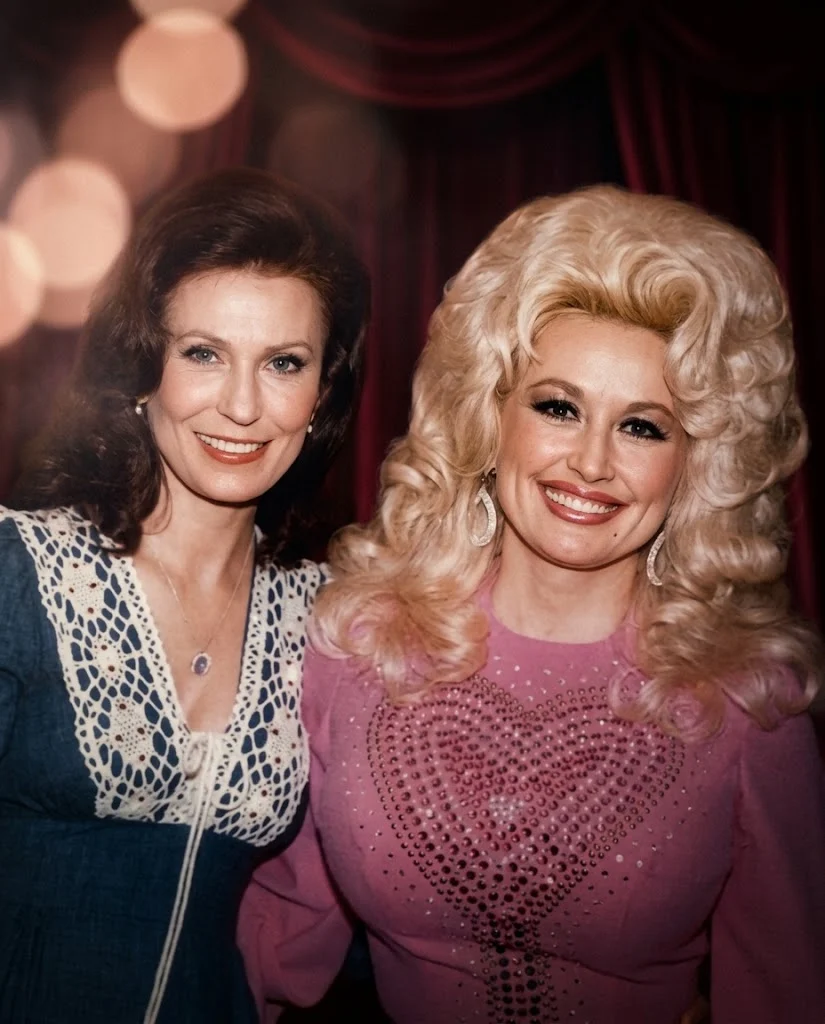
Loretta Lynn passed away peacefully at home on October 4, 2022, at age 90 and the music world responded with polished eulogies. Dolly Parton answered with a phrase that felt older than Nashville itself. She called Loretta her mountain sister.
For nearly sixty years the public was sold a feud. Magazines treated Loretta Lynn and Dolly Parton as rival queens circling the country music throne. The private truth was softer. They were two girls from Appalachian hardship who recognized each other before anyone else could.
They came to Nashville during the 1960s carrying raw talent acoustic guitars notebooks and memories of Appalachian poverty. Loretta had grown up in a Butcher Hollow cabin in Kentucky. Dolly had grown up in the Smoky Mountains of Tennessee. In a business run almost entirely by men they wrote their own truth and turned hardship into country standards.
Chart positions fed the rivalry myth. Week after week the industry set their names side by side as if country music could crown only one woman at a time. Behind the scenes they simply recognized one another.
Music columnists measured Loretta’s Kentucky grit against Dolly’s Smoky Mountain charm. Television studios and trade publications wanted tension. The two young songwriters had something else in common. They understood the ache of coal dust wood-plank cabins and one-room poverty without waiting for a press conference.
Loretta was the daughter of a coal miner who worked long hours underground. Dolly was raised in a one-room cabin in Locust Ridge, Tennessee, one of twelve children growing up along the Little Pigeon River. Neither woman arrived with corporate backing or industry connections. Both refused to let outside writers dictate what rural women ought to sing.
As Loretta scored landmark hits including Coal Miner’s Daughter and Don’t Come Home A-Drinkin’ and Dolly broke through with Coat of Many Colors and Jolene, the press kept searching for backstage friction. The women traded encouraging notes. They shared advice on publishing contracts. They comforted one another through the grueling demands of cross-country touring.
That quiet respect became audible in 1993 when Loretta and Dolly joined Tammy Wynette to record Honky Tonk Angels. There was no spotlight battle. Three women who had shaped modern country music stood around the same microphones and celebrated the survival of their shared generation.
Their private correspondence became an anchor as fame stretched into middle age and loss arrived. When Loretta lost her husband Oliver “Doolittle” Lynn in 1996 Dolly was among the first to reach out with quiet steady support. When Loretta faced severe health setbacks later in life Dolly sent warm letters and home-cooked gestures to the ranch in Hurricane Mills.
The bond revealed its real strength in August 2021. Catastrophic flash floods tore through Humphreys County, Tennessee, and claimed twenty lives. The waters swept through Loretta’s beloved ranch. Dolly sent a major financial donation to the recovery fund without issuing a press release or calling a camera crew.
Two women from the same hard mountains chose loyalty over spectacle and kept that loyalty alive in private letters and unpublicized help.
Their friendship survived the pressures of fame because it was built on shared beginnings rather than industry competition. The private letters and the quiet ways they guarded each other through decades of personal loss reveal a partnership far deeper than public records ever showed.