
Waylon Jennings and Willie Nelson did not beg Nashville for permission. They grabbed their guitars, chose their own bands, and turned raw roadhouse truth into a platinum revolution.
In the early 1970s, Music Row expected country singers to wear polished rhinestone suits and record with lush studio orchestras. The system felt like a factory, and the artists were expected to stay inside its lines.
Jennings refused to be a product. After a severe bout of hepatitis, he brought in New York manager Neil Reshen to renegotiate his terms with RCA Victor. The 1973 contract standoff shook Music Row because Jennings demanded the right to produce his own sessions, choose his own touring musicians, and carry the live energy of his road band into the studio.
Nelson walked another path. He left Nashville for Austin, Texas, embraced a stripped down acoustic spirit, and found a freer home at Columbia Records. His message was clear. Country music needed honest stories, not boardroom polish.
Artists could trust their own instincts over corporate formulas.
The industry doubted them until 1976. Then Wanted! The Outlaws arrived. The compilation brought together Jennings, Nelson, Jessi Colter, and Tompall Glaser. Its old west swagger and unapologetic sound became a cultural turning point.
Within months, it became the first country album to sell more than one million copies and earn a certified platinum plaque from the RIAA. That milestone proved the creative freedom of the Outlaw movement could conquer the mainstream.
The bond did not stop with one album. Years before, Johnny Cash and Jennings had shared a modest rented apartment in Nashville. They split meals, traded songs, and survived uncertain nights together.
Standing shoulder to shoulder with brothers who fought the same battles restored Cash’s vital fire.
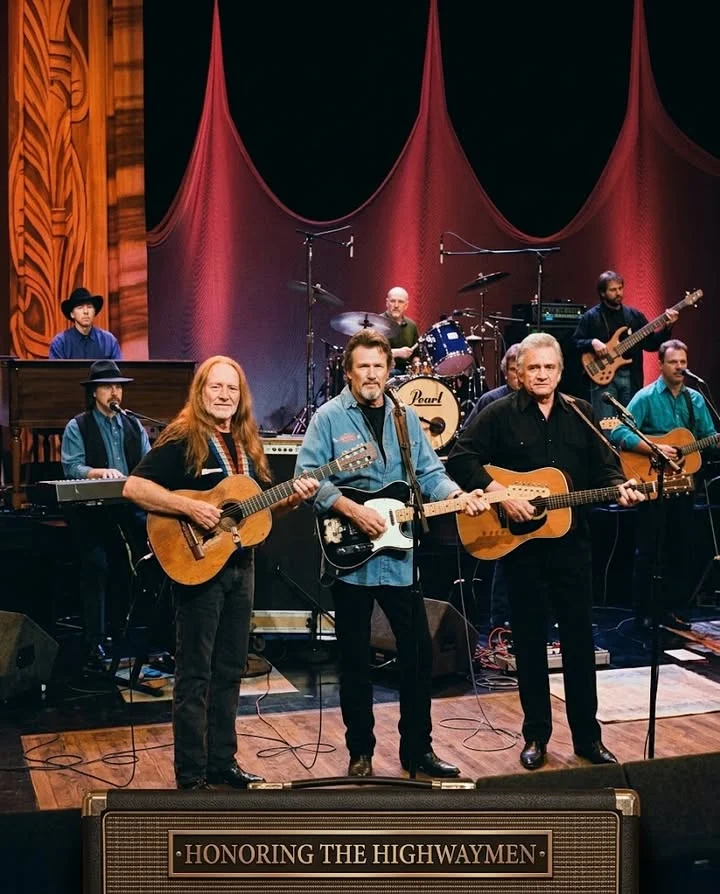
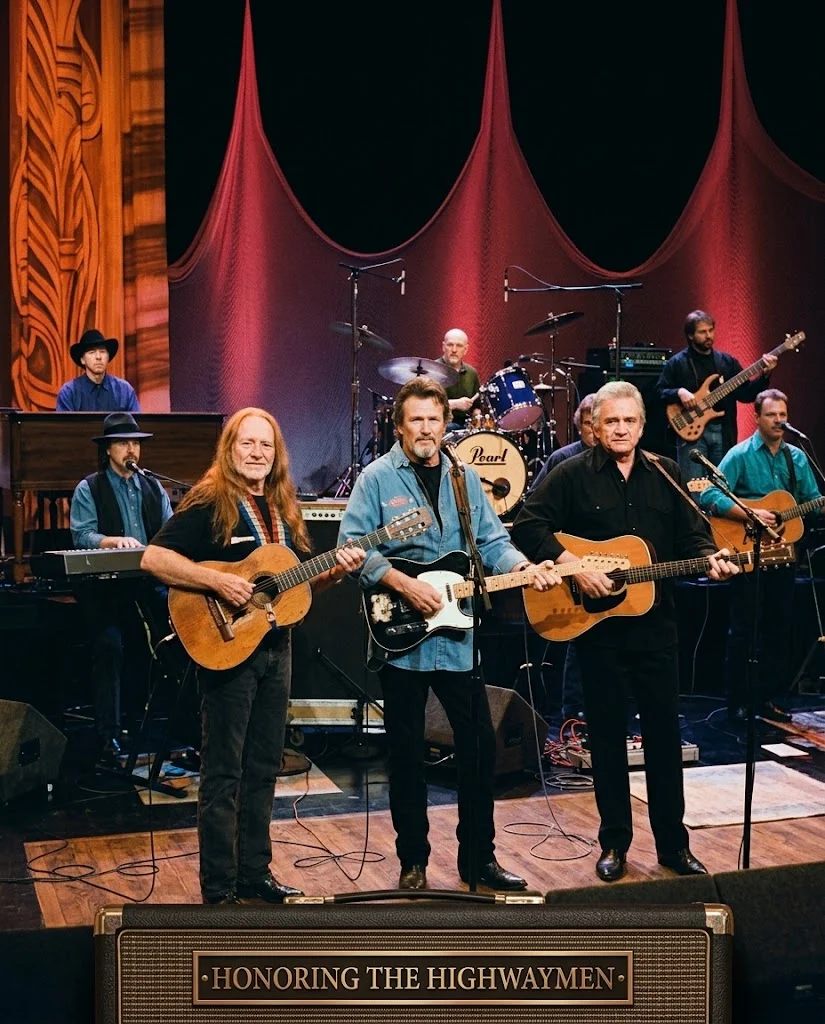
By the early 1980s, Cash faced quiet years as radio trends changed. In 1985, Cash, Jennings, Nelson, and Kris Kristofferson came together and formed The Highwaymen. Their shared independent spirit turned friendship into a public statement.
With leather jackets, Nelson’s battle scarred acoustic guitar Trigger, and voices shaped by long roads, the four men declared that country music belonged to honest storytellers. The private studio standoffs and contract battles behind the 1976 milestone remain one of Nashville’s most defining journeys.