
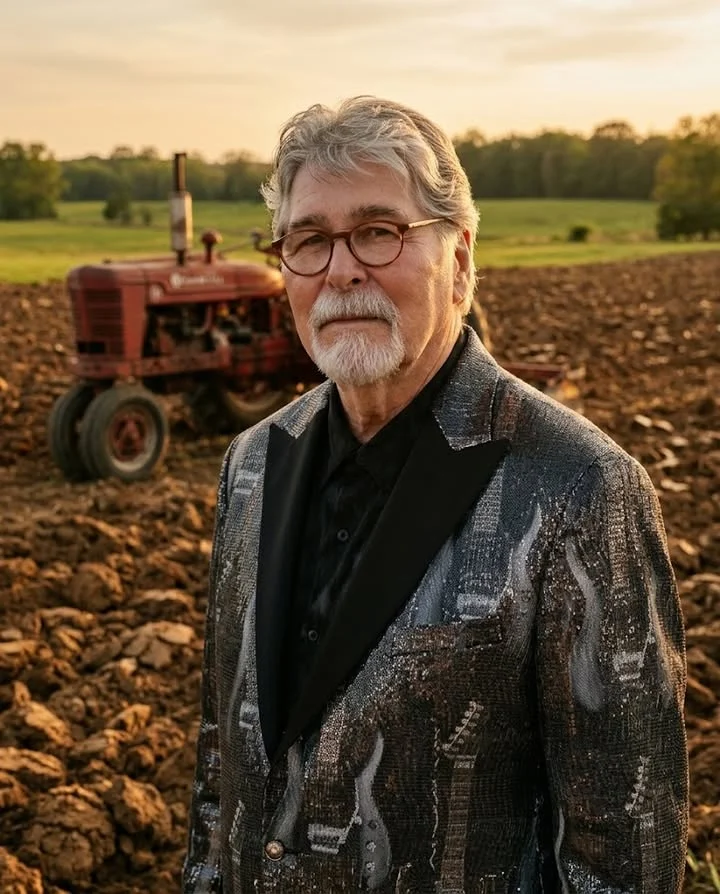
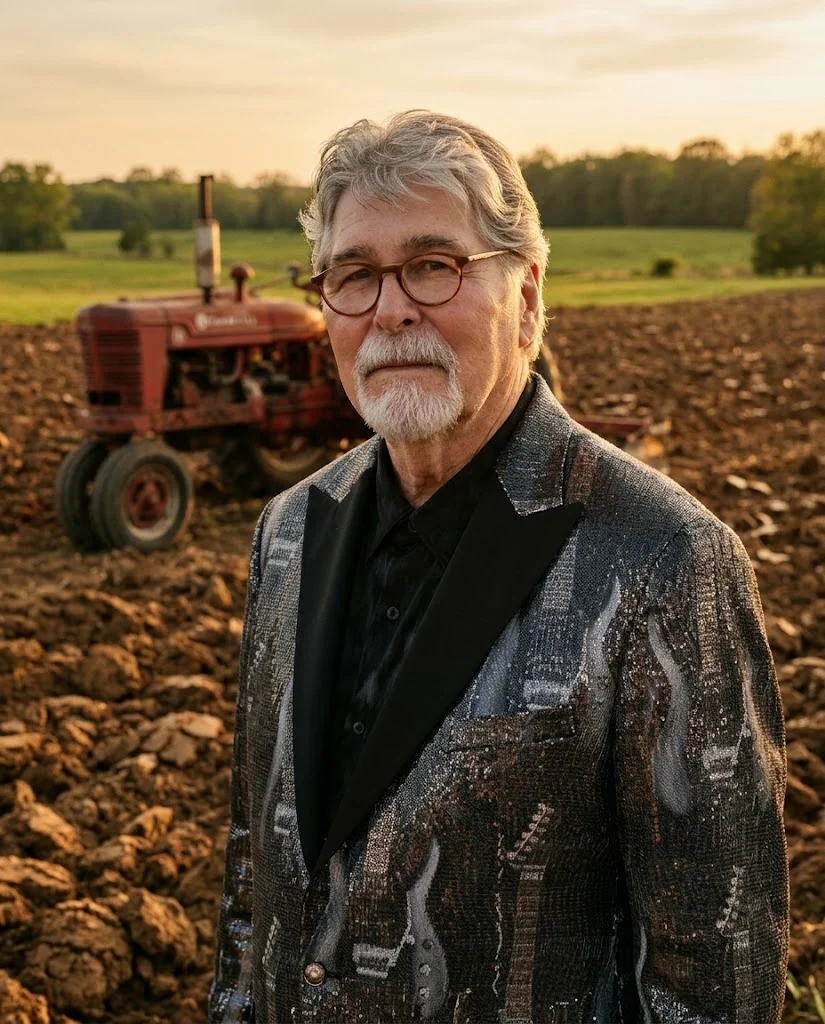
The stadium lights dimmed, and the record players kept spinning, but the deepest truth about Alabama lived far from the applause.
Randy Owen carried Fort Payne in his voice.
Before the multi-platinum records, before the 21 consecutive number-one singles, before the Country Music Hall of Fame induction, he was a boy in rural DeKalb County picking cotton under punishing Southern heat.
Those long days did more than tire his body.
They taught him a harsh but sacred kind of endurance, the rhythm of hard work, the weight of a dollar, and the quiet dignity of a father coming home exhausted after a brutal shift.
When the late 1970s and early 1980s country industry favored polished suits, glittering rhinestones, and solo stars backed by unseen session players, Owen and his cousins Jeff Cook and Teddy Gentry arrived with a different blueprint.
They proved a self-contained country band could rival the biggest rock acts in the world.
Before the fame, they spent seven exhausting summers playing for tips at The Bowery in Myrtle Beach, hauling their own gear and surviving on practically nothing.
On the world’s biggest stages, Owen wore denim jeans, casual tee shirts, and well-worn sneakers.
Executives wondered whether that casual look would alienate traditional audiences.
Instead it became a revolution.
It was not a branding trick.
It was a mirror held up to the people standing in the crowd.
When he sang “40 Hour Week For a Livin’” and “Song of the South,” he did not romanticize blue-collar life from a distance.
He sang with the authority of lived struggle.
Calloused hands were never a sign of shame, and dirt on a pair of boots was a badge of honor.
That authenticity anchored him even as Alabama rose to unprecedented fame.
In 1989, the boy from the cotton fields met Danny Thomas, the legendary entertainer and founder of St. Jude Children’s Research Hospital.
Thomas asked for help in saving lives, and Owen mobilized an entire industry.
He founded Country Cares for St. Jude Kids and called on country radio stations nationwide to host annual radiothons.
He asked loyal working-class fans to give whatever they could afford to help families they would never meet.
Over the decades, that initiative raised more than $800 million for pediatric cancer research and treatment.
It helped ensure families facing the darkest moments would never receive a bill for treatment, travel, housing, or food from the hospital.
His voice gave dignity back to factory workers, mechanics, farmers, and truck drivers who physically built the country every single day.
His heart extended beyond the workers to protect the most vulnerable children among them.
He proved a superstar could reach the absolute pinnacle of the commercial music industry without losing the dirt road that brought him there.
Chart records eventually fall, but the lives saved in Memphis and the hard-working people who heard their own struggles in an Alabama song carry his legacy forward for decades.