
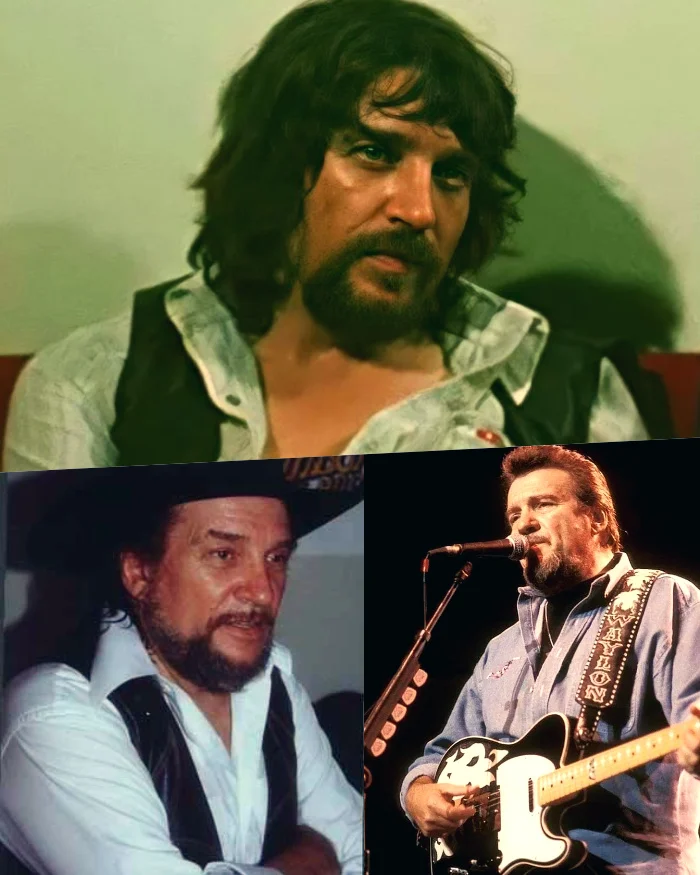
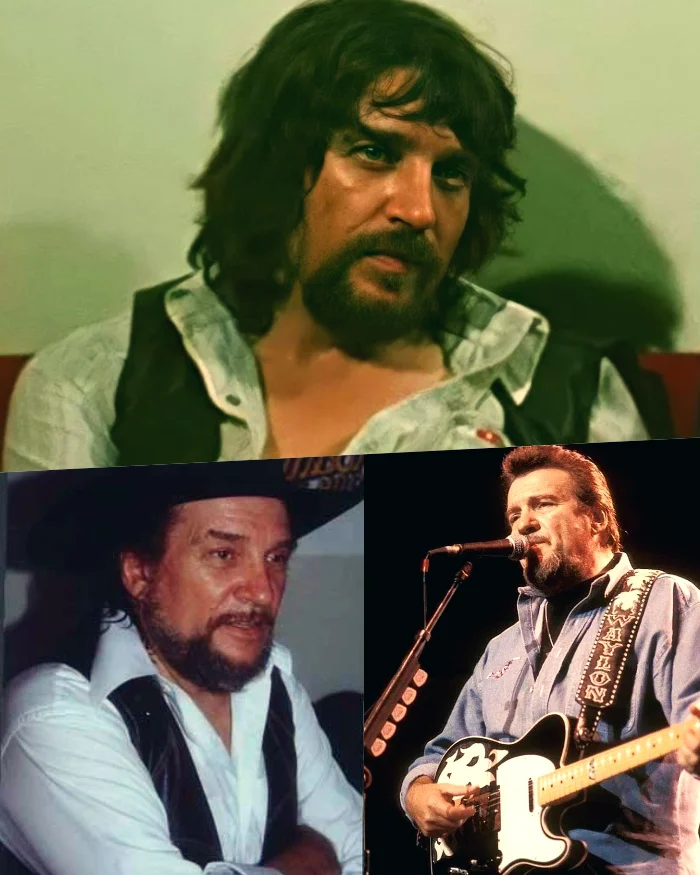
Waylon Jennings nearly walked away in 1972 because Nashville demanded a polished mask while his voice demanded a road worn truth.
The Nashville establishment had a very specific fiercely guarded way of making hit records in the early 1970s.
Before that breaking point he wore the rhinestone suit of a rising star and followed the assembly line that defined the Nashville Sound of the 1960s.
Studio executives chose arrangements and layered raw country voices with heavy string sections and lush background choirs.
A strict rotation of elite session musicians supplied the backing tracks while the singer stood quietly before the microphone and performed songs chosen by the producers.
For a Texas artist who knew the gritty bass driven reality of his live shows that silence felt like suffocation.
He chose to burn the comfortable path rather than betray the song in his chest.
The breaking point came when RCA issued Ladies Love Outlaws in 1972 without his final approval.
Frustrated exhausted and financially strained he was ready to leave the music business entirely.
Instead he decided to dismantle the system and made a move country artists simply did not make.
In 1971 he brought in Neil Reshen a New York rock manager who ignored the polite unwritten rules of Music Row.
Reshen brought aggressive leverage and confrontation to a town built on handshakes and quiet compliance.
The resulting 1972 renegotiation with RCA Records became a seismic event in the history of the genre.
Jennings secured an unprecedented $75,000 advance and the real victory was absolute artistic control.
The financial victory was secondary because the true prize was creative freedom.
He gained the right to choose his own material design his own album covers and decide exactly where and how he recorded.
He also decided who played on his records.
His physical transformation became a quiet declaration of independence.
He traded flashy stage wear for faded denim boots and a worn leather vest and let his hair grow out.
He brought his own touring band The Waylors into the studio and demanded the sound be as loud unpolished and raw as his road shows.
The 1973 album Honky Tonk Heroes stripped away sweeping orchestrations and replaced them with driving rhythm that finally captured his true voice.
That gamble broke the Nashville system wide open.
It carved a path for Willie Nelson Tompall Glaser and an entire Outlaw movement.
Nelson soon moved to Texas to cultivate his own independent sound and negotiated a similar contract.
In 1976 the movement culminated in Wanted! The Outlaws featuring Jennings Nelson Glaser and Jessi Colter.
The compilation became the first country album to sell one million copies and proved audiences wanted authenticity over assembly line perfection.
Jennings risked his entire livelihood to sing exactly what he felt.
He found his true sound and helped a generation play their own music on their own terms.