
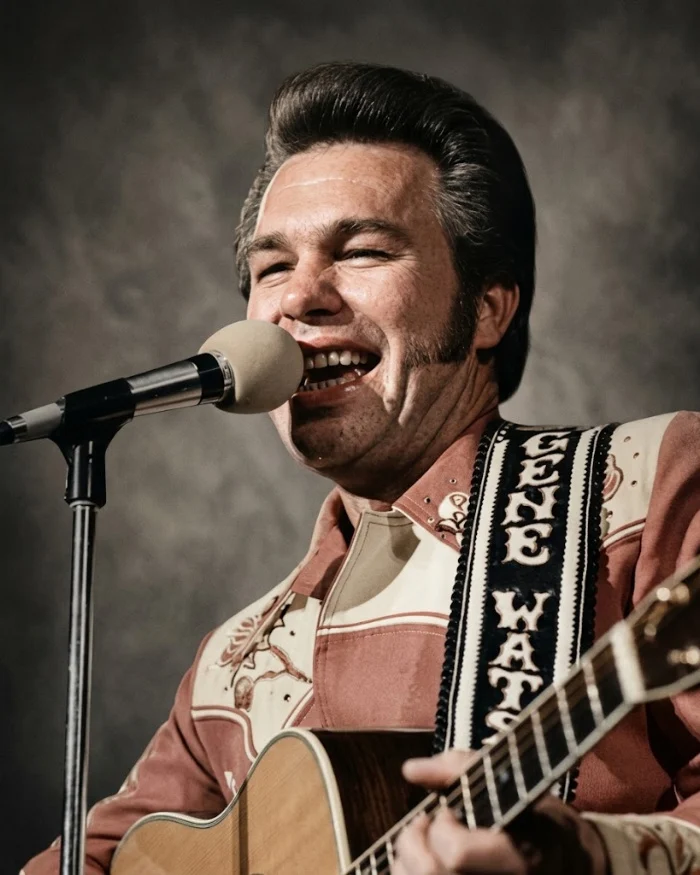
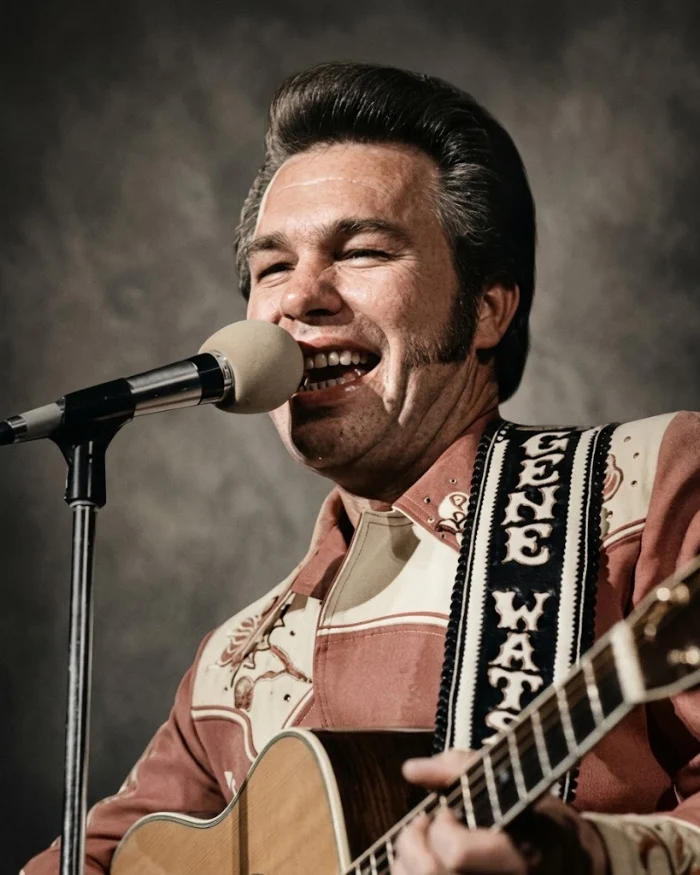
Long before Nashville ever learned his name, Gene Watson’s voice was forged in the brutal heat of a Houston auto body shop. Metal slammed, primer dust stung the air, and paint fumes clung to his skin as he worked from before dawn until after dark.
In the early 1960s, Watson did not look like a country star in waiting. He looked like a tired mechanic trying to feed his family. While other singers chased vocal coaches and studio doors in Nashville, he scrubbed grease from calloused hands and survived on a blue-collar paycheck that barely covered the week.
He was a working man with a voice that refused to stay silent.
To keep his family from slipping into poverty, Watson moonlighted in Houston’s honky-tonks. He formed a band called Gene Watson and The Other Four and played dimly lit clubs until late at night. That grind eventually led to a residency at the Dynasty Club.
His routine was punishing. He finished a long shift at the garage, washed the grime from his hands with industrial soap, and then stepped up to a microphone until the early hours of the morning.
Audiences heard something rare in his ballads. The sorrow was not manufactured. It came from exhaustion, hunger, and the daily pressure of survival.
Local record executives noticed. Watson cut regional singles for small labels such as Wide World and Resco. He pressed limited runs of 45 records that slowly caught fire on Texas radio.
That momentum carried him to Capitol Records. Yet Watson still did not trust the music business. He had grown up in severe poverty, and a hit could vanish as quickly as a paycheck. He kept his toolboxes. He kept fixing cars. He kept repairing bodies even while his records spread across national airwaves.
In 1975, the balance finally broke. His song Love in the Hot Afternoon rose to Number 3 on the Billboard country singles chart. At 31 years old, the man who had spent his adult life pulling dents from wrecked cars suddenly had one of the biggest records in the country.
Touring demands forced him to leave the garage behind. He followed that breakthrough with classics such as Paper Rosie, Farewell Party, and Fourteen Carat Mind.
When pop crossover swept through country music in the late 1970s and 1980s, Watson refused to soften his sound. He stayed rooted in the raw Texas honky-tonk world that had shaped him.
Even after tailored suits and Opry lights, he never forgot the shop. The quiet endurance of the mechanic remained inside the star. Every heartbreak he sang was paid for in sweat, dust, and love.
He did not borrow the heartbreak in his songs.
He sang it from the exhausted soul of a man who knew the true cost of survival.