
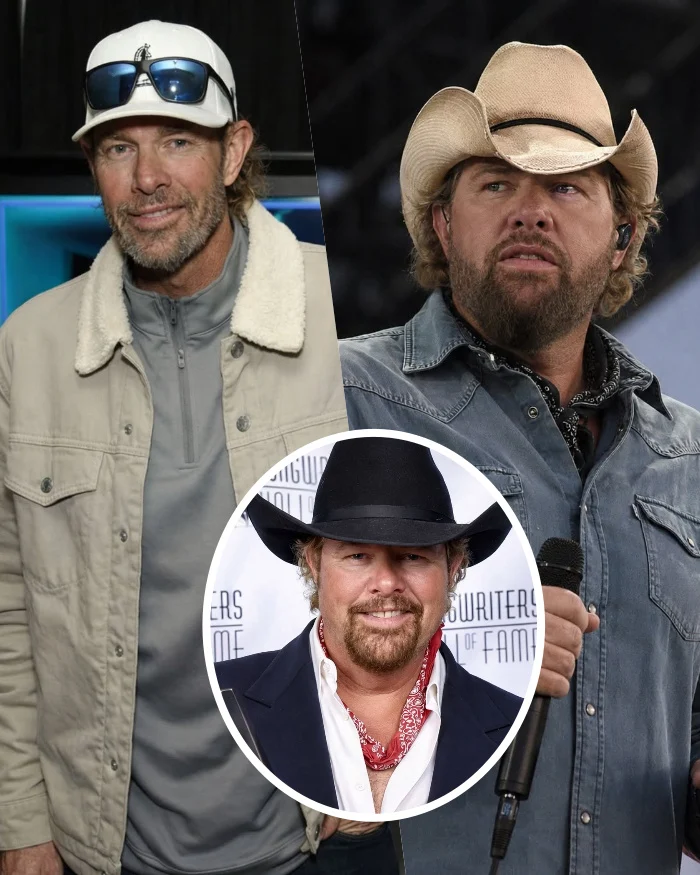
Before the stadiums shook and the platinum plaques lined the walls, Toby Keith was fighting to keep his family fed during the Oklahoma oil collapse of the 1980s.
The paychecks stopped. The dream did not. The towering Oklahoman turned to his band Easy Money and to brutal semi-pro football games with the Oklahoma City Drillers while the honky-tonk stage became his last chance.
For nearly a decade, he sang in smoky Texas and Oklahoma bars for tips, indifferent crowds, and motel ceilings stained by long nights. His wife and children lived inside the risk of every rejected demo tape he carried into Nashville.
Record executives kept telling him no. They said his booming voice and traditional-leaning sound did not fit the polished country radio market of the early 1990s. Some told him to pack his guitar and return to the oil fields.
He was not broken by the empty rooms. He was sharpened by them.
That grit finally reached Mercury Records executive Harold Shedd in an unlikely way. A flight attendant and fan of his band handed him Keith’s demo tape on a commercial flight, and Shedd listened to the cassette in the air.
The raw conviction he heard was impossible to ignore. Shedd traveled to Keith’s home state, watched him command a live crowd, and signed him in 1993.
Keith chose a song he had written alone in a motel bathroom in Dodge City, Kansas. “Should’ve Been a Cowboy” did not merely introduce him to the world. It became a cultural phenomenon and the most-played country song of the entire 1990s.
From that moment, he built a country music empire on his own terms. He wrote his own songs, controlled his masters, and launched his own label so no executive could ever shut him down again.
Even as he became a global stadium act and a towering symbol of American patriotism, he never left the roughneck behind. The man who once played for tips in Oklahoma dive bars carried blue-collar pride until the very end.
The oil fields taught him how to work. The empty bars taught him how to fight.
The voice Nashville rejected now echoes through the heartland for generations.