
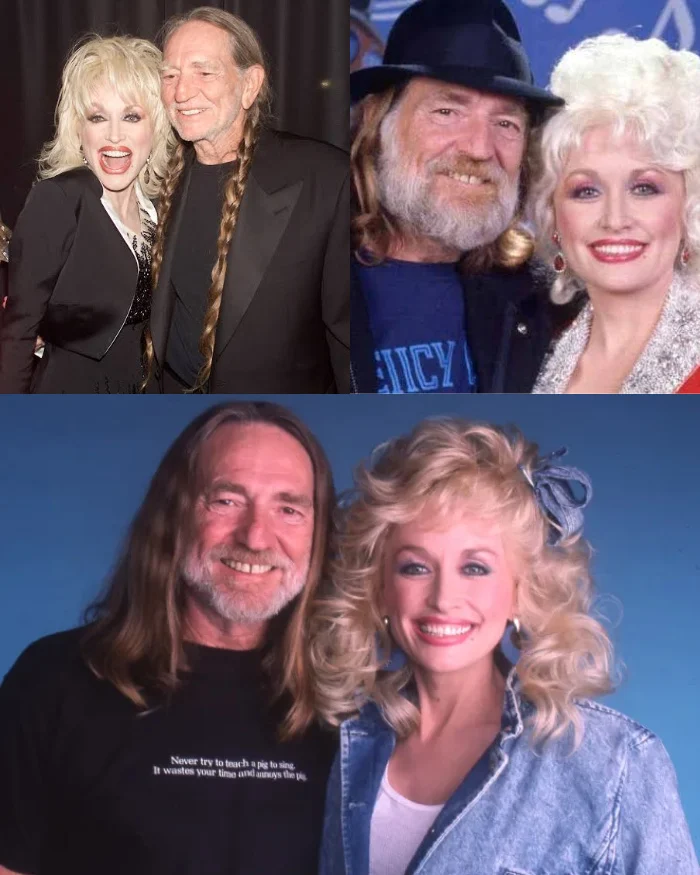
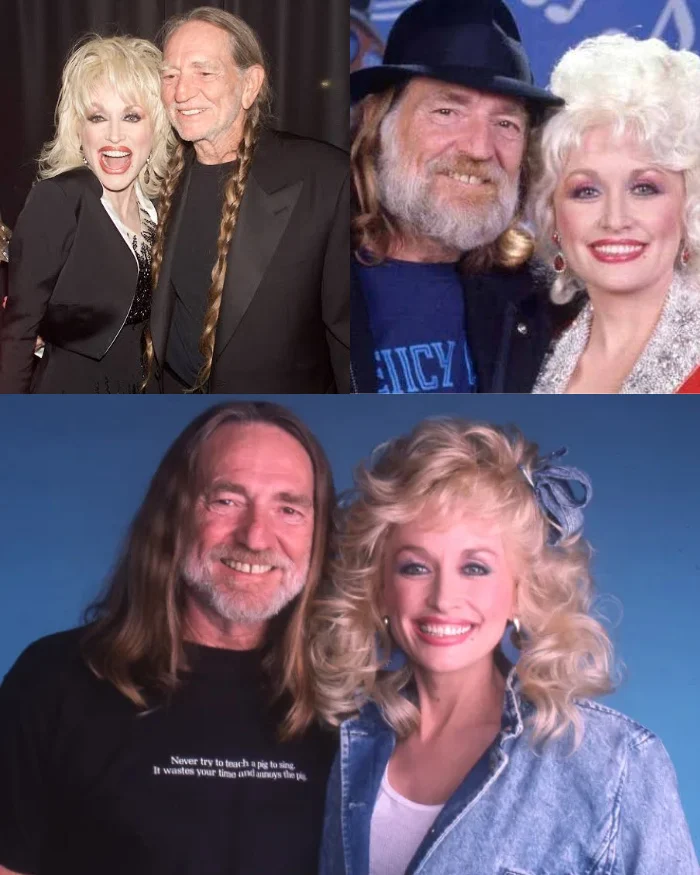
Long before the festival stages, the Hall of Fame plaques, and the duets that felt like conversations, Dolly Parton and Willie Nelson walked into Nashville in the early 1960s with worn notebooks and songs the industry did not know how to sell.
They were two hungry songwriters trying to survive Music Row. They found temporary shelter at publisher Combine Music and pitched material that executives considered eccentric. Nelson’s offbeat jazz phrasing confused traditional producers, while Parton’s crystalline Appalachian vibrato was called too regional for pop crossover dreams. Those lean years did not break them. They forged a shorthand that would outlast trends, contracts, and decades of fame.
Both proved their worth with their pens before finding stability as solo recording artists. They watched peers take their compositions to the top of the charts while waiting for their own breakthroughs. Their paths crossed in earnest during the Monument Records era, where producer Fred Foster guided both artists through sessions that sharpened their identities. Parton soon stepped into syndication television alongside Porter Wagoner, and Nelson packed his bags for Austin to help ignite the Outlaw country movement.
The bond deepened rather than faded. By 1982, shared history became the collaborative album The Winning Hand, a Monument project produced by Foster that paired Parton, Nelson, Kris Kristofferson, and Brenda Lee. The centerpiece duet, “Everything’s Beautiful (In Its Own Way),” written by Parton, placed her soaring soprano beside Nelson’s relaxed, conversational baritone. It reached number seven on Billboard’s Hot Country Singles chart and proved that their differences could create effortless harmony.
Two hungry songwriters trying to survive Music Row became two legends who kept making country music feel human.
Recognition arrived in parallel. Nelson entered the Country Music Hall of Fame in 1993, and Parton followed in 1999. When Parton received the Kennedy Center Honors in Washington, D.C., Nelson took the stage to sing her songs back to her from the balcony. Their mutual admiration also powered public causes. Nelson founded Farm Aid in 1985 to assist family farmers facing foreclosure, and Parton became one of its earliest and most vocal supporters. Nelson returned the favor by backing Parton’s Dollywood milestones and literacy campaigns.
Even later collaborations felt as natural as a porch conversation. In 2013, Nelson invited Parton to record “From Here to the Moon and Back” for his duet collection To All the Girls…, and the acoustic ballad carried the ease of old friends rather than the pressure of a studio session. In 2016, the CMA fiftieth anniversary project “Forever Country” placed their signature classics at the center of a historic celebration. A decade after that, they reunited for Parton’s 2023 album Rockstar and cut a spirited rendition of Nelson’s anthem “On the Road Again.” Parton drove the melody with buoyant clarity, while Nelson trailed slightly behind the beat and anchored the song with Trigger.
Their careers mirror modern country music itself. Both kept complete ownership of their publishing catalogs when many songwriters surrendered their rights, and both expanded into Hollywood, philanthropy, and American culture without abandoning their roots. Whenever they share a stage, the glamour of the mountain girl and the quiet presence of the Texas songwriter dissolve into pure friendship. Sixty years after those first Nashville handshakes, their story still sounds like two old friends sitting together on a Southern porch, choosing harmony over friction and friendship over fear.