
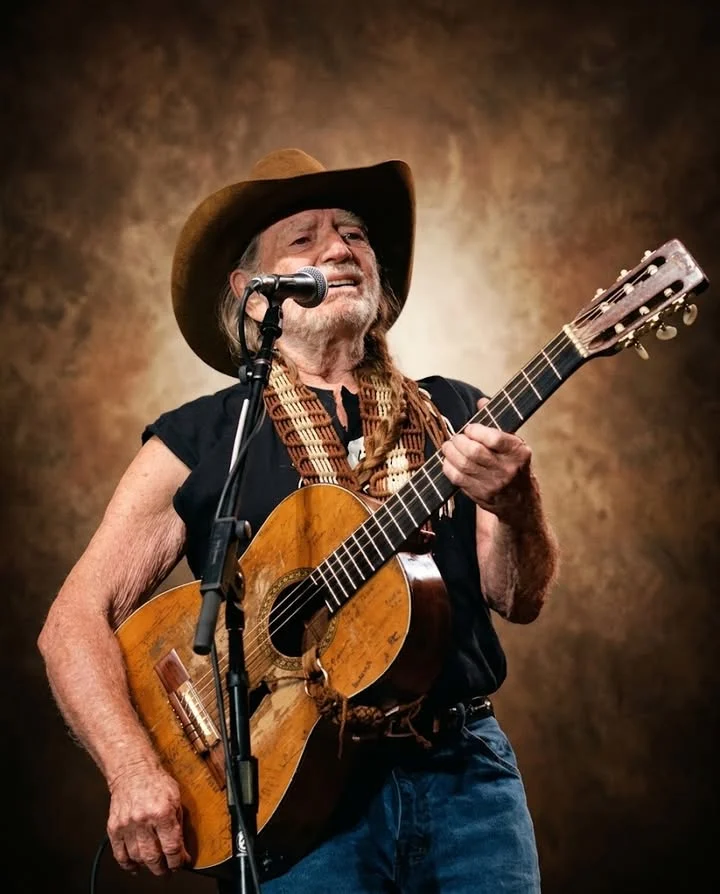
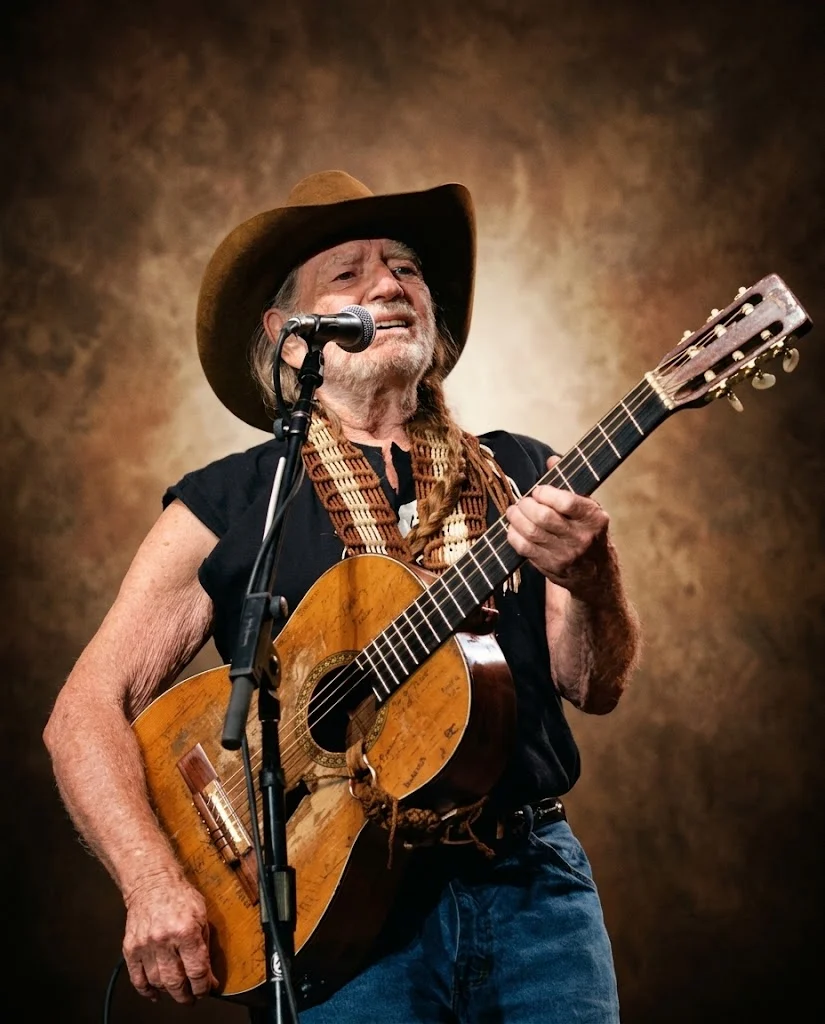
On a bitter winter night in Nashville, Willie Nelson lay down on cold asphalt with his arms spread open. He was waiting for a truck to end the pain. Not a single vehicle came. That empty road became the moment the outlaw icon was saved.
By the early 1960s, Willie Nelson was living a painful paradox in Music City. He was quietly writing masterpieces that would define country music, including Crazy for Patsy Cline, Night Life for Ray Price, and Hello Walls for Faron Young. Yet the polished and heavily orchestrated Nashville establishment had no use for his unconventional vocal phrasing or his jazz-inflected acoustic guitar.
To the executives on Music Row, his voice was too unusual. To himself, he felt entirely worthless.
Behind closed doors, his personal life was collapsing. His turbulent first marriage to Martha Matthews was defined by poverty, violent arguments, and overwhelming chaos. Drowning in heavy drinking and profound depression, the man who was writing the soundtrack to America’s heartbreak was losing his own will to survive.
He did not need a miracle. He needed the world to go quiet long enough for him to stand up.
The despair reached its absolute limit on that freezing road. Exhausted by relentless rejection and his own self-destructive cycles, Willie had walked into the darkness and waited. The silence that answered him was not rejection. It was a strange kind of mercy.
There was no sudden magical epiphany. He simply brushed the snow from his clothes, pushed himself off the pavement, and walked back home to face the morning. He had survived the night, but surviving the industry would require a much more radical choice.
The turning point arrived in 1970 when his Nashville pig farm caught fire. While flames consumed the property, Willie ran into the burning house to rescue the one thing that truly mattered, his Martin N-20 acoustic guitar known as Trigger.
Taking the fire as a sign, he packed up his life, turned his back on the Nashville machine, and moved home to Texas.
Settling in Austin, he stopped trying to fit into a rhinestone mold. He grew out his hair, put on a bandana, and started playing the Armadillo World Headquarters. Conservative rednecks and long-haired hippies suddenly found themselves standing shoulder-to-shoulder to hear his music. The Outlaw Country movement was born, and the man who had been rejected for being too different was leading a cultural revolution.
Yet the freedom of the highway came with a devastating price. The Outlaw myth often overshadowed the reality of the man beneath the braids.
His relentless touring schedule and dedication to the music cost him his first three marriages. He was an absent father for much of his children’s early lives, a heavy burden that he carried quietly. The ultimate tragedy struck on Christmas Day in 1991, when his son Billy Nelson took his own life at the age of 33.
The man who survived his own freezing night was forced to bury his boy, facing grief that no amount of fame could soften.
Willie found shelter in the very thing that had always been his salvation, the music. He leaned on his remaining family, bringing his children into his band, turning his legendary stage into a traveling home where they could finally heal together.
Today, well into his nineties, he is still sitting on a stool and holding the same battered guitar he saved from the fire. Trigger now has a massive hole worn straight through the wood from decades of aggressive picking, bearing the physical scars of a long and hard-fought journey.
He did not just survive that quiet freezing night in Nashville. He stood up from the pavement, walked through the fire, and spent the next sixty years singing the truth for anyone else trying to find their way out of the dark.