
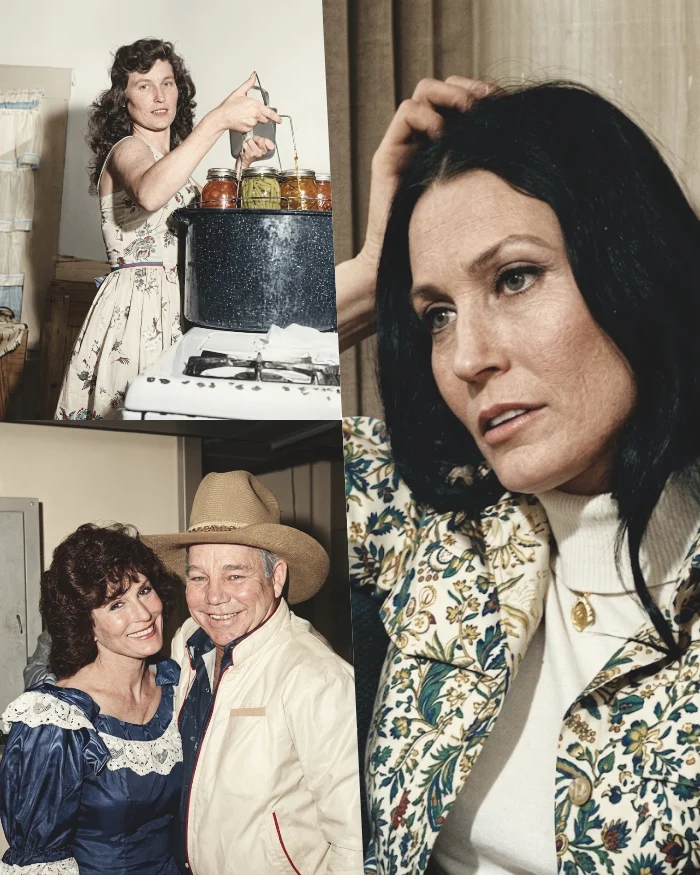
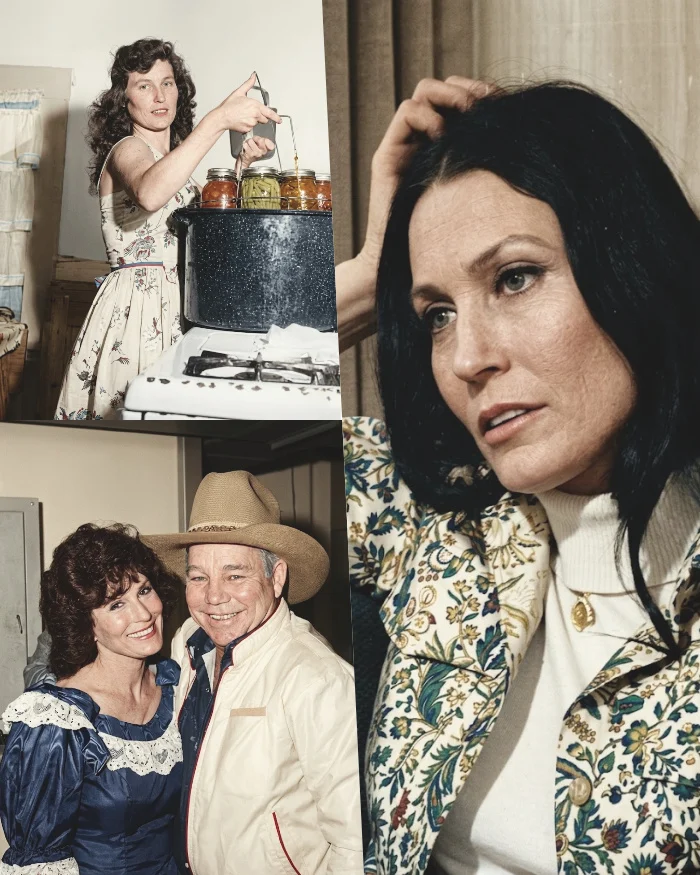
Hot creamed corn hit Oliver “Doolittle” Lynn before Loretta Lynn ever became a star. That furious kitchen moment revealed the woman who would spend decades refusing to swallow humiliation in silence. She was fifteen when she married Doolittle in 1948, and their home in Butcher Hollow, Kentucky, became a place where love, alcohol, betrayal, and survival collided.
Loretta grew up in an Appalachian coal mining camp and learned that dignity had to be defended. Doolittle’s drinking and repeated infidelity tested her patience, while country music culture often told wives to suffer gracefully. She rejected that script. Her rule was brutal and simple.
“If he hit her once, she promised to hit him twice.”
That same fire later fed her songs. When Loretta arrived in Nashville in the early 1960s, many female singers were expected to sound delicate and forgiving after heartbreak. She turned her microphone into a shield and a warning, pulling real arguments from her living room onto national radio.
Her 1966 breakthrough “You Ain’t Woman Enough” grew from a raw dressing room confrontation. A young woman had come to confess that she was pursuing Doolittle. Loretta did not collapse into tears. She wrote the song in ten minutes and delivered a blunt challenge that millions of wives recognized as truth.
Later that year, “Don’t Come Home A-Drinkin’” spoke directly to the exhaustion of waiting for a husband who returned from late night bar runs expecting comfort without accountability. Male radio programmers often called such material too aggressive for a woman. Rural women disagreed. They bought the records and flooded stations with requests until the industry had to follow their voices.
The record became her first number-one hit and the first album by a female country artist to be certified gold.
In 1968, “Fist City” sharpened that defiance into a threat. She wrote it after learning that a woman in Tennessee had been circling Doolittle while Loretta was away on tour. The song named the behavior, issued a physical warning, and climbed to the top of the charts.
Loretta became a champion because she said what many women could only think. She sang about cheating husbands, unfair double standards, constant pregnancies, and the exhausting work of holding a family together while a marriage wounded her.
The deepest paradox sat at the center of her legend. Doolittle caused many of the tears that shaped her biggest anthems, yet he also recognized a gift Loretta could not see in herself. He bought her first guitar, a $17 Harmony from a Sears Roebuck catalog, and demanded that she learn to play it.
When her shyness became a wall, he pushed her onto small stages in Washington state taverns. He drove across the country and demanded that radio stations play her early records. Even during her rise to fame, he would stand in the wings of huge auditoriums while thousands cheered as his wife sang about his worst mistakes.
Their marriage was deeply flawed. It survived public scandal, brutal fights, and the pressure of celebrity, yet neither partner walked away. They remained married for 48 years until Doolittle’s death in 1996.
Loretta Lynn did not need fictional pain to sell records. She took the messy reality of her own life and refused to let it destroy her. The woman who defended herself in a cramped cabin kitchen used that same defiance to reshape country music.