
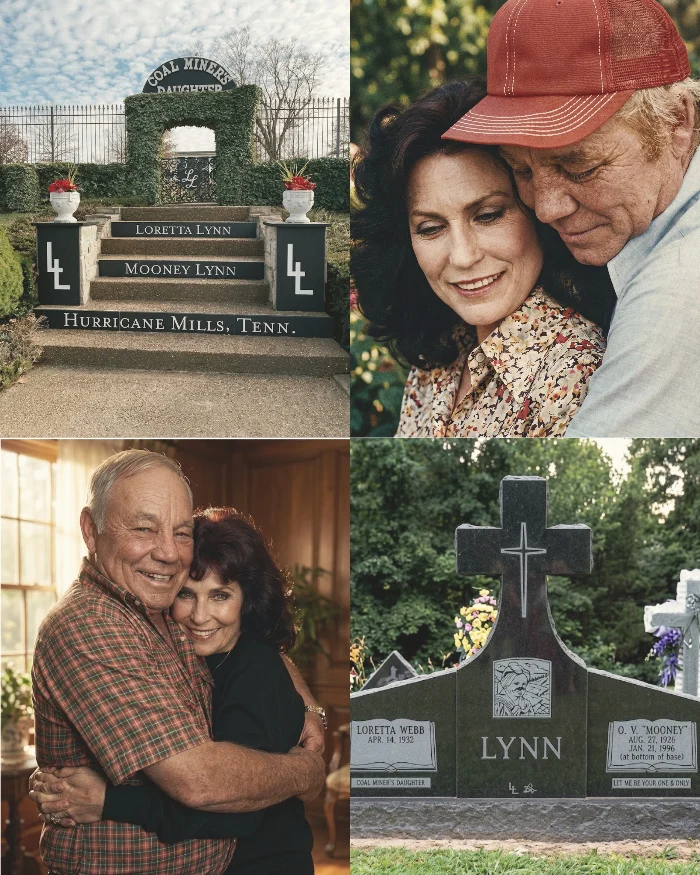
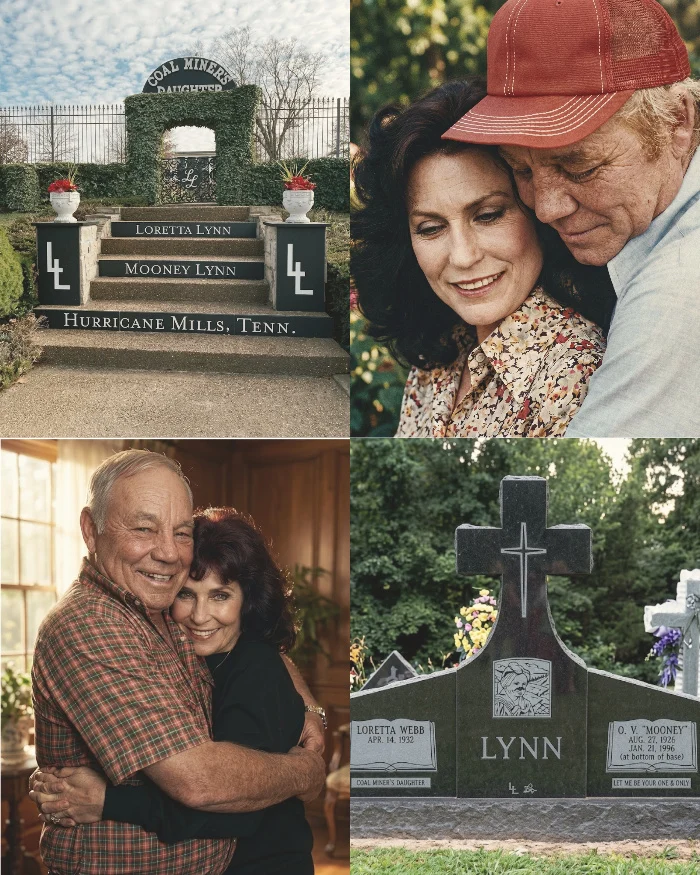
A quiet ridge above Hurricane Mills had waited twenty-six years for Loretta Lynn to come home.
On October 7, 2022, three days after the ninety-year-old icon died peacefully in her sleep, about one hundred family members and close friends gathered beneath the tall trees of western Tennessee. No television trucks lined the highway, and no public procession moved through Humphreys County. Her children and grandchildren held hands, lowered her casket beside Oliver “Doolittle” Lynn, and sang the opening lines of Coal Miner’s Daughter into the autumn air.
That hillside plot had become the final page of a private family story written across decades of grief, music, and loyalty.
“The coal miner’s daughter was home”
Loretta and Doolittle first drove down the gravel roads of Hurricane Mills in 1966. They wanted privacy and permanent land for their six children. The couple bought the old milling town, including the 1870s plantation mansion, a grist mill, a post office, and thousands of acres around them.
For two people who had once survived seasonal logging wages in Washington and slept in beat-up sedans during early radio tours, the ranch meant security. As the estate grew into a busy family community with trail rides, campgrounds, and personal museums, the steep hill behind the home stayed reserved for family.
The first headstone appeared there under devastating circumstances on July 24, 1984. Loretta’s eldest son, Jack Benny Lynn, worked the property as a horse trainer and blacksmith. He was thirty-four when he tried to ride across the rain-swollen Duck River. The horse stumbled, and Jack drowned on the family land. Loretta was hospitalized in Illinois for exhaustion when the news reached her. She later chose the high ground so her son would remain close to home.
Twelve years later, in August 1996, Doolittle was buried on the crest of the hill. After forty-eight years of marriage through poverty and relentless touring, he died from heart failure and diabetes complications. Loretta selected his gravesite and left open ground beside him for herself.
The ridge held sorrow again in July 2013, when Loretta’s eldest daughter, Betty Sue Lynn, died at age sixty-four from complications of emphysema. Betty Sue had helped manage ranch business and written songs for her mother in the 1960s. Losing a second child tested Loretta’s spirit, but the family cemetery kept her anchored at Hurricane Mills through severe floods and the quiet months after her own 2017 stroke.
During the two decades after Doolittle’s death, Loretta continued performing, earning Grammys, and writing records at Cash Cabin Studio. Whenever the highway released her, she returned to the plantation house below the hill and lived among children and grandchildren who helped keep the ranch alive.
As the service ended that Friday afternoon, red roses and white lilies covered the fresh earth. Public tributes in Nashville and at the Grand Ole Opry were still weeks away, but the deepest wish of Loretta Lynn’s life had been fulfilled.
The girl who left Butcher Hollow with almost nothing had bought her family an entire town, carried its losses on that hillside, and finally rested beside the man who bought her first guitar and the children she had protected for a lifetime.