
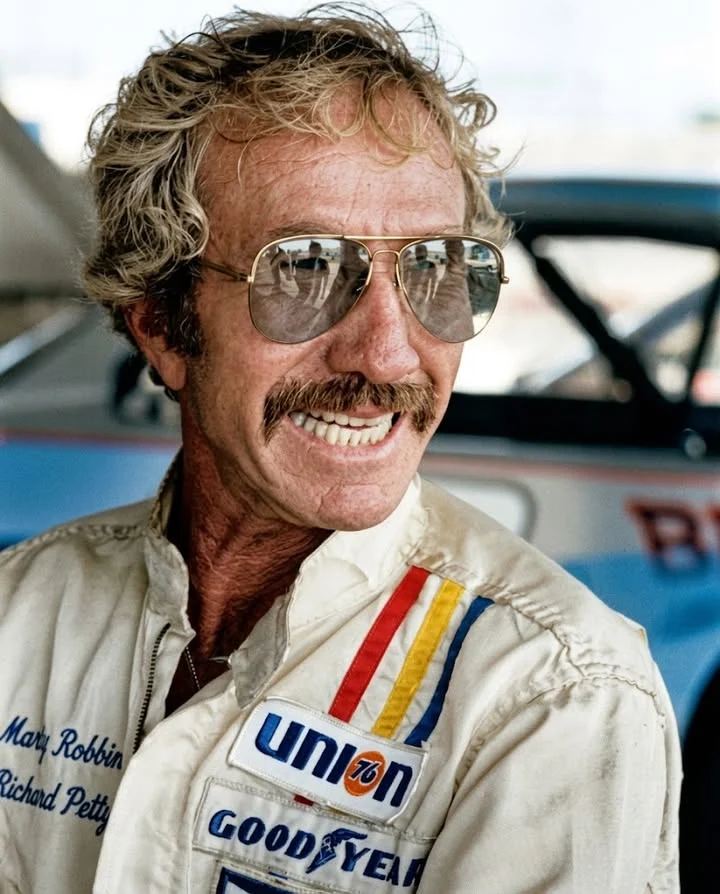
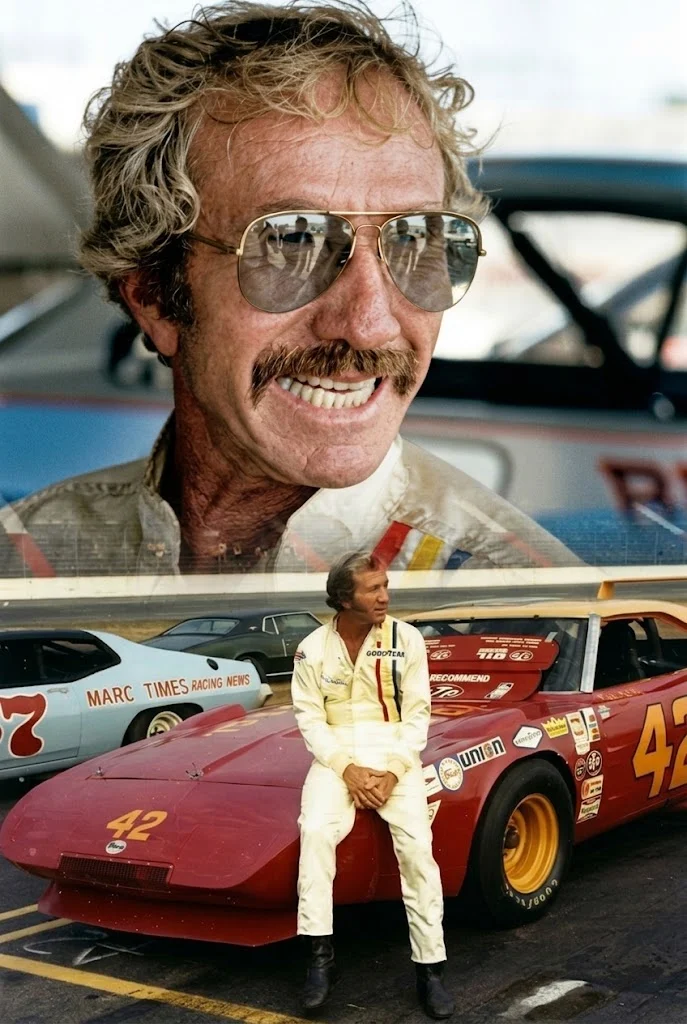
The view from the front of the pack was worth the risk for Marty Robbins and he proved it in one unforgettable afternoon at Talladega Superspeedway.
He did not cheat for a trophy and he did not cheat for money. He wanted to know what speed felt like when the greatest drivers in stock car racing could finally see him eye to eye.
Marty Robbins collected more than a dozen gold records and he possessed one of the smoothest and most effortless voices on the country charts. Yet his most revealing moment came not in a Nashville recording studio but in a hotel room with a Dodge carburetor and a melted piece of wax.
Between 1966 and 1982 he ran thirty five professional races on the NASCAR Winston Cup circuit and he often drove his two toned magenta and chartreuse cars. He refused to treat the sport as a simple publicity stunt. He was a respected competitor who understood the brutal physical risks of the track.
During the 1972 Winston 500 his desire to run at the absolute front of the pack pushed him into a deeply unconventional choice. NASCAR required specific cars to run restrictor plates and those metal devices sat under the carburetor to limit air and fuel intake. The plates capped horsepower and kept speeds manageable on the massive high banked superspeedways.
Robbins wanted to know what it felt like to genuinely keep pace with the legends and he quietly worked with car owner Bobby Allison and engine builder Eddie Allison to bypass the rulebook.
The modification was brilliantly simple. The crew used specialized wax to hold the mandatory restrictor plate in place so the Dodge could pass pre race technical inspection. Once the green flag dropped and the engine reached extreme operating temperature the wax melted and the plate dropped completely out of the carburetor.
Small catch rods installed deep inside the intake manifold prevented the heavy metal plate from falling into the valves and instantly destroying the engine. The missing plate created a full two inch opening and delivered an extra forty to fifty horsepower. With the massive engine breathing freely the Dodge could suddenly reach speeds approaching 220 miles per hour.
On race day the illegal modification worked exactly as planned. Robbins found himself running blistering lap times and reportedly pushing fifteen miles per hour faster than his own qualifying speed. He ran near the front and traded paint with legends such as Richard Petty and Bobby Allison.
He even blew past Richard Petty and Bobby Allison said Robbins was so elated by the sheer speed that he waved at The King while completely unable to contain his excitement on the radio.
He ran near the front until an unrelated mechanical issue eventually forced him out of the race. Instead of quietly loading his car onto the hauler and hoping officials would ignore a retired vehicle Robbins made a choice that permanently cemented his reputation in the garage.
When NASCAR informed him that his performance had earned him the Rookie of the Race award Robbins firmly refused to accept it. Before inspectors could tear down his engine and discover the tampering he walked directly up to race officials and turned himself in.
He did not want to steal prize money or a trophy from drivers who relied on the track to feed their families
He simply wanted to experience the exact view that his racing heroes saw every weekend
In a fiercely competitive sport where technical violations usually brought heavy fines suspensions and bitter arguments the regular drivers and NASCAR officials reacted to his confession with an understanding smile. They disqualified his run and officially dropped him to last place in the fifty car field.
The garage respected his absolute honesty because he did not cheat to take a victory away from anyone else. The creative mechanical tampering revealed a purist who loved the sensation of speed far more than he cared about public accolades.
His immediate willingness to surrender his own finish proved that the integrity behind his music was exactly the same as the integrity behind the wheel. The official record books forever show a last place disqualification but the racing community always remembered the afternoon a country singer outran the kings of NASCAR just to feel the wind.