
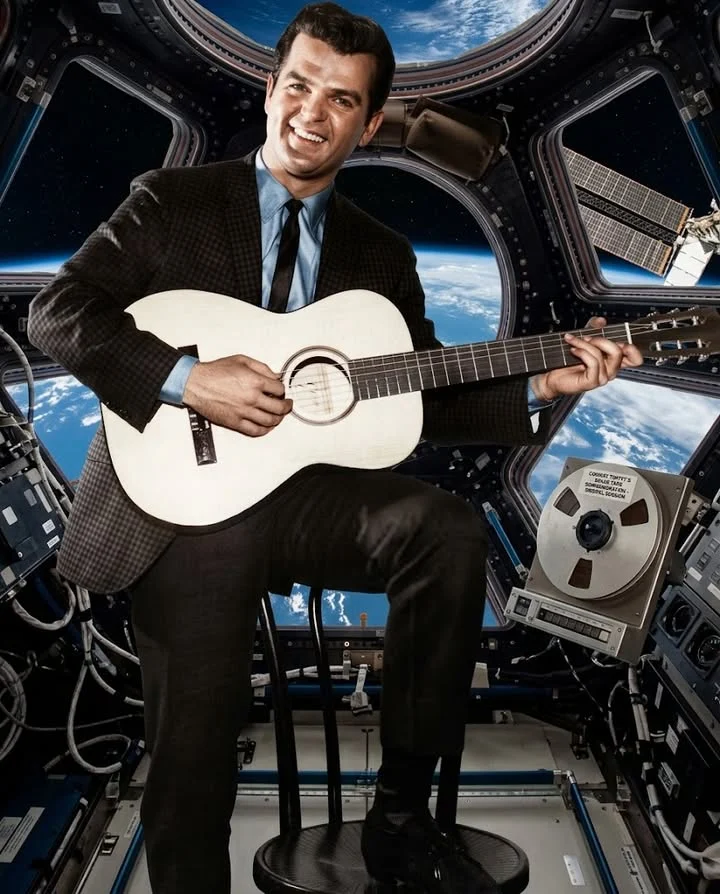
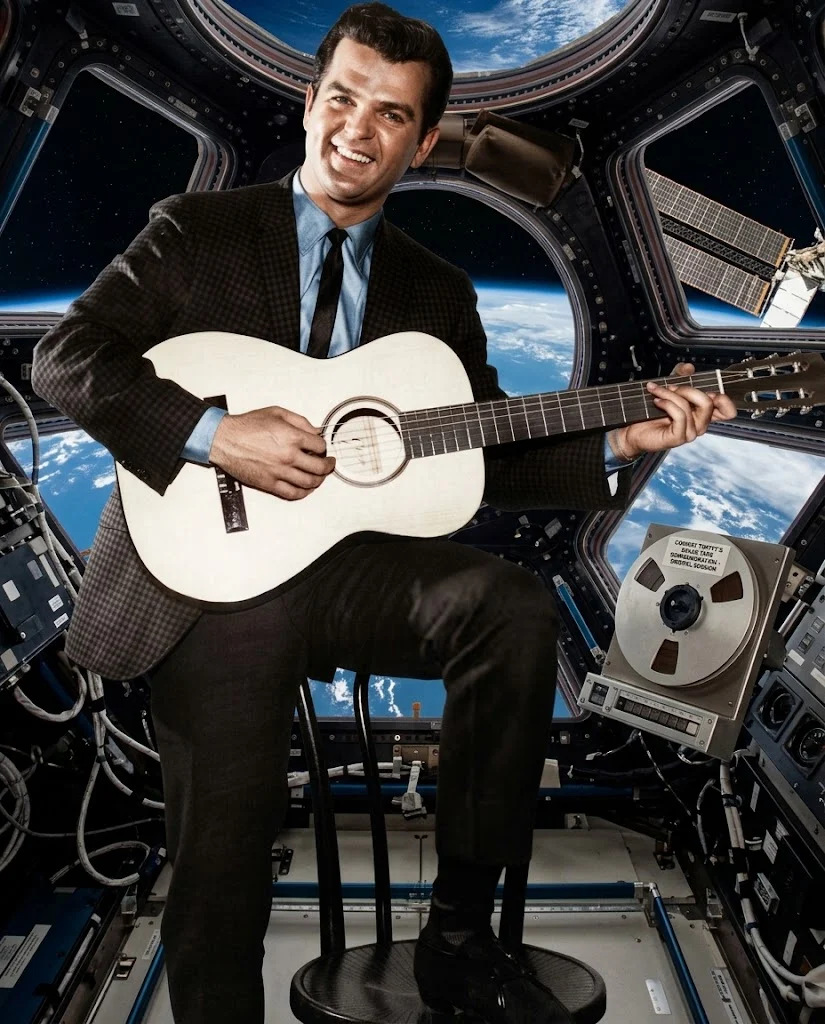
A country voice that belonged to honky tonks and front porches was drifting through zero gravity while two rival superpowers prepared to say goodbye in orbit. That voice belonged to Conway Twitty. On July 19, 1975, his Russian language recording of Hello Darlin’ filled the Apollo-Soyuz Test Project cabin and turned a simple cassette tape into one of the most unexpected gestures of peace in the Cold War.
Millions of people watched the first joint American and Soviet space flight become a symbol of détente. Yet inside that historic spacecraft commander Thomas Stafford carried a personal gift that had nothing to do with politics and everything to do with music. Stafford was an Oklahoma native who grew up listening to country radio. In March 1975, he asked his fellow Oklahoman Conway Twitty to record a surprise version of his 1970 number-one hit Hello Darlin’ for the Russian cosmonauts.
Twitty first thought the request was a joke. He was known for heartbreak ballads and honky tonk stages, not for space diplomacy. When he learned that the NASA commander was serious, he agreed to leave his comfort zone behind.
To make the song possible, Twitty worked with Professor Gurij Chemelev from the University of Oklahoma to translate the lyrics and teach him the sounds. The translated title became Privet Radost. The session was far harder than the singer expected. The professor kept stopping the recording to correct the accent and demand a proper Russian cadence. Twitty had to explain that a country singer does not simply holler at a woman and that the opening line still needed the soft intimate growl that made the original famous.
Hours of compromise between strict Russian grammar and genuine Nashville soul finally produced the tape. NASA packed it aboard the Apollo module, and it passed through the atmosphere while waiting for its moment in the cold silence of space.
As the mission drew to a close and the two spacecraft prepared to undock, Stafford pressed play. Twitty’s voice carried through the module and toward the Soyuz crew and the control centers on the ground. A song built for small towns was suddenly moving at thousands of miles an hour above Earth.
Art could accomplish in a few minutes what international treaties took years to build.
Back in Los Angeles, Twitty sat in a dressing room before a concert and watched the broadcast. He saw the planet spinning below the capsule and heard his own voice singing in Russian to the universe. The seasoned performer was left humbled by a moment no one had planned.
The gravity of the scene was briefly lightened when Mission Control in Houston joked that the transmission sounded like it came from far Western Oklahoma around Kiev. Stafford proudly confirmed that it was indeed Conway Twitty singing for the world.
Country music has always been rooted in dirt roads and everyday struggles. It rarely belongs to the sterile expanse of outer space. Yet for a few minutes suspended in the void, a grounded voice became the ultimate bridge between two nations.
Twitty’s usual stage was a wooden platform under a spotlight. His most extraordinary performance happened in the quiet dignity of the stars and left a legacy that reached far beyond the atmosphere.