
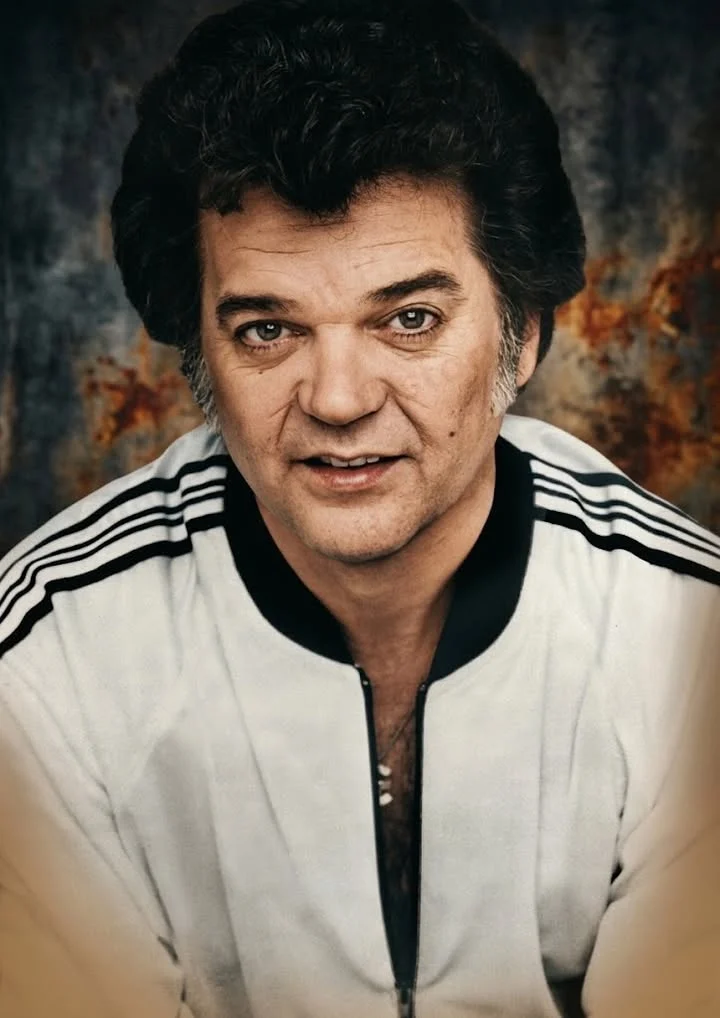
The man who once made arenas tremble with a rock and roll ballad stood in a Nashville lobby with a stack of country records and waited for rejection.
By 1958, Conway Twitty had already conquered the world with “It’s Only Make Believe.” He had money, screaming fans, and the kind of fame that put him beside Elvis Presley on the charts. Yet the applause felt hollow to the young man born Harold Lloyd Jenkins in Friars Point, Mississippi. He did not want another pop stage. He wanted the honest ache of country music.
When he left the pop machine behind and aimed his voice at Music Row, Nashville did not open its arms. Producers heard a fading rock star looking for a rescue. Radio DJs turned away the records he carried by hand. The global chart ruler became a humble visitor knocking on small station doors, asking for three minutes and a fair listen.
The gamble nearly cost him everything. He could have returned to the easy money of rock and roll. Instead he kept driving, kept pleading, and kept believing that country music was not a costume but his true home.
Then legendary Decca producer Owen Bradley heard the raw, growling pain inside the pop star’s voice. In the famous Quonset Hut studio, Bradley stripped away polished orchestration, background choruses, and showy vocal tricks. He surrounded Twitty with crying steel guitars, mournful fiddles, and Nashville’s finest session players. He asked the singer to lean close to the microphone and let the working-man truth in the lyric do the work.
He did not need Nashville to make him a star. He needed Nashville so he could finally become himself.
The transformation arrived slowly, then all at once. In 1968, “Next in Line” climbed to number one and forced the country establishment to welcome him home. What began as a painful outsider journey became a record setting legacy, with 40 number-one Billboard country hits that stood for decades.
Conway Twitty proved loyalty to country music by risking the fame he already had. His heartbreak sounded real because it was real. The quiet studio sessions with Owen Bradley rebuilt not only his sound but also his place in the story of Nashville.