
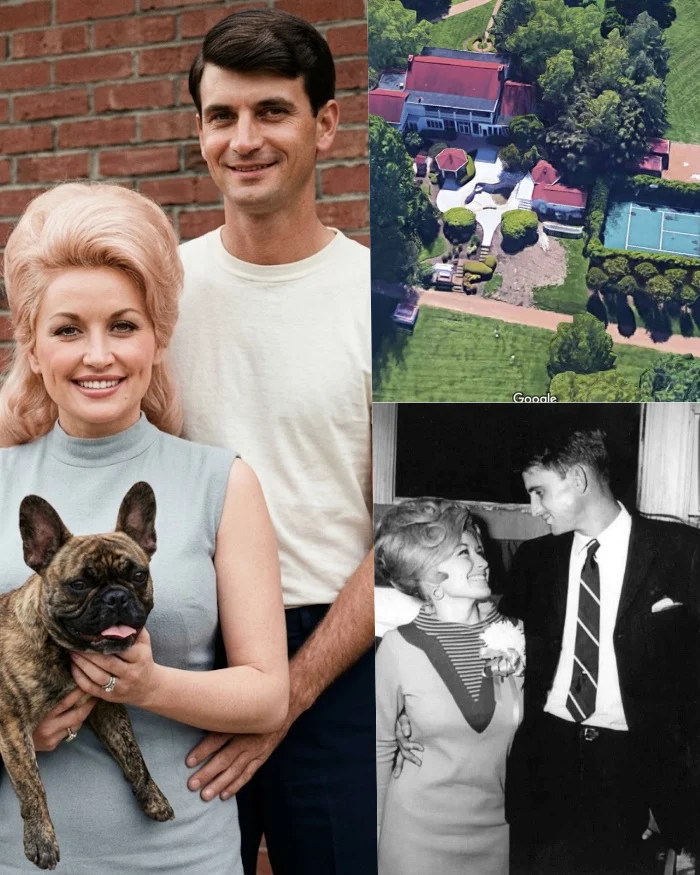
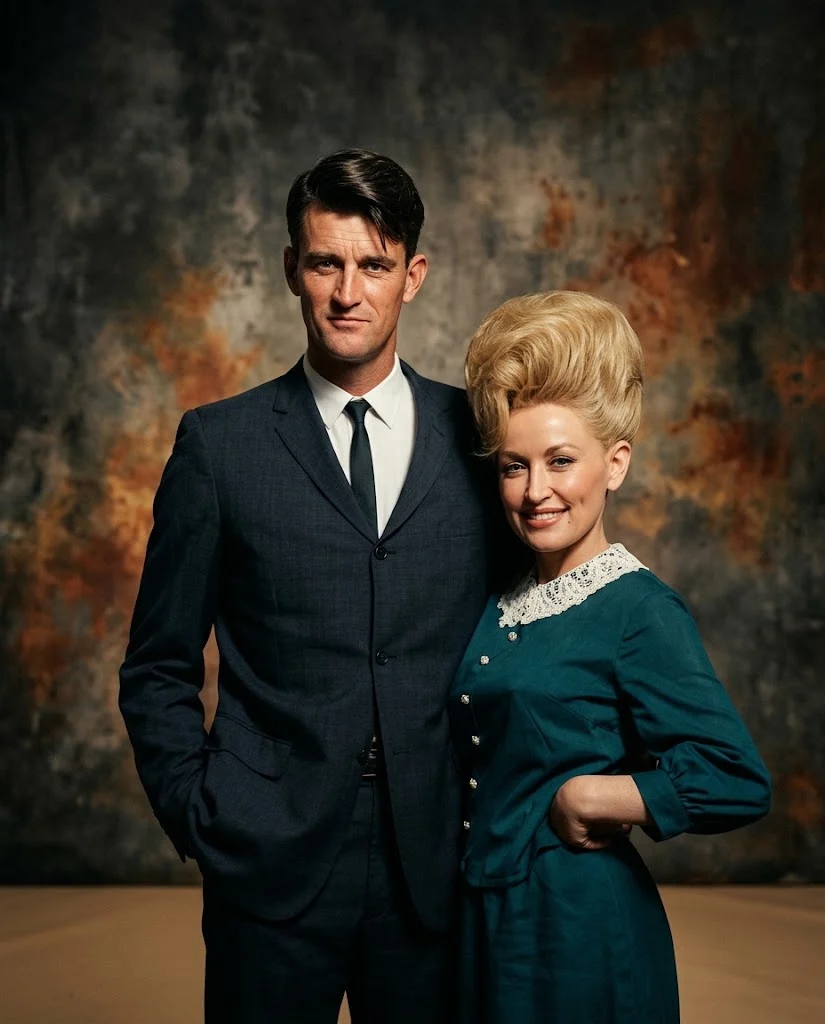
Before the rhinestones and roaring arenas, the most important promise in Dolly Parton’s life arrived after a quiet marriage in Georgia. Carl Dean held back the words I love you until the couple stood as husband and wife on May 30 1966. That single delay turned a private vow into a lifelong anchor for one of the most famous voices in country music.
An eighteen-year-old Dolly stepped into Nashville in the summer of 1964. She met twenty-one-year-old Carl Dean outside the Wishy Washy laundromat on her very first day. He was an asphalt paving contractor with a steady hand and a quiet heart. Their bond did not begin with cinematic speeches. It began with presence.
Dolly lived among the theatrical noise of Music Row. She expected grand declarations. Carl answered with patience. He visited her uncle’s house, sat on a rustic wooden porch as the sun faded, repaired broken things, and listened to her huge dreams without demanding the spotlight.
His silence was deliberate. He did not speak the three words during courtship. For Carl they belonged only to marriage. He said them after the couple drove to Ringgold, Georgia, for a hidden ceremony witnessed by Dolly’s mother. Her record label had urged her to delay a wedding because it could threaten her rising career. They chose privacy instead of promotion.
His love was not a sales pitch. It was a boundary he kept for a lifetime.
That security was tested soon after the wedding. At an early BMI industry dinner the crowd overwhelmed him. On the drive home he told Dolly he loved her and that he would never attend another red carpet event. He kept that promise.
He did not need to stand on a stage to prove his devotion.
While Dolly crossed over from The Porter Wagoner Show to pop superstardom and Hollywood film roles through the 1970s, Carl stayed at their Brentwood, Tennessee, farm. He ran his paving business in anonymity. He did not chase chart records or television specials. He waited for the woman who returned when the tour buses stopped.
Dolly used songwriting as a private bridge across the distance created by her grueling schedule. The world heard her heartbreak anthems. Sometimes she sent a secret letter to her husband through music. She wrote From Here to the Moon and Back to honor his unwavering devotion. She later confirmed it was a direct tribute to Carl.
His refusal to share the spotlight was not absence. It was protection. Carl Dean became the one person in Nashville who did not want anything from Dolly Parton the superstar. His quiet presence gave her a normal grounded home beneath every roaring stage light.
The world got a towering country legend. The girl on the wooden porch always belonged to him.
The empire was built on words and music. The marriage survived because one man understood that the deepest love can be spoken once and lived forever.