

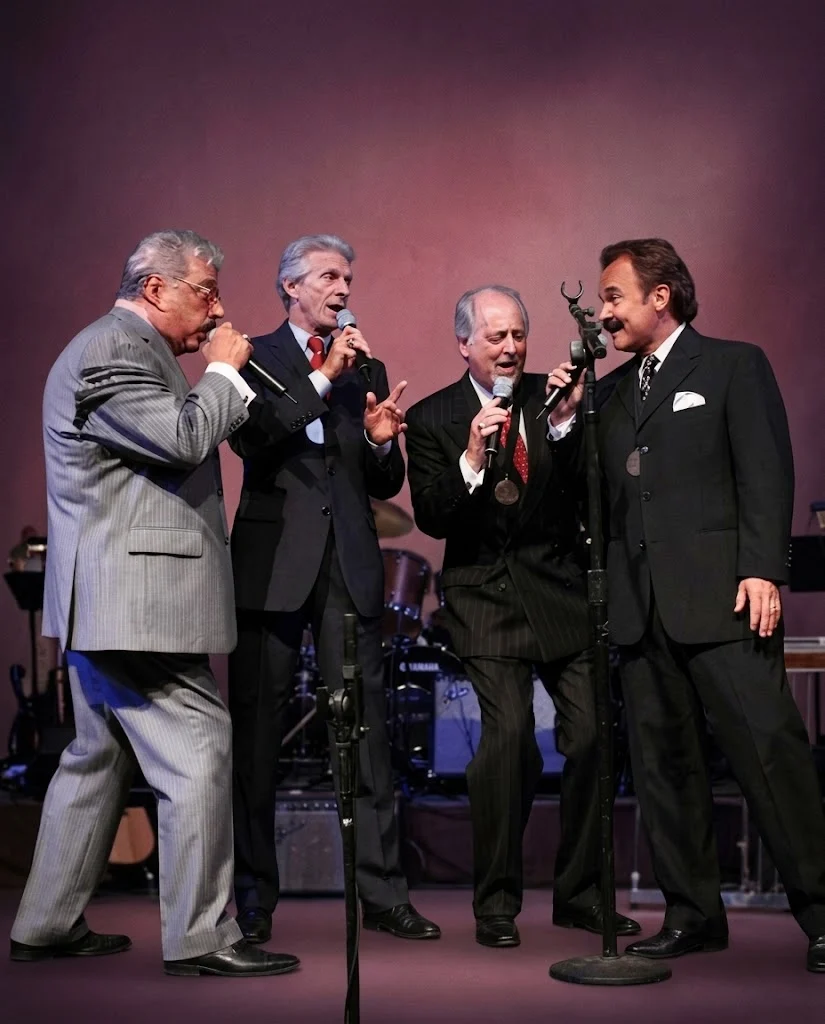
The applause had barely faded when the real test began.
In the spring of 1966, The Statler Brothers stood under the brightest light of the music industry and held two Grammy trophies. Don Reid, Harold Reid, Phil Balsley, and Lew DeWitt came from Staunton, Virginia, and the Shenandoah Valley churches and community halls where their voices first learned to blend.
That night at The 8th Annual Grammy Awards, they won the gold phonographs for Best New Country and Western Artist and Best Contemporary Performance by a Group. The song that opened the door was Flowers on the Wall, written by tenor Lew DeWitt. It ruled country radio, crossed into pop, and sold more than one million copies.
From the podium, they saw their wives and families with proud and tearful eyes. Those people had supported them through quiet years and hard roads long before the world knew their names.
Then the theater emptied.
Sudden fame did not feel like a gift at first. It felt like a heavy crown. The success of Flowers on the Wall became an invisible burden. The group had to prove that they were more than a passing phenomenon.
The recording studio grew tense. Executives and press watched to see if the boys from Staunton could deliver another massive hit. Follow up singles found some chart success, yet they did not capture the same lightning.
For several years, The Statler Brothers endured a frustrating dry spell. They also spent more than eight years on the road as the opening act and backing vocalists for Johnny Cash. That tour life showed them both the majesty and the danger of huge fame.
Many groups break under pressure like that. They chase radio trends, shift blame, and lose the sound that made them special.
The Statler Brothers did the opposite.
They leaned on brotherhood when the spotlight turned cold.
They kept their four part harmonies, their shared work ethic, and their traditional country roots. They refused to change their values just to appease the late 1960s music scene.
The Grammys proved their talent to the world. Surviving the silent pressure proved their staying power to themselves.
That quiet fortitude helped lead them to a historic run with Mercury Records in the 1970s. They did not merely survive one huge crossover hit. They became one of the greatest vocal groups in country music history.
One glittering night in 1966 gave them a golden crown. The next four decades showed whether they could carry it.