

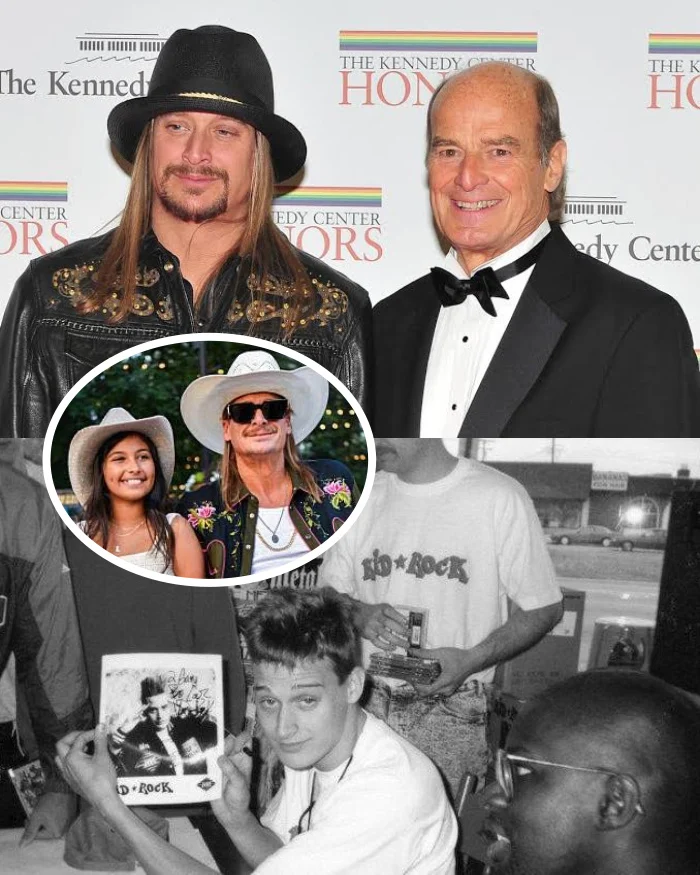
Bob Ritchie could have walked into a cushy office and accepted a life already paid for. Instead he chose sweat and rejection.
He grew up in Romeo, Michigan, inside a family that owned a successful chain of car dealerships. The future Kid Rock had a comfortable home and a clear path to wealth.
His father, William Ritchie, refused to let that path become a shortcut. Behind their home sat a six-acre apple orchard, and it became the training ground for a stubborn work ethic.
Young Bob carried heavy baskets through the neighborhood and knocked on neighbor doors. He faced awkward pitches, tired arms, and front doors that closed without warning.
Every closed door became a lesson in grit.
Those hard dollars taught him how to read people and how to keep standing after a no. The comfort of inherited money never dulled his hunger.
Years later he traded apples for mixtapes. As a young artist trying to break into the music industry, he did not wait for a major label to hand him a contract.
In the late 1980s and early 1990s, gatekeepers did not know what to do with a kid from Macomb County who wanted to blend hip-hop with country and rock.
So he bypassed them. He sold homemade cassettes at car washes, outside small clubs, and in crowded parking lots. He pitched his music straight from the trunk of his car.
The five-dollar sales became his creative fuel. He saved every handful of cash and poured it back into studio time.
By booking late-night sessions when rates were cheapest, he recorded the tracks that formed his early independent catalog.
That street money also paid for record pressing and his first run of merchandise. It laid the foundation for Top Dog Records.
The same hands that once picked apples now handed cassettes to strangers on Detroit sidewalks. The product changed, but the hustle stayed the same.
His empire was not inherited. It was built from calloused palms, closed doors, and trunk sales.