
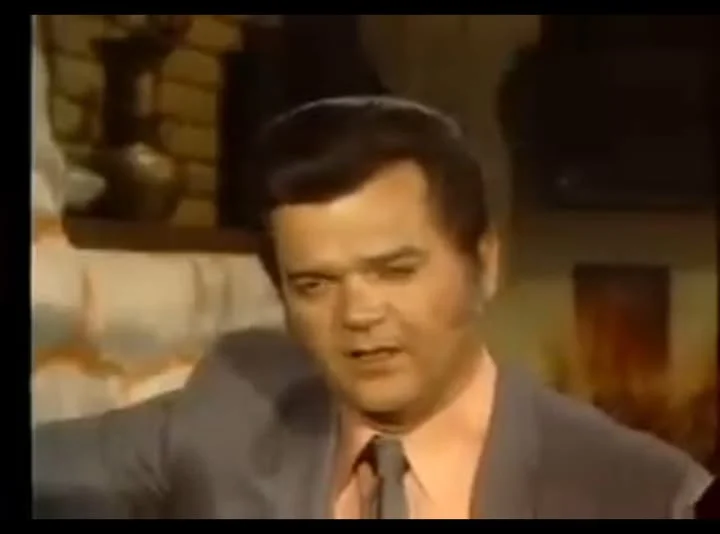
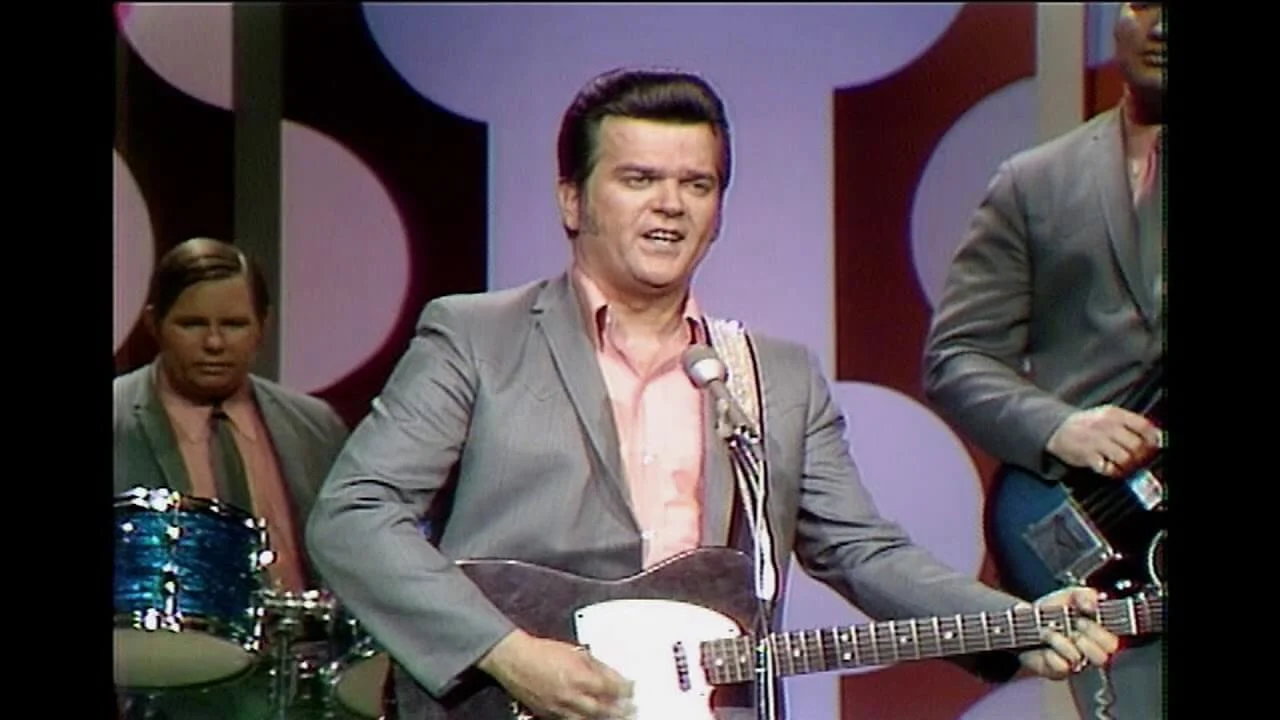
There is a moment in every broken hearted person’s life when the past walks right back in. For the man in Conway Twitty‘s 1971 masterpiece, that moment arrives with two simple words: “Hello darlin’.” But nothing about the greeting is simple. It is a door creaking open to memories of a love lost, a confession wrapped in nostalgia, and a plea for forgiveness that never quite reaches its destination.
Twitty, renowned for his velvet baritone and an uncanny ability to make every syllable ache, poured his soul into this track. It tells the story of a man who stumbles upon his former lover. His heart crashes against his ribs as he forces a calm greeting, but inside he is drowning. The lyrics catalogue his sleepless nights, his tears until dawn, and the crushing regret of having wronged her. It is a universal scene of heartbreak and the desperate wish to turn back time.
“What I’m trying to say is I love you and I miss you And I’m so sorry that I did you wrong.”
Commercially, the song soared to the number one spot on the Billboard Hot Country Singles chart, cementing Twitty’s place among country royalty. Yet its true power lies in its emotional resonance. Listeners across generations see themselves in that encounter—the polite small talk, the hidden trembling, the final goodbye that lingers like smoke.
Through decades of hits, “Hello Darlin'” remains Twitty’s most enduring calling card. Its timeless appeal has inspired countless covers, each artist trying to capture the same raw vulnerability. The song is more than a memory; it is a confession booth where everyone has sat. The music video, though simply produced, amplifies the intimacy of the story, while the lyrics themselves read like a letter never sent.
Conway Twitty did not just sing about heartache. He inhabited it. With “Hello Darlin'”, he gave a voice to that quiet, devastating moment when love and regret shake hands, and then walk away separately, knowing the road behind them is still warm with footsteps.