
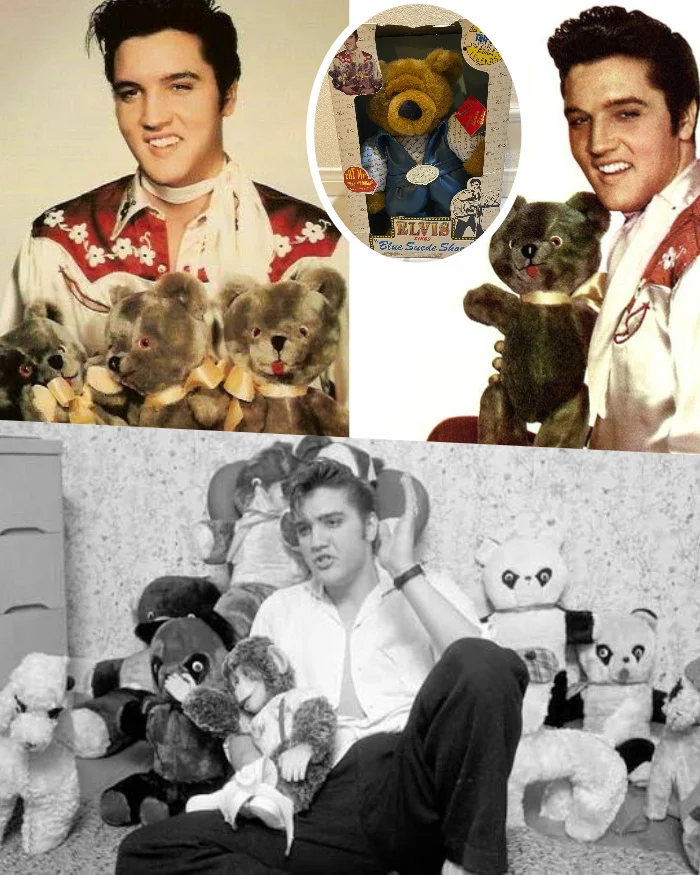
Elvis Presley made rock and roll feel like a hug. In June 1957, he traded danger for cuddles and turned young love into a bright, singable promise. (Let Me Be Your) Teddy Bear became one of his most charming and playful hits, written by Kal Mann and Bernie Lowe. The song compares devotion to the comfort of a teddy bear, and Presley’s buoyant vocal style gave it a catchy rock and roll lift. It climbed to number one on the Billboard charts and appeared in the film Loving You, blending innocence with his magnetic charisma for teenagers and mainstream audiences alike.
The song’s roots lay in Hollywood and Philadelphia. Mann and Lowe, the Philadelphia-based team behind Cameo Records, were asked to supply material for Presley’s second feature film, Loving You, released in 1957. They knew Presley could fuse youthful energy with romance, so they shaped a lighthearted number for his expanding teenage audience.
Presley cut the track on January 24, 1957, at Radio Recorders studio in Hollywood. His core band joined him there, with Scotty Moore on guitar, Bill Black on bass, and D.J. Fontana on drums, plus Dudley Brooks on piano and the Jordanaires on vocal harmonies. The result captured both the breezy feel of rock and roll and the lightheartedness of pop, making it perfect for the film soundtrack and for release as a single.
By 1957, Elvis Presley had become a cultural phenomenon. His transition into Hollywood films allowed him to reach an even wider audience, and songs tied to his movies often doubled as commercial hits. Teddy Bear was designed to complement his on-screen persona in Loving You, where he played a rising young singer navigating fame and romance.
Releasing the song as a single was a natural decision for RCA and Presley’s management. Its playful and innocent tone appealed to parents who might have been wary of his more rebellious numbers, while still capturing the excitement that endeared him to teenagers. It provided a softer and humorous counterpart to edgier hits like Jailhouse Rock and All Shook Up, demonstrating his range and broadening his appeal.
The song also capitalized on his growing reputation as a heartthrob. By likening himself to a teddy bear, a symbol of comfort, loyalty, and affection, Presley reinforced his image as both a romantic lead and an approachable star.
The heart of Teddy Bear is a lighthearted love song that blends humor with sincerity. The singer pleads to be held close, hugged, and cherished like a teddy bear.
Put a chain around my neck and lead me anywhere
That line mixes romance with devotion and suggests a willingness to surrender completely to love. The message stays deliberately innocent, avoiding the rebellious or suggestive undertones of some other Presley tracks. It emphasizes comfort, affection, and light romantic playfulness, making it widely accessible, particularly to younger fans who could enjoy its sweetness without parental disapproval.
Presley’s delivery deepens the charm. His voice carries the record, moving smoothly between crooning and playful exclamations while injecting humor and warmth into every phrase. He delivers the lyrics with a wink in his tone, ensuring the song feels fun rather than overly sentimental. The Jordanaires’ background harmonies add to the cheerful mood, making the track feel like a group serenade.
Musically, Teddy Bear is built on a straightforward rock and roll structure with a bright and bouncy rhythm. Fontana’s drumming provides a steady backbeat, Moore’s guitar offers crisp riffs that keep the track energetic, Black’s upright bass drives the groove, and Brooks’s piano adds melodic flourishes. The Jordanaires’ backing vocals echo Presley’s lines and reinforce the playful atmosphere, giving the song a polished pop feel. His phrasing emphasizes the humor of the lyrics while still conveying genuine affection, striking a balance that made the song appealing to a broad audience. The arrangement keeps things simple, ensuring the lyrics and his delivery remain at the forefront, and its brevity and catchiness made it perfect for radio play and easy for fans to sing along.
The single took off quickly. By July 1957, it had reached number one on the Billboard pop chart and held that position for seven weeks. It also led the country and rhythm and blues charts, reinforcing Presley’s rare ability to achieve crossover success across multiple genres. Internationally, it became a hit in markets such as the United Kingdom, further cementing his global appeal.
Culturally, the song revealed a gentler side of Presley’s persona at a time when debates about rock and roll morality dominated public discourse. While critics condemned his hip-shaking performances as provocative, the track showcased his ability to deliver innocent and charming material that even skeptical parents could accept. It became a staple of Presley’s live performances and television appearances in 1957. Its playful tone made it ideal for engaging audiences, and it reinforced the image of Presley as not just a rebellious rocker but also a versatile entertainer.
Decades on, Teddy Bear still ranks among Elvis Presley’s most beloved songs from the 1950s. Its playful lyrics, catchy melody, and charming delivery ensure its continued presence in compilations of his greatest hits. The song is also frequently remembered for its role in Loving You, where it highlighted his ability to blend music and film seamlessly.
The track’s enduring popularity lies in its universal message of affection and comfort. While not as dramatic as Heartbreak Hotel or as rebellious as Jailhouse Rock, it represents the lighter and more innocent side of Presley’s artistry. It captures a moment when he balanced youthful charisma with mainstream appeal, ensuring his dominance across audiences.
Teddy Bear continues to resonate as a joyful reminder of Elvis Presley’s early years, when his music not only defined rock and roll but also brought smiles and laughter to millions. Its charm and innocence remain timeless, securing its place as one of the King’s most delightful and enduring hits.