
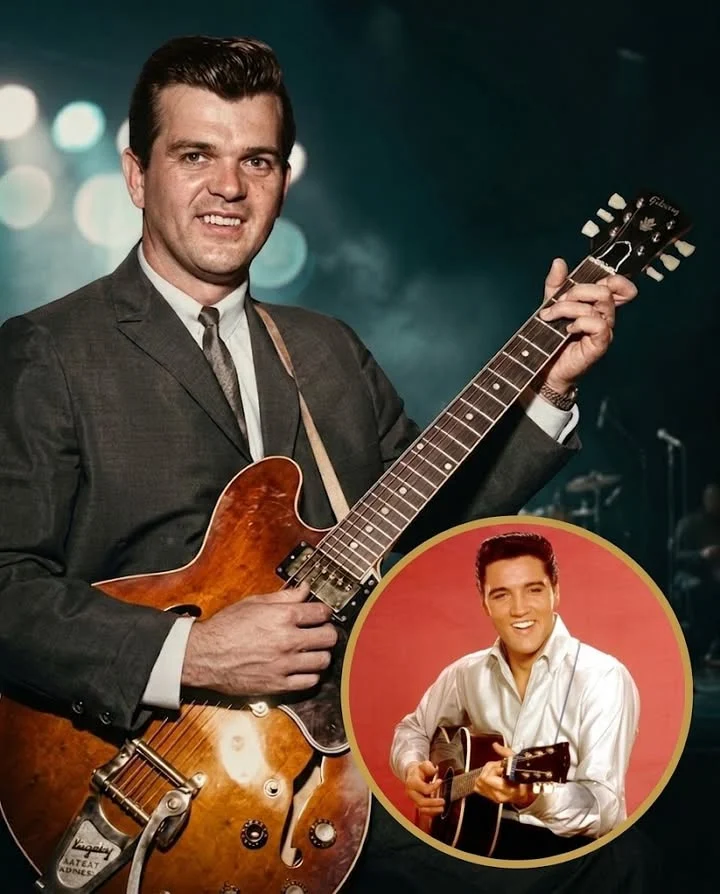
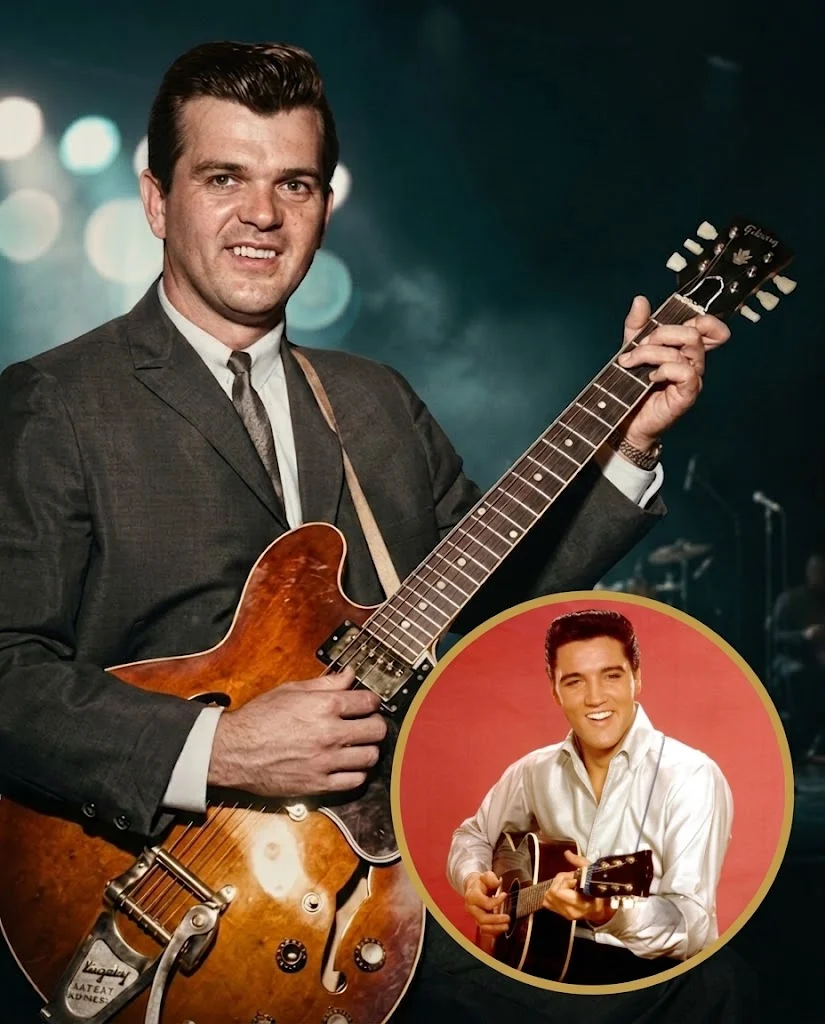
Radio phones lit up in 1958 because listeners believed they were hearing a hidden Elvis Presley record. The voice carried a gravelly ache that sounded like fire and heartbreak, yet the singer was Conway Twitty, a young man refusing to live inside someone else’s shadow.
“It’s Only Make Believe” arrived as a soaring blend of rockabilly edge and country sorrow. The song told the story of a man trapped in a fractured fantasy, knowing his love was entirely one-sided. That desperation gave the track a heavy emotional toll, and the public mistook its intensity for a secret Presley session.
Disc jockeys became caught in the confusion as rumors spread across the airwaves. Fans wanted proof that the King had released an uncredited test record. The answer was far more human. The voice belonged to Harold Jenkins, who had recently reinvented himself as Conway Twitty.
Instead of shrinking under the comparison, Twitty let the curiosity open a door. Listeners who chased the Elvis rumor stayed for the raw sorrow in his delivery. The record climbed the charts on its own merit. It reached the number one spot on the Billboard Hot 100 in the United States and topped the UK Singles Chart.
The song that launched his empire was not built inside a polished Nashville or Memphis studio. In Hamilton, Ontario, Twitty sat on the edge of a hotel bed with drummer Jack Nance. Between sets at the Flamingo Lounge, they turned the quiet pain of a one-sided romance into a sweeping melody.
That small Canadian room became the seedbed for a career that would later produce more than 50 number one country hits. Twitty sang the everyday sorrows of ordinary people with a voice that carried both grit and tenderness. His performance proved he was not merely chasing a rockabilly trend. He was shaping a distinct identity.
My prayer is that you’ll love me too.
The plea felt urgent because the singer sounded as if he had lived it. The mistaken identity could have buried a lesser artist, yet Twitty used the moment to step into his own light. The world did not receive a second Elvis Presley.
The soaring record did not introduce the world to a second Elvis Presley. It gave them the first Conway Twitty.