
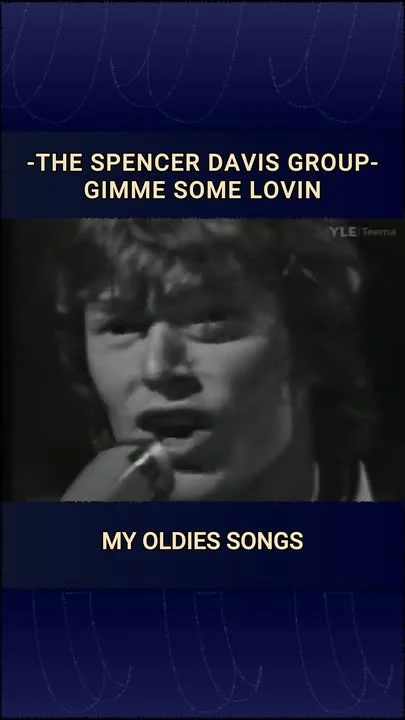
The first few seconds of Gimme Some Lovin’ tell you everything you need to know. A drum pulse that feels like a freight train rolling downhill, a Hammond organ riff that lights up the room like a match in a dark club. That opening is more than an introduction—it is a statement of intent. The Spencer Davis Group, four lads from Birmingham, had distilled British rhythm and blues into its most thrilling form. When the single hit in late 1966, it shot to Number 2 in the United Kingdom and climbed to Number 7 in the United States the following year. More than half a century later, it still sounds like ignition.
The song arrived at a moment when the group was already riding high. After two UK chart-toppers, Keep On Running and Somebody Help Me, the band entered Philips Studios in London during June and September of 1966 to cut what would become their transatlantic breakthrough. The credits belong to Steve Winwood, Spencer Davis, and Muff Winwood, with production handled by Island founder Chris Blackwell. For the American market, a young Jimmy Miller stepped in to remix the track, adding a sheen that would forever split collectors into two camps.
The UK single is raw and muscular, the organ and rhythm section sitting right in your face. The US version breathes differently—tambourine and call-back vocals tighten the groove, the whole mix pulls forward with an urgency that feels almost live. Many listeners swear the American pressing is slightly sped up, a production trick that makes the song pop out of AM radio speakers with a brightness the original lacked.
At the center of it all stands Steve Winwood, barely nineteen years old, singing with a raspy, gospel-tinged authority that belies his age. His Hammond organ riff is one of rock’s most recognizable keyboard figures—octaves pounded with percussive intent, drawbars set for a gritty edge that functions like both rhythm guitar and horn section. Behind him, Pete York drives the band at a relentless tempo hovering around 147 beats per minute, his snare cracking on two and four like a heartbeat. Muff Winwood locks in with a punchy bass line that shadows the organ, while Spencer Davis adds rhythm guitar that punctuates rather than threatens to solo.
The arrangement is a masterclass in economy. There are no wasted notes. The verses ride a lean texture, giving Winwood room to plead and push. The pre-chorus tightens the screws, and when the chorus explodes with stacked harmonies, tambourine, and that hammering organ, the song reaches a plateau of joy that never feels forced. A brief break resets the energy before the final push—no solos overstay their welcome, no bridges break the spell. That discipline is why the track feels like perpetual motion without ever sounding frantic.
Harmonically, the song sits in G major, a bright key that lets the organ cut through radio speakers without harshness. Winwood’s riff plays with flattened sevenths and sixths, implying a dominant-seventh flavor that walks the line between blues and pop. The vocal melody is conversational and direct—a plea for energy and connection after a long day, the kind of universal sentiment that slots perfectly into the soul tradition. And the call-and-response chorus, borrowed from gospel practice, gives the song a communal lift that made it an instant crowd-pleaser.
The song’s afterlife has been extraordinary. Rolling Stone includes it among the 500 greatest songs of all time. Film soundtracks and commercials have kept it in rotation, and the later brass-heavy cover by The Blues Brothers proved that the core idea—organ riff plus call-and-response hook plus piston-drive rhythm—could thrive in any arrangement. The Spencer Davis Group never again reached these heights; the track marks the crest of their chart run, setting the stage for I’m a Man and for Winwood’s eventual formation of Traffic.
For collectors, the transatlantic mix difference remains a point of fascination. The UK single is leaner but punchier in the rhythm section. The US version, remixed by Jimmy Miller, folds in extra percussion and backing vocals, presenting a slightly more hyped live sheen. If you are clearing the track for film or television, knowing which mix you need can save time in licensing negotiations. And for musicians analyzing the waveforms, lining up the two singles side by side reveals subtle shifts in the tambourine’s transient shape, the vocal ambience, and the EQ contour on the organ.
This is a recording that wears its craft lightly. It lasts just under three minutes, but it contains a whole performance philosophy: build a locomotive groove, stamp a single unforgettable timbre on it, and let a great singer testify. The band’s chemistry is audible in every bar—how the drums anticipate the organ’s accent, how the bass locks to the snare, how the guitar splashes chords that feel like exclamation points rather than paragraphs.
If you want to follow the thread, queue up The Spencer Davis Group – I’m a Man for a sister single that doubles down on rhythmic insistence. Booker T. & the M.G.’s – Green Onions offers a cooler, slinkier organ-driven pocket. And Sam & Dave – Hold On, I’m Comin’ brings the same Stax gospel-soul fire. But nothing quite replicates the moment when that Hammond riff first kicked in, pulling listeners into a groove that still sounds like the beginning of something unforgettable.
Key facts at a glance: Recorded at Philips Studios, London, June and September 1966. Written by Steve Winwood, Spencer Davis, and Muff Winwood. Produced by Chris Blackwell for the UK single; remixed by Jimmy Miller for the US release. Peaked at Number 2 in the United Kingdom and Number 7 in the United States. Featured on the US-only album Gimme Some Lovin’, released in March 1967. The original UK single is not included on the British Autumn ’66 LP, a quirk of how labels repackaged hits for different sides of the Atlantic.