
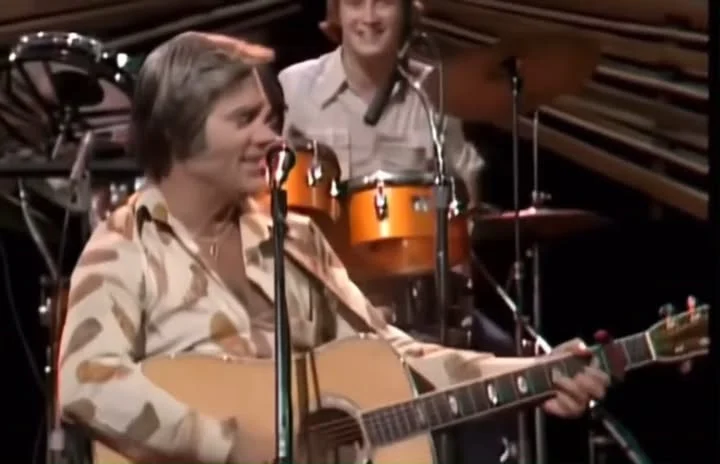

George Jones and the raw ache in his voice turned a simple story of moonshine into an anthem that still hums through dive bars and dusty roads. The year was 1959. America was on the cusp of change, but in the rural pockets of the South, the old ways held tight. And then came “White Lightning”—a song that wasn’t just a hit. It was a confession, a celebration, and a mirror held up to a hidden world.
The man who wrote the words was J.P. Richardson, known to the rockabilly world as the Big Bopper. He was an outsider to pure country, but he understood its heartbeat. His lyrics painted a wild scene—a man desperate for a taste of that fiery corn liquor, a temporary salve for life’s hammer blows. The Bopper’s pen gave the song a gritty, almost reckless honesty.
But it was Jones’s delivery that turned those words into legend. That “barroom baritone” could slide from a smooth drawl into a wounded growl within a single line. He brought a sense of longing and desperation to the music, capturing the complex love-hate relationship so many have with homemade spirits. Every note felt like a man standing at the edge of a dark road, deciding whether to step forward or turn back.
“White Lightning” wasn’t just a party anthem—it was a glimpse into a disappearing culture.
The song arrived at a moment when moonshine still bubbled in hidden stills across the rural South. For those who knew that world, the song was a familiar, almost sacred echo. For others, it sparked outrage. Critics called it a glorification of illegal activity, a moral slip in country music’s fabric. But Jones never flinched. His voice carried the truth of a life where liquor was both poison and medicine.
Despite the controversy, “White Lightning” shot to the top of the charts and cemented Jones as a superstar. It became a signature piece, a testament to his ability to find beauty in broken places. The song refuses to fade. It still plays on jukeboxes, still echoes in old trucks, still reminds us that country music once dared to stare into the darker corners of the soul.
So here’s to the Possum, to the Bopper, and to a song that burns with the same fierce, fleeting heat as the liquor it honors. Just keep your glass legal.