
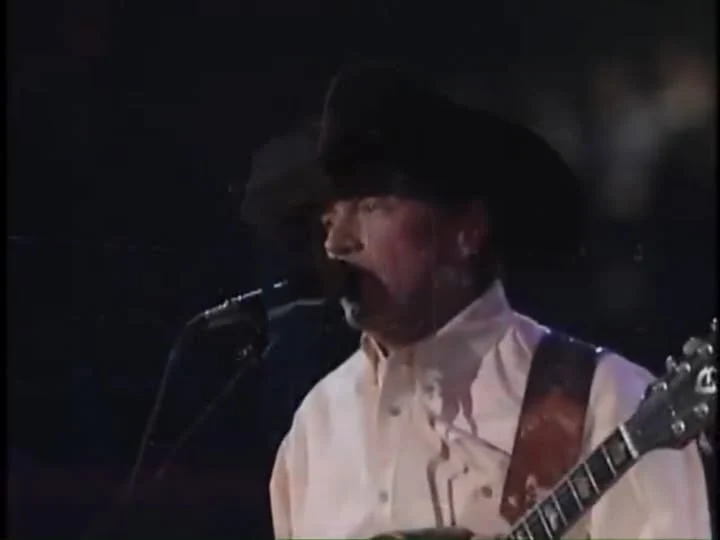
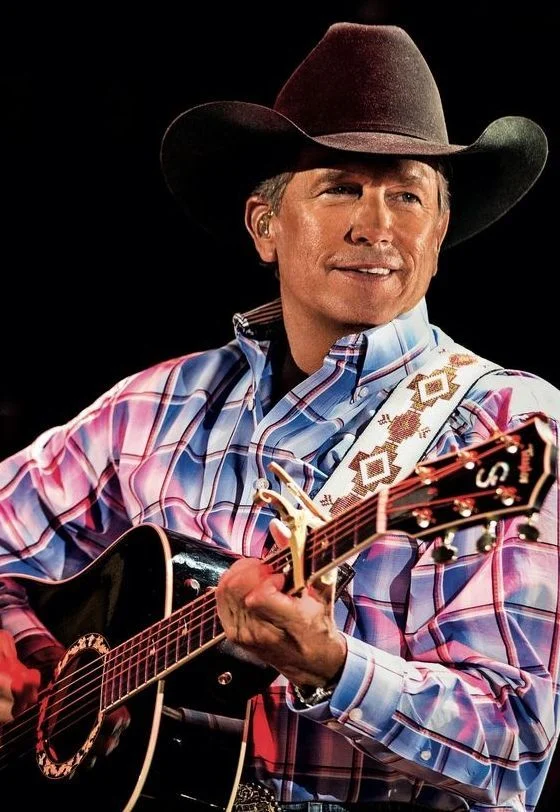
“Well, excuse me, but I think you’ve got my chair.” With those eleven words, George Strait didn’t just start a song—he started a slow-burning masterpiece of romantic deception. The twist arrives minutes later, a confession whispered like a secret: “That wasn’t my chair after all.” In that moment, the entire narrative snaps into place, revealing a charm offensive so clever it feels like eavesdropping on destiny. Released in 1985 as the first single from Something Special, “The Chair” remains one of country music’s most elegant acts of storytelling, a four-minute micro-drama where the payoff is earned not through bombast but through restraint.
Written by the legendary duo Hank Cochran and Dean Dillon, the track arrived at a pivotal moment. By 1985, Strait was already leading the neotraditionalist charge for MCA Records, offering a quiet, Texas-flavored counterpoint to the pop-inflected crossover sounds flooding Nashville. Along with co-producer Jimmy Bowen, he crafted a sound that felt less like a polished product and more like an overheard conversation in a sawdust-floored honky-tonk. The year before, he had earned the CMA Male Vocalist of the Year award. “The Chair” became his seventh No. 1 hit, a testament to the power of vocal nuance and narrative precision over spectacle.
The song’s genius lies in its structural audacity: it has no traditional chorus. The melody line, carried by Strait’s unhurried, buttery-smooth baritone, repeats subtly, but the lyrics are an unbroken, sequential narrative.
The opening notes set the stage with deliberate intimacy. A snare drum ticks softly in the mix, followed by the warm thrum of an upright bass. The steel guitar enters not with a dramatic slide but with a restrained, almost conversational phrase—the sound of a spotlight settling on a face across the room. The rhythm section locks into a relaxed two-step sway, while the acoustic guitar provides an understated strumming foundation. Sparse electric guitar fills act like nervous smiles between lines. The piano adds a soft honky-tonk trill, a nod to the dancehall setting. Every element is carefully placed to keep the listener leaning in.
Strait’s delivery is the real anchor. He doesn’t sing the opening line; he speaks it, placing the listener directly into the scene. His confident yet polite phrasing—the fabricated request for a chair, the offer of a light, the invitation to dance—unfolds with escalating cleverness. As the conversation moves to the dance floor, the dynamic swells imperceptibly. The hi-hat becomes slightly more present; the steel guitar weaves a gentle, melodic sustain. The production is a masterclass in knowing what to leave out.
This is where the song transcends simple narrative. It captures a universal human anxiety: the high-stakes risk of the approach. Most great country songs deal in grand heartache or wild celebration. “The Chair” is about the exquisite tension of a first impression, the moment before any real action. It’s a micro-story containing all the drama of a three-act play. And then the final reveal—the line that reframes the entire preceding experience—hits like a quiet thunderbolt: “Oh, I like you too, and to tell you the truth, that wasn’t my chair after all.”
The whole construction becomes a beautifully crafted ruse, a perfect seduction achieved through politeness and wit. The absence of a traditional chorus suddenly makes perfect sense. The final chord resolves the tension with quiet satisfaction. “The Chair” isn’t a song to sing along to with abandon; it’s a song to lean into, to study like sheet music revealing the subtle architecture of a classical composition. Its power lies in its dedication to traditional country sound, its unhurried pace, and its commitment to narrative fidelity.
“The Chair offers the listener the rare satisfaction of a story perfectly told, where the twist feels both earned and inevitable.”
This track, from an album that helped define neotraditional country, remains a high-water mark not just for George Strait but for the genre itself. It is a timeless, four-minute masterclass in building genuine intimacy between an artist, a listener, and a story. The charm is in the conversation, the thrill in the reveal, and the staying power in the King’s effortless delivery.
Listening Recommendations
Randy Travis – “Forever and Ever, Amen” (1987): Shares a similar neotraditionalist clarity and romantic devotion, utilizing a clean, simple production style.
Merle Haggard – “Today I Started Loving You Again” (1968): Possesses the same unhurried pace and focus on subtle, conversational phrasing within a classic country framework.
Alan Jackson – “Chattahoochee” (1993): While more uptempo, it features the same commitment to concrete, evocative storytelling and clear, neo-honky-tonk instrumentation.
Conway Twitty – “Hello Darlin’” (1970): Another classic built on a dramatic, one-sided conversational opening, drawing the listener immediately into a private moment.
Vince Gill – “I Still Believe in You” (1992): Exemplifies the smooth vocal control and emphasis on musical subtlety that characterizes Strait’s finest balladry.