
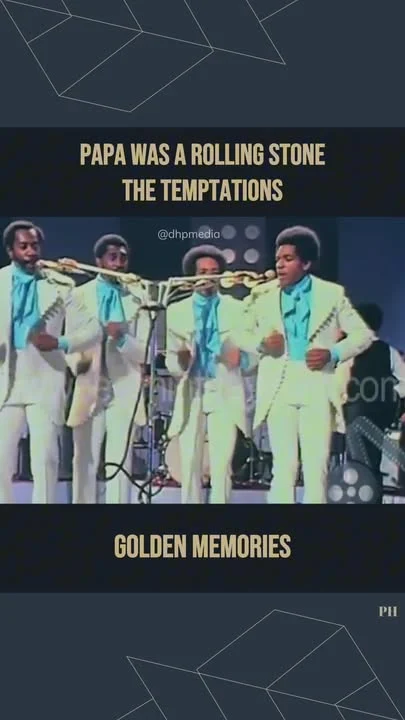
There are songs that entertain, and then there are songs that haunt you. “Papa Was a Rolling Stone” by The Temptations belongs in the second category. Its iconic opening bassline—a slow, deliberate crawl—feels less like an introduction and more like a summons. Before a single word is sung, you’re already trapped inside a world of tension and unresolved shadows. It’s a masterclass in atmosphere, a record so dense with texture that it rewards listeners decades after its release.
While the song functions as a masterpiece in isolation, it exists within a bigger picture. The track anchors All Directions, the group’s 1972 studio album, a project that saw them pivot from polished Motown harmony to something far grittier and more experimental. Under the visionary guidance of producer Norman Whitfield, the Temptations embraced the burgeoning sounds of psychedelic soul, a genre that fused the raw energy of funk with the introspection of rock and the theatricality of orchestral pop. This wasn’t the same group that charmed the charts with “My Girl” and “Ain’t Too Proud to Beg.” This was a band shedding its skin and stepping into the unknown.
In the decades since its release, the song has not merely endured. It has become a cultural reference point, a template for ambitious R&B, and a stark, beautiful meditation on the wounds left by absent fathers. It was rewarded handsomely in 1973 when it won three Grammy Awards, including Best R&B Vocal Performance by a Duo, Group, or Chorus and Best R&B Instrumental Performance for its celebrated instrumental counterpart. To listen to “Papa Was a Rolling Stone” is to hear the sound of a genre pushing itself beyond the boundaries of a three-minute pop single.
The genius of the track is how the music itself tells the story. The sparse arrangement feels like a house filled with echoes.
What truly sets this piece apart is the sheer craft of its soundscape. The composition is an intricate puzzle, with each instrument playing a vital narrative role that builds toward a devastating emotional payoff.
At the heart of it all is that unforgettable electric bass riff. It creeps forward with a hypnotic, almost paranoid energy, a heartbeat for the song’s sorrow and fury. The wah-wah guitar weaves through the mix like an interrogator, its tones sharp and conversational, never overstaying its welcome but always present. Beneath these driving forces lies a cinematic string arrangement, alternating between lush, swelling crescendos and spine-tingling, quiet flourishes. The horns, too, are characters in their own right, moving from muted, bluesy laments to bold, defiant blasts. And then there’s the piano, subtle yet essential, providing a glimmer of melodic clarity against the darkness of the funk groove.
Lyrically, the record confronts the legacy of a father’s irresponsibility. It asks hard questions about memory and truth. The vocalists—the late Dennis Edwards, Melvin Franklin, Otis Williams, and Richard Street—deliver these verses with a combination of resignation and bitter rage. The narrative is left deliberately open-ended, with the final verses revealing that the only concrete truth was that the father left his family with nothing. This refusal to provide easy answers, to leave the listeners with more questions than solutions, is what elevates it from a mere pop song to a work of lasting artistic significance.
If the song leaves you wanting more of that distinct blend of storytelling and innovative instrumentation, there are several companion pieces worth exploring. The Temptations’ own “Ball of Confusion (That’s What the World Is Today)” offers a similar dose of psychedelic funk infused with social commentary. Marvin Gaye’s “What’s Going On” provides a more tender but equally profound look at the societal issues of the era. Stevie Wonder’s funky, rhythm-driven “Superstition” captures that same energetic instrumental interplay. For a deeper dive into family dynamics on the dance floor, Sly and the Family Stone’s “Family Affair” is an essential listen. And if you prefer the purely instrumental side of things, Kool & The Gang’s “Summer Madness” offers gorgeous, mellow textures with a similar sense of expansive orchestration.
Ultimately, “Papa Was a Rolling Stone” isn’t just a track you play. It’s an environment you enter. The song’s influence travels through generations, from the soul acts of the seventies to the hip-hop producers of the nineties, proving that when raw emotion meets impeccable musical craft, the result is truly ageless. It remains a cornerstone of the All Directions album and a crown jewel in the Motown catalog. It is a reminder that soul music was never just about dancing—it was also about bearing witness to the complicated truths of the human heart.