
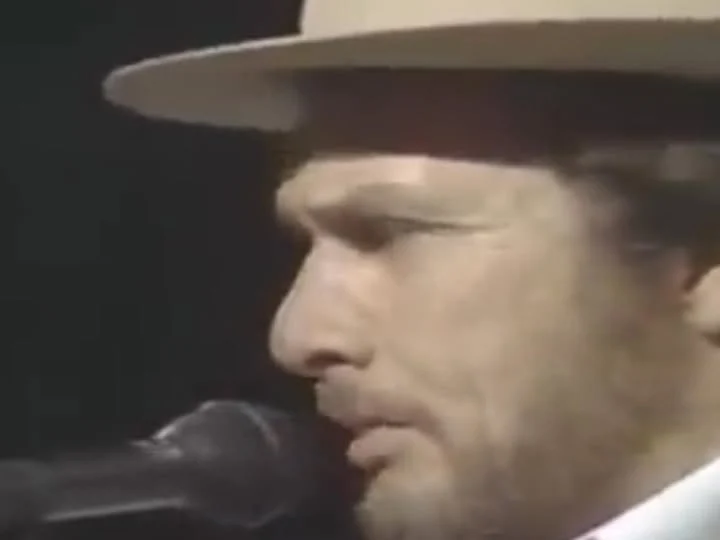
Merle Haggard once sang about a man so weary of concrete and crowds that he begged to be turned loose somewhere in the middle of Montana. That raw plea, delivered with a world-weary rasp, forms the heart of Big City, a song that transcends its country roots to speak to anyone who has ever dreamed of breaking free. The opening line hits like a sigh of exhaustion:
I’m tired of this dirty old city.
Immediately, Haggard pulls listeners into a world of endless work and too little play, where sidewalks feel like traps and the only hope lies in wide open spaces.
Released in 1981 as the title track of his album of the same name, Big City marked a pivotal shift in Haggard’s career. He had just moved from Capitol Records to Epic Records, a change that sparked a burst of creative energy. For this album, Haggard wrote eight of the twelve tracks, pouring his own frustrations and observations into the lyrics. The song quickly became an anthem for the working class, climbing to number one on the Billboard Hot Country Singles chart in April 1982. Its success was no accident; the narrative of longing for a simpler life resonated across generations and social backgrounds.
The protagonist of Big City is a man trapped in the urban grind, surrounded by “entirely too much work” and “dirty old sidewalks.” Haggard masterfully paints this scene with gritty imagery, yet the song never loses its sense of hope. The chorus offers the dream of escape:
Think it’s time you guys like the headphones turn me loose set me free somewhere in the middle of Montana.
Montana here becomes more than a place—it symbolizes the American Dream of open spaces and personal freedom, a stark contrast to the claustrophobic city life. This theme of redemption through escape is one of Haggard’s hallmarks, weaving personal struggle into universal longing.
Musically, Big City is a testament to Haggard’s versatility. The steady beat and mournful pedal steel guitar create a melancholic backdrop, while his signature twangy guitar cuts through like a thread of hope. The instrumentation mirrors the narrative’s emotional arc, moving from weariness to a quiet resolve. Haggard’s vocals, rough yet tender, carry the weight of a man who has seen too much but still believes in the possibility of a new beginning.
More than four decades after its release, Big City remains a poignant ballad. It reminds us that the desire for freedom, for a life beyond the ordinary, is timeless. Haggard’s ability to transform a simple story of escape into a deeply emotional experience is what makes him a legend in country music. As the song fades, the plea for liberation lingers—a call for all of us to seek our own Montana, wherever that may be.