
The first time you hear it, it feels like a secret whispered directly into your ear. Years later, it still arrives with the same force. The amber glow of a dashboard radio catches the edge of memory and suddenly you are somewhere else entirely. A young woman on a commuter train presses her forehead against the cold glass, exhausted from two night shifts. The weight of the next twelve hours presses down on her shoulders. And then the song begins.
The verse wraps around her like a familiar ache, intimate and close. Rob Grill sounds almost apologetic, describing worries that make a person weep. But then everything shatters into light. The chorus hits like a door kicked open and the whole world changes color. Sha la la la la la, live for today. She lifts her chin without thinking. The permission has been granted.
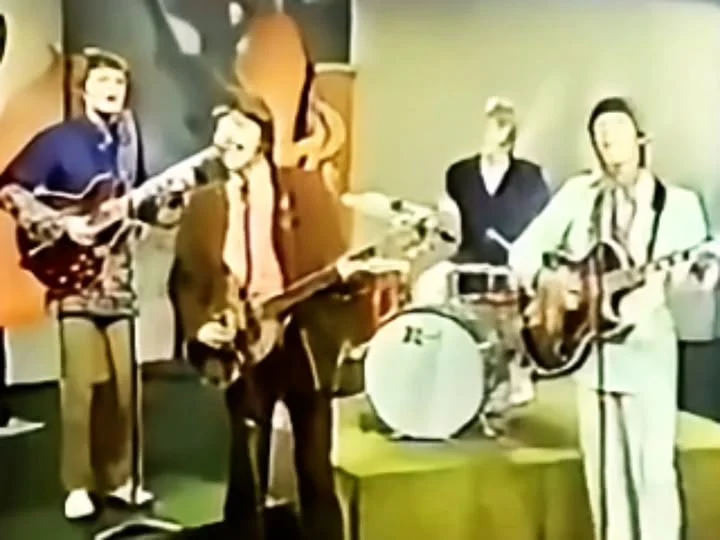
This moment belongs to The Grass Roots, a band that started as a producer’s experiment and became something far greater with a single track. The song arrived in 1967, a year of chaos and beauty, and it captured both sides of that tension. The verse holds the fear. The chorus offers the escape. The entire experience lasts two minutes and thirty five seconds, just long enough to remind you that the future can wait.
The birth of a classic
The story of this song begins not in Los Angeles but in Italy. The original was a 1966 hit called Piangi con me by the band The Rokes. Songwriters and producers P F Sloan and Steve Barri took that mournful Italian ballad and transformed it completely. They draped it in the textures of the American counterculture, bright and conflicted and urgently alive. The result became the title track for the band’s second album, released in July 1967, and it marked the debut of the lineup featuring Rob Grill on lead vocals.
The Grass Roots had struggled to find their footing before this moment. Earlier singles had not connected. But this track soared into the US Billboard Hot 100 Top 10. It sold a million copies and earned a gold disc. The session work was handled with the precision of the era’s finest musicians. Sloan himself played guitar alongside members of the legendary Wrecking Crew, including drummer Hal Blaine and keyboardist Larry Knechtel. The sound was polished but never sterile, a studio masterwork that still carried the rough edges of a real band finding its voice.
The architecture of tension
The opening riff is deceptively simple, a nervous acoustic guitar pattern with tambourine shimmering underneath. Grill’s voice stays low and close, almost confessional. Minor keys color the mood and the folk rock introspection feels deeply personal. You can hear the universality in it, the way every human being has stared at the ceiling at four in the morning wondering how to face the day.
Then the explosion arrives.
Nothing changes in tempo but everything changes in energy. The arrangement swells into a majestic wall of sound. Harmonies layer upward into the stratosphere, carrying the central command with them. There are no strings or horns here. The sweep comes entirely from multi tracked voices and instruments working in perfect unison. The piano adds harmonic richness beneath a short screaming electric guitar break that feels purely cathartic. This is what separates a good pop single from a timeless anthem, the ability to capture a duality that never fades.
The song manages to capture the duality of 1967, the fear of a chaotic world and the ecstatic defiant desire to seize the present moment, all within two and a half minutes.
The quiet power of a singular moment
Think about the micro story embedded in this sound. A tired worker on a rainy Tuesday morning. A student overwhelmed by deadlines. A parent sitting in a parked car before walking through the front door. The melancholy verse matches their exact state of mind. But the chorus offers the counterargument. It says yes, the world is heavy and uncertain. And still, you get to choose this moment. You get to live inside it fully.
The contrast between the tight minor key verse and the boundless major key adjacent chorus serves a deeper purpose. It mirrors the internal decision we all have to make, the choice to set down the baggage of tomorrow and inhabit the present. The music does not just describe this choice. It performs it. It becomes the escape route.
This is why the song has never aged. The production quality is so meticulous that it rewards careful listening. Many people invest in studio headphones to hear the subtle details in tracks like this one, the ghost of a tambourine in the right channel, the way the piano creeps in just before the chorus breaks. The sonic density is a gift that keeps giving with each new listen.
The final chorus fade out is a masterpiece of sustained energy. It does not drop off abruptly. It diminishes into the distance like a promise still echoing. The song leaves you with the intoxicating dangerous invitation of its title. Live for today. It is a rallying cry dressed up as a Top 10 single, a rush of musical adrenaline that remains the most essential entry point into everything The Grass Roots ever created.
Sometimes the most complex emotional truths arrive in the simplest packages. A sha la la la la la can carry more weight than a thousand carefully chosen words. Decades later, the message remains utterly current. The song still sounds like now. It still offers the same permission. And every time it plays, someone somewhere lifts their chin and decides that the future can wait just a little bit longer.