
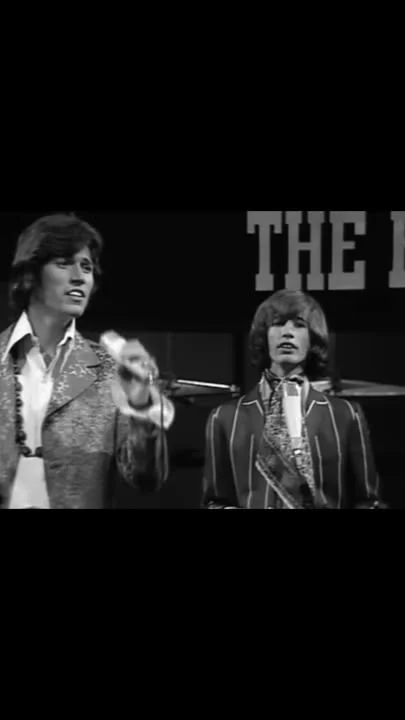
Great songs don’t beg for your tears. They build a room where you can decide whether to cry.
That room exists in To Love Somebody, the 1967 single that announced the Bee Gees as architects of heartbreak. Released on Bee Gees’ 1st, the album that introduced their transatlantic audience to harmonies sharp as gulls and ballads with grown-up sorrow, the track stands as a quiet monument. It was produced under the guidance of manager Robert Stigwood and Ossie Byrne, with Bill Shepherd shaping the orchestral contours that remain one of the song’s signatures. Polydor handled the UK release, Atco the US, both betting on a band whose pop instincts were already bending toward something grander.
The lore around the composition carries its own gravity. Barry Gibb and Robin Gibb are credited as writers, and many sources note the tune was reportedly intended for Otis Redding. He never recorded it, but the intention matters. It explains the grammar of the melody, which leans into vowel-forward phrases and long open tones that invite a soul interpreter’s generosity. You can feel it in the refrain, the way the line asks the singer to push air across a gentle crest rather than sprint up a hill. This is not melodrama. It is proportion.
What makes this piece endure is the marriage of restraint and monumentality. Listen to the arrangement. A steady rhythm section refuses to hurry. Strings arc rather than gush. Backing vocals shade rather than insist. Barry Gibb’s lead is burnished but not showy, with a vibrato that tightens slightly at the end of sustained notes. He sounds close to the microphone, yet not intimate in the confessional sense. He is a storyteller who keeps just enough distance to keep the story from consuming him.
Consider the song’s afterlife. Covers by Nina Simone, Janis Joplin, Al Green, Jimmy Somerville, and Michael Bolton testify to a composition built for endurance. Each interpreter pulls a different thread. The simmering ache. The gospel prolongation. The torch song clarity. This is telling. When a song can be repainted that many times without losing its face, the original has done something architectural rather than merely decorative.
Nearly sixty years later, the recording still clicks in modern rooms. Small speakers. Large theaters. A family living room with aging home audio gear. The proportions hold. The track offers one of the most disciplined performances in pop history. The organ provides a soft bed that behaves like a tide, pulling phrases forward. A lightly picked guitar answers with a few well placed consonants of sound. Bill Shepherd’s strings enter with a swell so measured you can practically see the bow hair tighten. They do not sweeten the melody. They underline its architecture.
There is a marvelous humility to the rhythm section. The bass plays like a patient counselor, nodding on the downbeat, adding small upward glances as the harmony pivots. Drums are dry and focused, brushes or light sticks keeping texture on the snare without polishing the pulse to a shine. This is pop engineered for emotional transfer, not spectacle. Even the tiniest mix choices feel purposeful. The reverb tail is short enough that phrases don’t blur. The room keeps the voice centered without isolating it from the band. On good studio headphones, the stereo field opens like a proscenium. Voice in the pocket. Strings on gentle wings. Organ and rhythm tucked into their lanes with civil discipline.
The song behaves like a standard without impersonating one. The melody is simple but the intervals are not childish. The chorus resolves with the satisfaction of truth rather than the dopamine of novelty. It lives in a mid tempo that defies fad. The lyric sketches longing with an economy that borders on aphorism. The Bee Gees will later be associated with glitter and feverish dance floors. Here the glamour is grown up. A pressed suit, not a sequined jacket.
There is a moment near the end when the lead vocal leans into a phrase with a little more muscle. Not a shout. A brace. The strings tuck under him. The organ pushes a half step more air. For a bar or two you feel a private catharsis. Then the track settles, as if exhaling. The final seconds do not announce resolution. They allow it.
For those seeking similar experiences, consider these six tracks that share the same orchestral soul balladry. The Righteous Brothers with Unchained Melody. The Walker Brothers with The Sun Ain’t Gonna Shine. Dusty Springfield with You Don’t Have to Say You Love Me. Otis Redding with I’ve Been Loving You Too Long. The Bee Gees themselves with Words. And The Beatles with Yesterday. Each demonstrates the power of understatement and the architecture of a melody that knows exactly how to hold space.
Lyrics
There’s a light
A certain kind of light
That never shone on me
I want my life to be lived with you
Lived with you
There’s a way everybody say
To do each and every little thing
But what does it bring
If I ain’t got you, ain’t gotYou don’t know what it’s like, baby
You don’t know what it’s likeTo love somebody
To love somebody
The way I love youIn my brain
I see your face again
I know my frame of mind
You ain’t got to be so blind
And I’m blind, so, so, so blind
I’m a man
Can’t you see what I am
I live and I breathe for you
But what good does it do
If I ain’t got you, ain’t gotYou don’t know what it’s like, baby
You don’t know what it’s likeTo love somebody
To love somebody
The way I love youYou don’t know what it’s like, baby
You don’t know what it’s likeTo love somebody
To love somebody
The way I love youYou don’t know what it’s like, baby
You don’t know what it’s like
To love somebody
If you are coming to the track for the first time, try two listens. First as a civilian. Let the melody find its place and resist the urge to analyze. Second as an eavesdropper in the studio. Focus on entrances and exits. How the strings never overstay. How the backing vocals appear like lanterns on a path. How the drum accents avoid cliché. You will hear choices made by musicians who trust the song more than their egos.
And that, more than any statistic, explains the song’s longevity. Charts can tell you who listened. They cannot teach you why a tune keeps returning. To Love Somebody returns because it does not mistake volume for conviction. It knows that love, in practice, is not the fireworks display but the way you hold yourself steady while the wind argues at the door.