
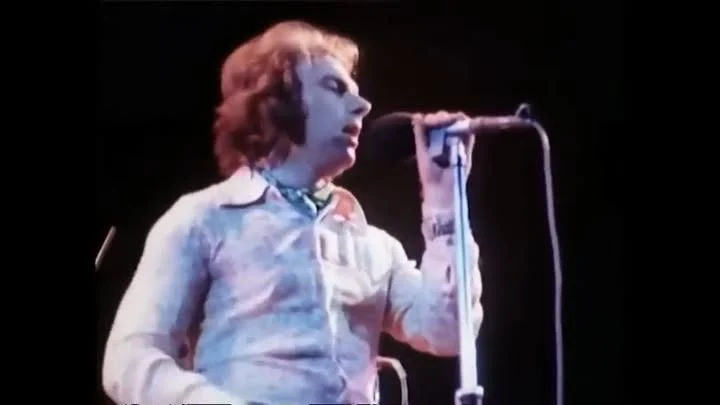
There is a moment in every summer when the air becomes thick with memory and the cicadas seem to sync with a three-chord pulse. That pulse is Van Morrison’s “Brown Eyed Girl”. It does not ask for your attention. It simply appears, from a car stereo or a backyard speaker, and suddenly you are seventeen again, barefoot on grass that will never be quite as green. This song is not a piece of music. It is a time machine disguised as a pop single.
The strange journey of this 1967 record began not with a seamless vision but with a reluctant leap. Morrison had just escaped the loud, chaotic world of his Belfast band Them, the same group that gave the world the raw garage anthem “Gloria”. At twenty one, he was tired of the industry grind. Producer Bert Berns coaxed him to New York. Berns knew radio hits. He had already produced Morrison on Them’s “Here Comes the Night”. Now he signed the young singer to his label, Bang Records. The result was a two day session that produced the hastily assembled debut album Blowin’ Your Mind!. Morrison later disowned both the label and the album. Yet from that fraught moment came the song he could never escape: “Brown Eyed Girl”. It became his permanent calling card, a pop artifact he tried for decades to outrun.
The greatest pop songs don’t just recount a memory. They become the memory itself.
The music itself is a masterclass in mid sixties efficiency. The band played with a crispness that owed a clear debt to calypso and Latin rhythms, the sounds Berns loved. There is no sprawling reverb, no psychedelic haze. This music was meant to be heard right now, blasting from a dashboard. Gary Chester’s drums are light and driving. Hugh McCracken’s acoustic rhythm guitar grounds the track in a folk rock undertow. Then Al Gorgoni’s electric lead guitar cuts through with a joyous descending line that hooks the chorus. It is an instant classic. Garry Sherman’s organ fills the middle frequencies with a bright, almost circus like tone, perfectly sunny. The absence of a prominent piano line lets the organ and rhythm define everything. And the backing vocals from The Sweet Inspirations, a group that included Cissy Houston, add a warm soulful glow that transforms a boyish memory into something spiritual.
At the center of it all is Morrison’s voice. He was only twenty one but already possessed a world weary rasp. Here that rasp is infused with youthful exuberance, a passionate yelp that explodes on lines like “Do you remember when we used to sing sha la la la la la la la la la la te da?”. It is a vocal performance of glorious, unselfconscious abandon. His phrasing is conversational and immediate, but the sheer power hits like catharsis.
The lyrics, originally titled “Brown Skinned Girl” before a tape box error changed it to the commercially safer “Brown Eyed Girl”, are wistful reflections on a summer romance. They are sensory vignettes: the sun setting, skipping stones, the sound of a radio, “making love in the green grass”. That last line was famously censored for being too suggestive. A detail that now feels absurdly quaint. The song is not explicit. It is tender. It is a poem about the realization that some moments are lost forever once they are lived.
The irony of the track’s enduring status is that it represents everything the later, jazz obsessed Morrison rebelled against: the quick hit pop single, the commercial constraint, the necessary compromise. Yet it became his essential access point. It is the moment the raw spirit of Astral Weeks first flickered into mass consciousness. The song peaked in the Top 10 of the Billboard Hot 100 and has since become one of the most ubiquitously played songs of the 1960s. It is a testament to its democratic appeal.
For those building a high fidelity listening setup, a track like this reveals its true depth through premium audio. On a tinny speaker it sounds fine. Through careful calibration the warmth emerges, the backing harmonies separate, the interplay between rhythm and lead guitar becomes clear. Aspiring musicians also see the core structure laid bare, which is why guitar lessons often focus on this particular blend of chords and rhythm.
Today “Brown Eyed Girl” is less a song and more a cultural shorthand. It appears when a road trip stretches late and someone needs pure uncomplicated joy. It is the wedding slow dance that isn’t slow, a spontaneous burst that connects generations. It is the eternal echo of a time when innocence and adult experience first collided in a fleeting unforgettable summer. Three minutes of perfect melancholy disguised as carefree abandon.
If you love this sound, try these
The Box Tops – “The Letter” (1967). Shares the urgent soulful grit and efficient pop structure.
The Young Rascals – “Groovin’” (1967). Captures the same sun dazed easy going romantic mood.
Aretha Franklin – “I Never Loved a Man (The Way I Love You)” (1967). Features The Sweet Inspirations on backing vocals.
Otis Redding – “(Sittin’ On) The Dock of the Bay” (1968). Offers a similar wistful melancholy reflection on past love.
The Beatles – “Here Comes The Sun” (1969). Presents a comparable feeling of lightness and simple optimism.