
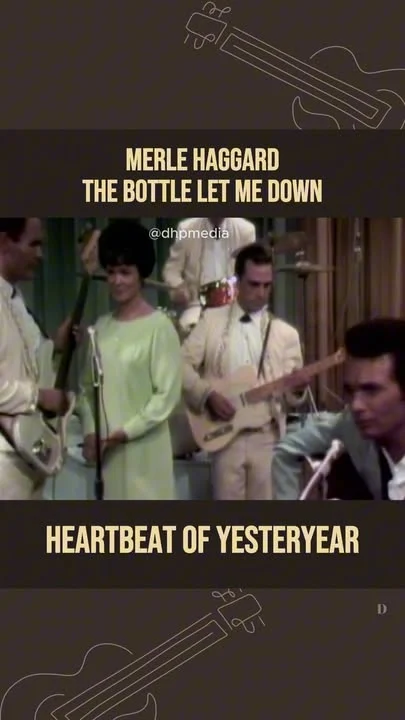
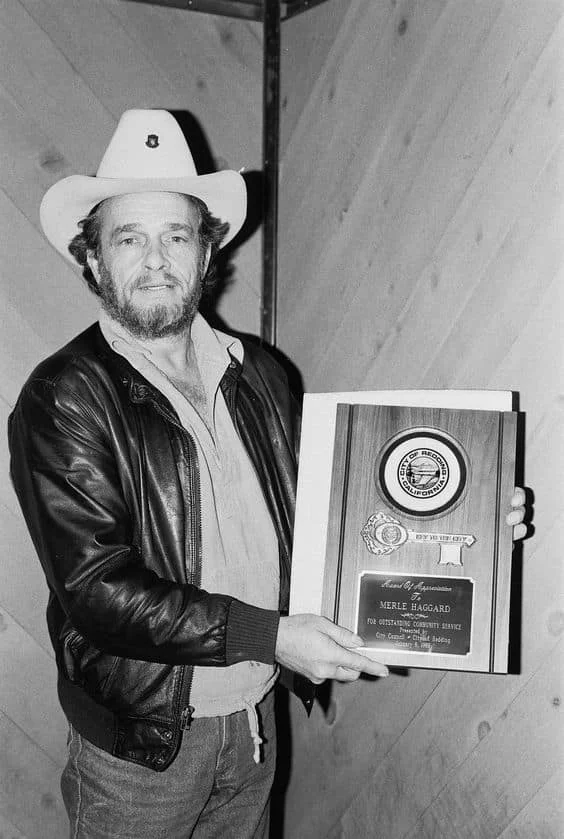
There is a moment in every country music fan’s life when a song cuts through the noise and settles into the bone. For millions, that moment arrives with the first aching notes of Merle Haggard‘s “The Bottle Let Me Down”. Decades after its 1966 release on the album “Swinging Doors”, the track still feels like a confession whispered in a dim barroom, a raw nerve exposed under neon light.
The genius of Haggard lies not in glamorizing pain but in laying it bare. The song opens with a man who leaves the bar feeling nothing at closing time—only to realize the numbness is a lie.
“Each night I leave the barroom when it’s over / Not feeling any pain at closing time”
These lines immediately pull the listener into a cycle of heartbreak and temporary escape. The bottle becomes both a crutch and a betrayer, a friend who always lets you down when the real hurt surfaces.
What makes this track timeless is its refusal to stay within the bounds of country music. Haggard’s storytelling is universal. Anyone who has known the sting of loss or the hollow comfort of a quick fix will recognize themselves in the protagonist’s downward spiral. Haggard sings with a weariness that feels earned, his voice carrying the weight of countless nights spent chasing forgetfulness. The lyrics,
“The bottle’s the only friend I’ve got left now / And I’m down to my last dime”
capture the desperation of someone who has run out of options and hope.
Yet beneath the melancholy, there is a thread of self-awareness that elevates the song from mere sadness to profound human truth. Haggard does not celebrate the bottle; he exposes its failure. The protagonist knows he is trapped, and that awareness becomes the faintest glimmer of resilience. It is not a story of triumph but of endurance—a man who keeps walking into the bar because he has not yet found another way.
Musically, the arrangement amplifies the emotional weight. The mournful pedal steel guitar weeps alongside Haggard‘s vocals, while the twangy guitars evoke the lonely echo of a honky-tonk after last call. Every note seems to bend with longing, transporting the listener to a roadside bar where the jukebox plays on and the night stretches into an endless ache.
More than five decades later, “The Bottle Let Me Down” remains a cornerstone of country music because it tells a truth that refuses to age. Merle Haggard the troubadour understood that the most powerful songs do not offer easy answers—they simply say, “I have felt this too.” In that shared recognition, the music becomes a balm, a reminder that even in the lowest moments, we are not alone. The bottle may let us down, but a song like this never will.