
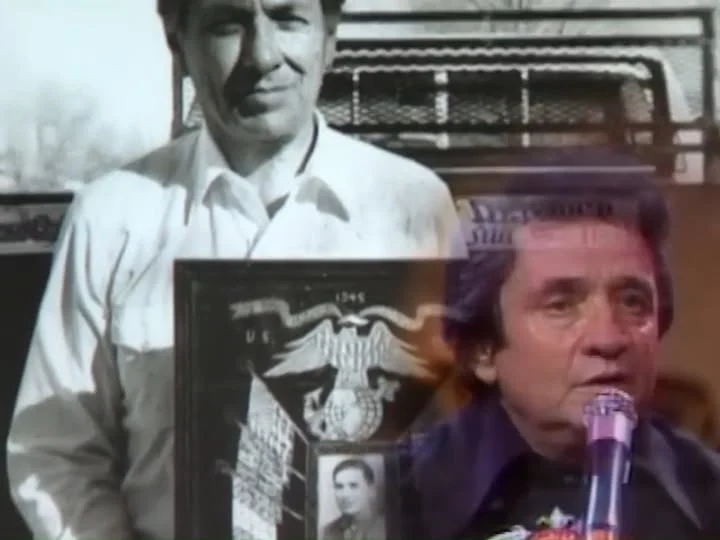
He was celebrated with ticker tape. He shook the hand of a president. He raised the flag on Iwo Jima. And then, quietly, the country forgot him.
The year is 1964. America was busy polishing its own legend. A clean cut image beamed from every television set. Then came a song that shattered that image with a story that felt older than the land itself. The voice was Johnny Cash, and it was stripped of everything except a weary, bone deep gravity.
This is the story behind The Ballad of Ira Hayes. A song that was never meant to comfort.
Imagine driving across the Arizona desert late at night, the radio signal growing faint. That is how many first heard it. The arrangement is sparse. The sound is desolate. It comes from the album Bitter Tears, released by Columbia in late 1964. It is a concept record dedicated to the plight of Native Americans, a subject Johnny Cash felt a deep, personal connection to, even if his own claimed ancestry would later be debated.
At the time, this was a radical pivot for the Man in Black. Most country artists stuck to safe themes. Cash used his fame for advocacy. The songs were mostly written by Peter La Farge, a Native American folk singer. Cash championed them as an act of protest. The message was direct. The conviction was absolute. It would define his most enduring work.
The arrangement of The Ballad of Ira Hayes is austere, almost skeletal. It serves the story without mercy. The sound is intentionally muted. We hear Cash close mic’d, delivering the lyrics in his signature rhythmic, conversational style. A talking blues structure that gives the narrative its momentum.
The core rhythm section, with Luther Perkins on guitar, Marshall Grant on bass, and W.S. ‘Fluke’ Holland on drums, keeps a slow, measured pulse. Perkins’ playing is melancholic, less rockabilly boom chicka boom and more a subtle, sad strum. The bass line is deep and deliberate, walking through minimal chord changes with a funereal solemnity.
What elevates the song to cinematic tragedy is the unexpected color. A distant, haunting flute played by Rufus Long lends an ancient, ceremonial timbre. It evokes the Pima reservation and Hayes’ heritage. Crucially, there is no traditional piano part. No sentimentality. The emotional weight rests on the stark truth of the vocal delivery and the unhurried pace.
This is a masterclass in sonic restraint. No soaring choruses. No dramatic shifts. The dynamics are low, building tension through repetition and unflinching detail. To truly hear it, invest in premium audio equipment. Quality studio headphones reveal the subtle reverb on Cash’s voice and the clean, metallic string sound of the acoustic guitars. It is an exercise in contrast: a simple four chord progression against the complexity of a national failure.
The core tragedy of Ira Hayes is American hypocrisy. He was one of six Marines immortalized in the iconic flag raising on Iwo Jima. He was Pima. The song narrates his journey from a reservation where the white man stole their water rights, to the brutal slopes of Suribachi, then to a ticker tape parade where he was wined, speeched, and honored.
The contrast is horrifying. Hayes was a war hero, a national symbol. But back on the Pima land, he was just another Native American with no water, no job, no place. The system that celebrated him when he risked his life was the same system that had already crushed his community.
Cash forces us to acknowledge the gap between the myth we celebrate and the man we discard.
When the lyric arrives—Call him drunken Ira Hayes, He won’t answer anymore—it lands with the sickening thud of inevitability. Unable to cope with trauma and the emptiness of celebrity, Hayes died at 32, drowning in a shallow irrigation ditch on his own reservation.
Country radio resisted the song. It was banned or given minimal airplay. The industry was uncomfortable with the blunt political message. Cash famously took out a full page advertisement in Billboard magazine, chastising the industry for its cowardice. It was a career defining moment. The song peaked at number three on the Billboard Hot Country Singles chart. The American public was willing to listen to a difficult truth, even if the gatekeepers were not.
The power of this recording lies in its refusal to look away. It is a vital history lesson, a micro story about a macro injustice that continues to resonate. It asks us to grapple with the difference between token praise and structural support. It is a necessary, powerful, and deeply sad document of a nation failing one of its own.
Listening Recommendations
Peter La Farge – “Coyote, My Little Brother” (1963). Another essential track from the songwriter behind Ira Hayes, detailing the destruction of Native American culture with a stark folk sensibility.
Bob Dylan – “The Lonesome Death of Hattie Carroll” (1964). Shares the narrative drive and socio political focus, using a true story to expose deep inequality and legal injustice.
Merle Haggard – “Okie From Muskogee” (1969). A contrasting perspective from the era, exploring working class pride and anti counterculture sentiment with a plain spoken country sound.
Buffy Sainte-Marie – “My Country ’Tis of Thy People You’re Dying” (1964). A more direct, raw address of colonial injustice from a Native American perspective, released in the same cultural moment.
Townes Van Zandt – “Tecumseh Valley” (1968). A beautiful tragic narrative ballad about a young woman undone by poverty, demonstrating the power of a single acoustic guitar and a poignant story.
Marty Robbins – “El Paso” (1959). An example of a classic country ballad that uses rich storytelling and evocative sonic imagery, setting a standard for narrative depth in the genre.