
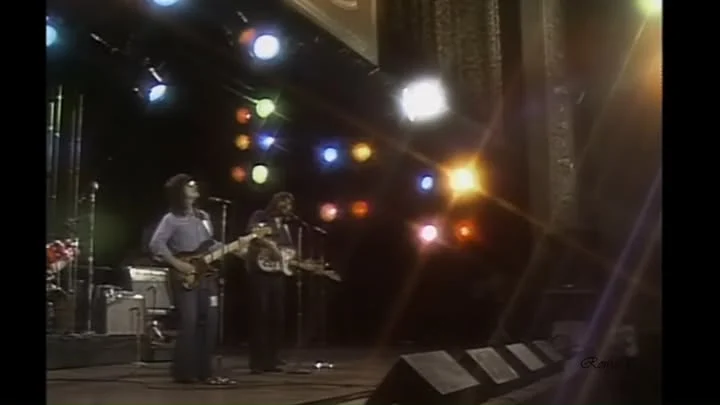
There are songs that simply entertain, and then there are songs that seem to change the very air around them. Waylon Jennings’ “This Time” belongs to the second group. More than four decades after it first appeared in 1974, this track remains a defiant, open-hearted declaration from an artist who had finally taken command of his own creative journey. It is not merely a song about love or regret. It is about standing your ground and believing that you can become someone new.
“This time if I’m strong enough to hold on”
That single lyric captures the beating heart of the entire piece. It is a promise whispered to the mirror, a vow to push forward even when the past keeps pulling backward. For Jennings, those words carried a double meaning. He was not only singing about personal struggle. He was also describing his own battle against the polished, safe world of mainstream Nashville, a system that had tried to smooth out every rough edge of his music.
When Waylon Jennings walked into the studio to record the album This Time, he did so with something rare in his hands. For the first time with RCA Records, he owned the final say. The result was a collection of songs that mixed country with rock and folk in a way that felt entirely natural. It was raw, honest, and unmistakably his. The title track soared to the top of the Billboard country charts, announcing that a new movement was here to stay.
The story behind that music matters. By the mid-1970s, Jennings had grown weary of what the industry called the Nashville Sound. Those sessions often depended on slick string sections and carefully neat vocals. Jennings wanted grit. He wanted space. He wanted to hear the creak of the guitar and the breath before a phrase. Working alongside Willie Nelson and other outlaws of the genre, he helped tear down the old rules and build a new house for American country music.
What makes “This Time” so fascinating is the way its instrumentation supports that sense of freedom. The arrangement opens with a quiet confidence, allowing the melody to breathe before the full band joins the conversation. Nothing feels rushed. Nothing feels overdone. Every instrument earns its place.
The piano drifts in with subtle grace, adding a layer of introspection between the verses. Its deep, meditative notes sit just underneath the surface, reminding the listener that this is a song about reflection as much as action. Then the guitars begin their dialogue. An acoustic guitar provides a warm foundation while a sharper electric guitar cuts through with moments of tension. That contrast echoes the entire outlaw country philosophy, tipping a hat to tradition even as it reaches for something newer.
Beneath it all, the bass and percussion keep a steady, almost conversational pulse. The bass never demands attention. Yet without it, the whole piece would lose its forward motion. The drums stay restrained, tapping out a rhythm that nudges the song along without ever drowning out Jennings’ powerful baritone. It is a masterclass in arrangement, a reminder that sometimes the most compelling moment comes from leaving space within the sound.
Lyrically, “This Time” speaks to anyone who has ever needed a second chance. The verses wrestle with honesty and fragility. They acknowledge the scars of failure while refusing to accept defeat. Jennings delivers those words with a voice that sounds lived in, weathered by late nights and long roads, yet somehow full of hope. His performance turns the song into a personal testimony. When he sings, listeners believe him.
The impact of this track went far beyond its chart position. “This Time” became a milestone in the outlaw country movement, showing other artists that creative control was possible. It helped open doors for musicians who wanted to tell their own stories in their own way. In that sense, the song is both a personal victory and a cultural turning point. It proved that honesty, when wrapped in a great melody and played with conviction, could still find an audience.
For those who want to explore more music in that same spirit, several songs stand alongside this classic.
Willie Nelson shines with “Blue Eyes Crying in the Rain,” a tender ballad that strips away every extra layer to leave only pure emotion. There is not a wasted note in the entire performance.
Johnny Cash delivers a masterclass in raw storytelling on “Folsom Prison Blues,” a recording that captures the grit and ache of a man trapped by his choices. The rhythm is simple, but the weight is enormous.
Kris Kristofferson brings a wandering soul to “Me and Bobby McGee,” a song that blends vulnerability with a sense of adventure. His way with words remains a benchmark for songwriting.
Merle Haggard explores similar themes of regret and resilience in “Mama Tried,” offering a confession that feels both personal and universal. His voice carries the same unpolished truth that defines this era of country music.
Finally, Waylon Jennings and Willie Nelson join forces on “Good Hearted Woman,” a duet that celebrates the bond between two pioneers who refused to play it safe. Their chemistry leaps through every note.
“This Time” is far more than a forgotten hit from a bygone decade. It is a living piece of musical history, an anthem for anyone who has ever needed to break free from expectations and start over. The melodies are inviting, the lyrics are genuine, and the voice behind it all belongs to one of the most important artists country music has ever produced. Whether you have known the song for years or are pressing play for the first time, its message remains impossible to ignore. It asks you to believe that change is within reach, one step, one note, one moment at a time.