
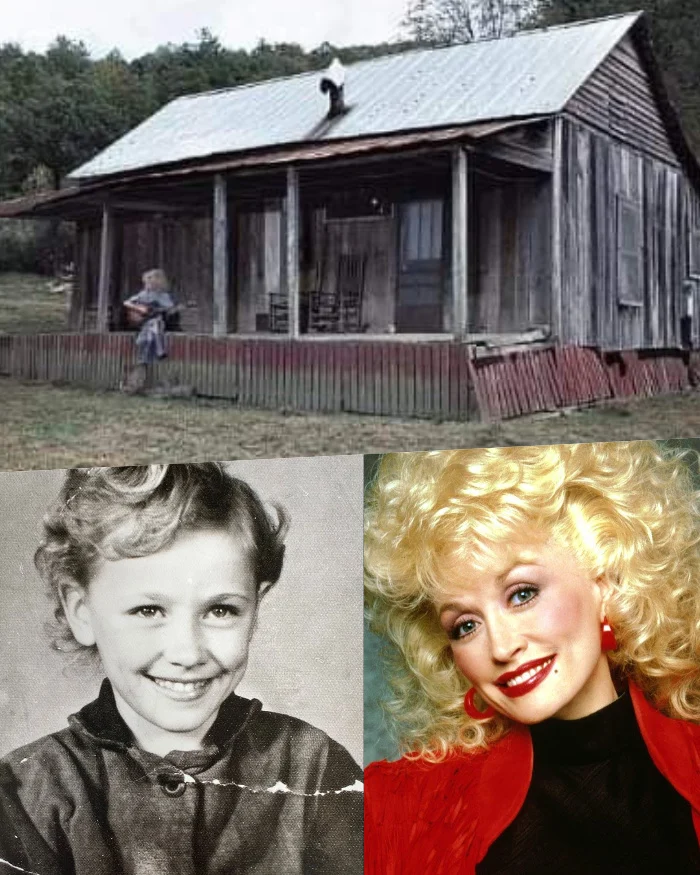
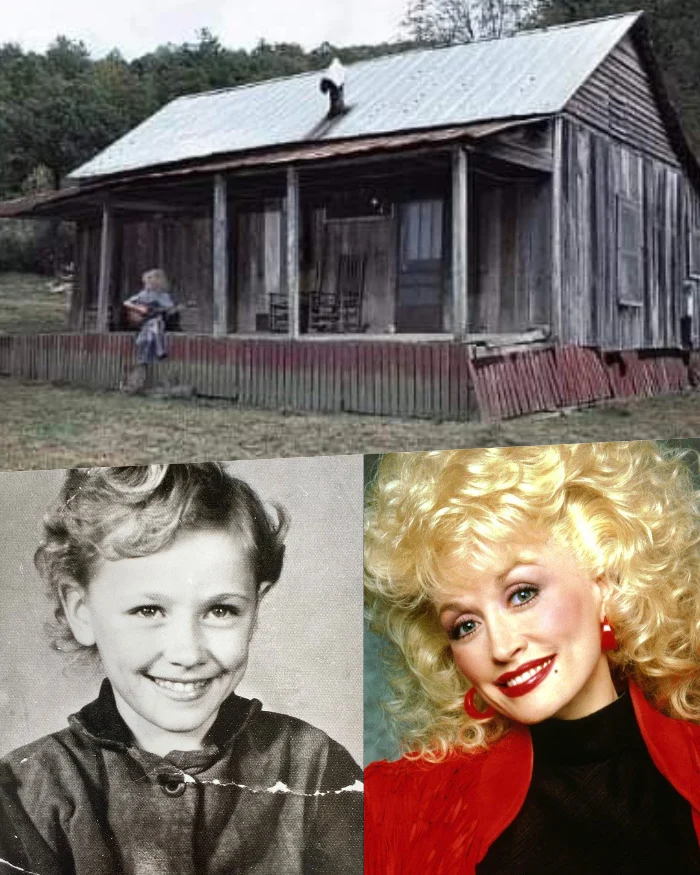
Dolly Parton could have built a mansion on her childhood land. Instead, she spent millions to make sure the tiny cabin where she grew up stayed exactly as poor as it was.
“I wanted to freeze it in time,” Parton said of the two-room home in Locust Ridge, Tennessee, where she and her 11 siblings once slept three and four to a bed.
The cabin had no electricity, no running water, and no indoor plumbing. The family survived freezing Appalachian winters by lining the walls with old newspapers to block the wind. When Parton finally bought back the property from outside owners, she brought in her brother Bobby, a carpenter, to rebuild the joints and floorboards exactly as they were.
But the restoration went far beyond wood and nails. Parton tracked down original family heirlooms that had been sold off during hard times—the iron beds her siblings slept in, the floral-patterned plates her mother used, the old wash pot Avie Lee used to clean the family’s clothes.
She and her siblings recovered vintage canning jars and original furniture, filling the cabin with authentic items from the 1940s and 1950s. The kitchen, where her mother fed a dozen children from a single stove, was restored as a quiet acknowledgment of Avie Lee’s sacrifice.
Meanwhile, buying back the surrounding acreage was a tribute to her father, Robert Lee, a sharecropper who could neither read nor write but worked tirelessly to keep a roof over his family’s heads.
The project served a dual purpose: it preserved the original cabin as a private sanctuary for the Parton family, while also building an exact, true-to-scale replica for the public at Dollywood. Millions of fans can now walk through the replica and see the precise placement of the wood stove and wash basin.
For a woman who has spent her life on the world’s biggest stages, covered in rhinestones, the Locust Ridge cabin represents the absolute opposite of her public image. It is bare, quiet, and stripped of all glamour.
The wealth she earned from country music simply gave her the ability to reclaim the history that country music was built upon. By gathering the scattered pieces of her past and putting the cabin back together board by board, she proved that the most famous woman in Nashville never really left the mountains.
The cabin stands not as a monument to how far she has come, but as a permanent reminder of exactly where she started.