
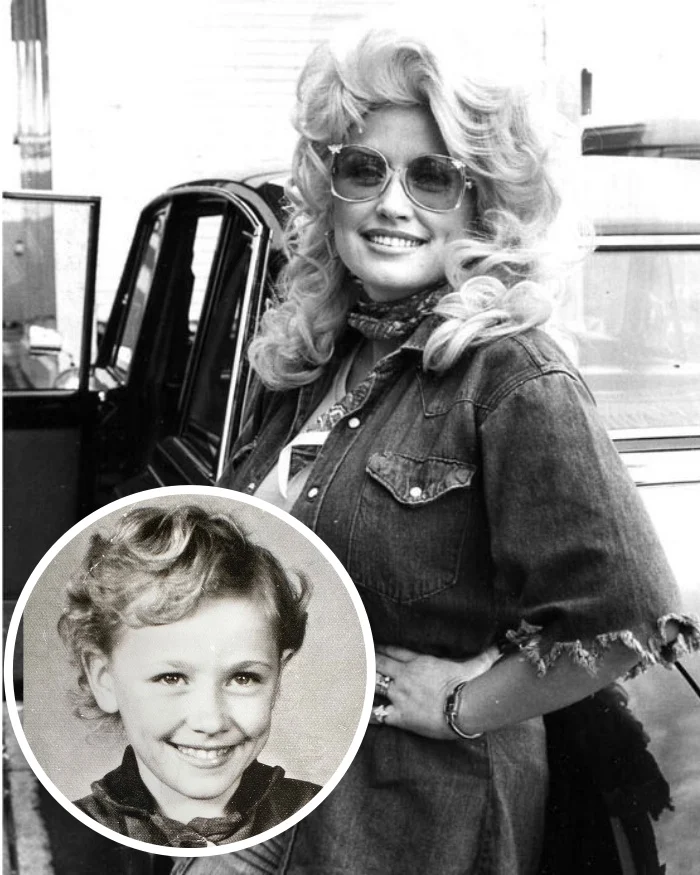
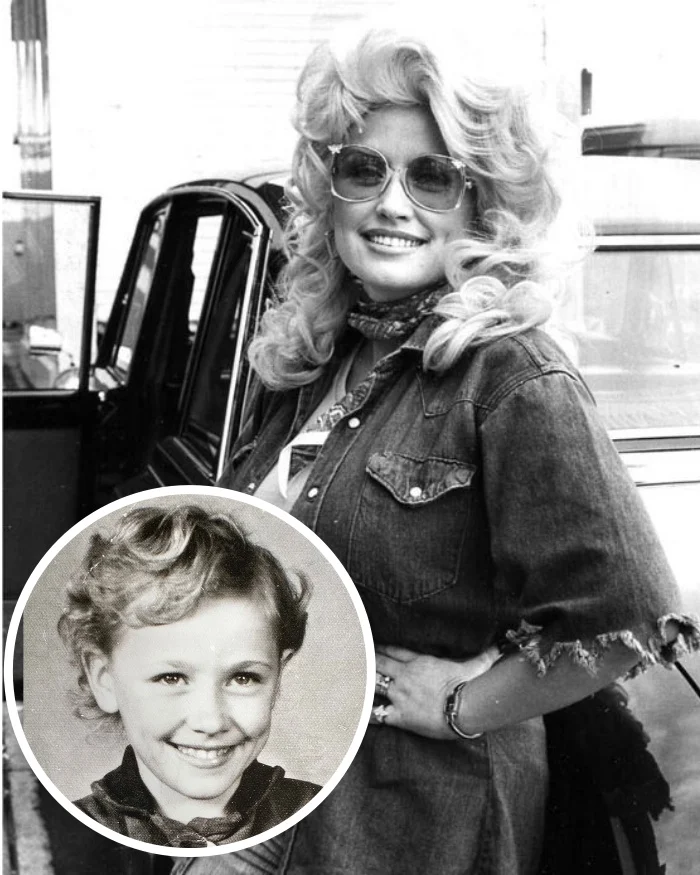
In the quiet hills of Locust Ridge, Tennessee, a small girl with big dreams was about to change the course of music history forever. But before the fame, before the thousands of records, and before the global recognition, there was a broken mandolin, two bass strings, and a family struggling to survive.
Eight-year-old Dolly Parton, the fourth of twelve children, didn’t have the luxury of dreaming about a future in music. Her family lived in a one-room cabin where every day was a fight for survival, and there wasn’t enough money for warm coats or proper shoes. Yet, in the midst of that hardship, she found a way to make music with what little she had. She fashioned a makeshift instrument out of a broken mandolin and two bass strings, tinkering with it until she could pick out simple chords.
Her uncle, Bill Owens, saw something special in his niece. He noticed her determination and raw talent, and he made a decision that would change everything. He spent what little money he had to buy her a real, small-body Martin guitar. It was a sacrifice, but he saw that she deserved more than a toy—she needed a proper instrument to find her true voice.
That Martin guitar became her most prized possession, and she held onto it so tightly that she slept with it under the covers during the cold Tennessee nights. It was her shield against a childhood defined by poverty and hardship, and it gave her a way to express the stories she carried inside her.
Her first original song, ‘Little Tiny Tasseltop,’ was about a handmade corncob doll with corn-silk hair that her mother had crafted for her. It was a simple, honest song that captured the reality of her life, and it set the stage for a career that would be built on authenticity.
Before she was even ten years old, she was carrying that Martin guitar into local Knoxville broadcasting studios, performing on the Cas Walker Farm and Home Hour. She was a small child holding a large instrument, but she commanded the room with her voice and her presence. She didn’t try to be anyone else—she sang with a piercing authenticity that cut through the static of the radio waves.
Uncle Bill’s quiet purchase provided a future global artist with her only reliable way out of the Smoky Mountains. He gave her the physical tool, but she supplied the unyielding conviction that the people, the struggles, and the stories of Locust Ridge were worth sharing. Today, Parton’s catalog holds thousands of original records, and her name is etched into every major music hall of fame across the globe.
Yet, the foundation of that massive empire was not built on industry connections or Nashville money. It was built on a small-body Martin, a corncob doll, and a little girl who realized that the honest truth of her life would become exactly what the world needed to hear.