
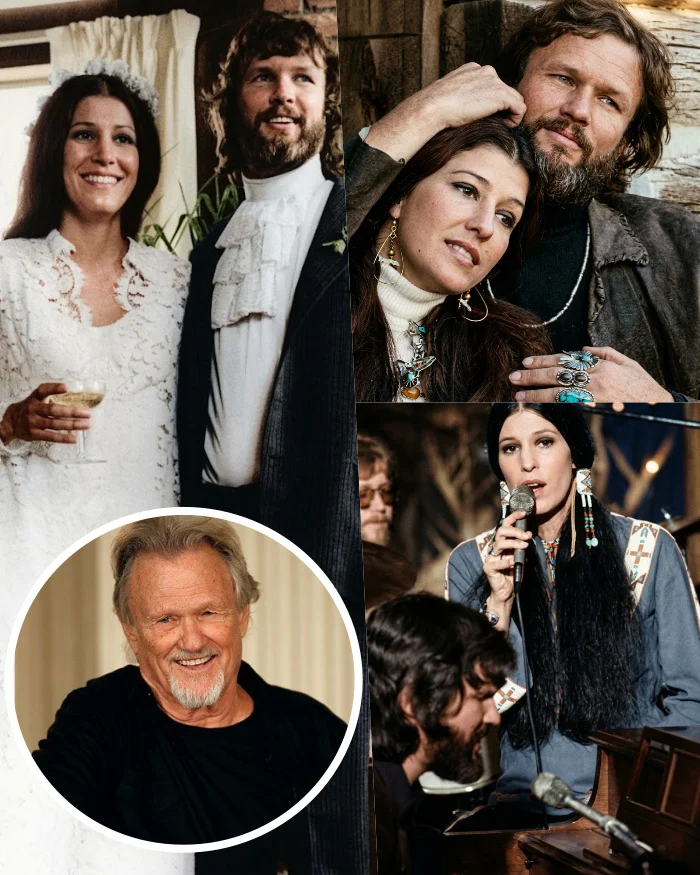
They stood beneath the stage lights with two Grammys in their hands and a love story the world believed was flawless. Backstage, another story was unfolding, one shaped by a spontaneous flight change, a fierce creative bond, and a storm that fame could not calm.
In the fall of 1971, Kris Kristofferson boarded a plane in Los Angeles with a ticket for Nashville. He was already a serious songwriting force, known for “Sunday Mornin’ Comin’ Down” and “Me and Bobby McGee.” Yet he never reached Music City that day.
Beside him sat Rita Coolidge, a rising vocal powerhouse who had just come off Joe Cocker’s Mad Dogs & Englishmen tour. The industry already called her the “Delta Lady,” and her soulful grace seemed effortless. When the plane stopped in Memphis, the original plan dissolved.
Kristofferson left the flight with her. That impulsive romantic detour lit a relationship that would reshape country and roots music across the 1970s.
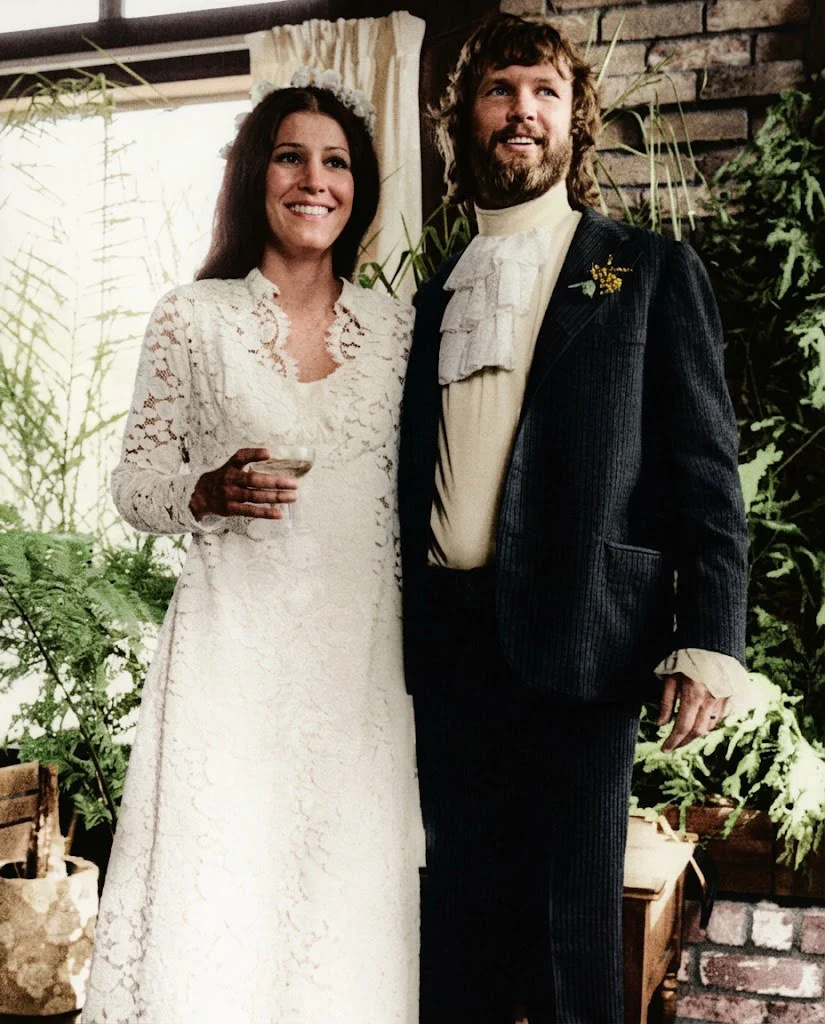
They married in 1973, joining two different corners of entertainment. Kristofferson was the rugged Rhodes Scholar poet who challenged Nashville’s rules. Coolidge brought deep emotional clarity to every microphone she touched.
Their daughter Casey arrived in 1974, giving the household a quiet anchor inside a life ruled by tour buses, studio sessions, and the relentless machinery of fame.
To the public, the pair looked untouchable. They became one of the era’s defining duet partners and recorded three collaborative albums, “Full Moon” in 1973, “Breakaway” in 1974, and “Natural Act” in 1978. Their debut duet record topped the Billboard Country charts and proved that their chemistry carried straight onto vinyl.
The industry honored them quickly. They won two Grammy Awards for Best Country Vocal Performance by a Duo or Group, first for “From the Bottle to the Bottom” in 1974 and again for “Lover Please” in 1976.
Under the lights, they shared a microphone and an unmistakable connection. Every glance and blended harmony felt like a living-room intimacy broadcast to thousands of fans.
But the spotlight often concealed heavier shadows nearby. As the decade moved on, Kristofferson’s career expanded into Hollywood. Roles such as his work in “A Star Is Born” pulled him into a chaotic orbit and deepened his internal struggles and his reliance on alcohol during that period.
Fans saw a united front on television specials and album covers. Coolidge was privately fighting to hold the family together, absorbing the collateral damage of his restless spirit.
The strain eventually cracked the foundation. After nearly a decade of marriage, they divorced in 1980. They separated their lives, protected their daughter, and stepped away from the collaborative spotlight.
Years later, Coolidge chose to document those complicated years in her memoir. She did not erase the beauty or hide the damage. She described the specific studio sessions where their love and pain were permanently captured, and she acknowledged the deep tenderness he carried beneath the chaos.
Their bond was profoundly real even when its weight became too heavy to carry
Their marriage did not need a perfect ending to be true. The union could not survive the punishing realities of the 1970s music industry, but the work they made inside that brief window remains untouched by the fallout.
The flight to Memphis landed long ago. The harmony they found there never faded.