
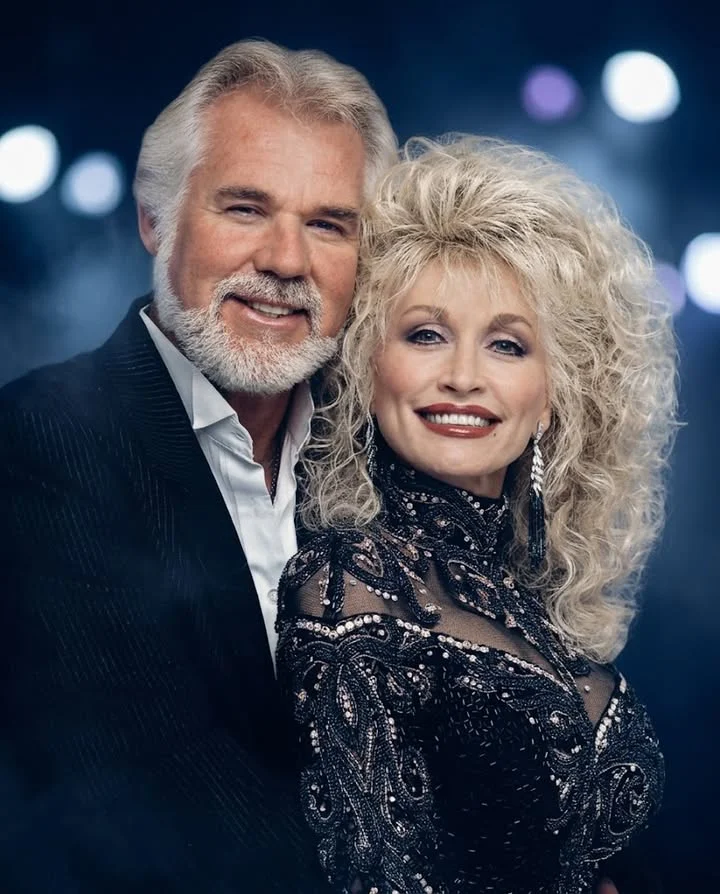
Dolly Parton did not sing. She sat in her living room and spoke about Kenny Rogers, and that quiet choice became the emotional heart of a farewell watched by a locked-down nation.
In late March 2020, Kenny Rogers died peacefully at his home in Sandy Springs Georgia at age 81. His passing came just as nationwide stay-at-home orders began to close public venues and halt traditional memorial services. With gatherings impossible, CMT stepped in with a televised tribute called CMT Giants Kenny Rogers A Benefit for MusiCares. The special aired on April 8 2020 and carried a double mission. It celebrated Rogers’ six-decade career and raised relief money for the MusiCares COVID-19 Relief Fund, which helped studio musicians, crew members, and touring personnel facing sudden unemployment.
The broadcast brought remote performances and reflections from Lionel Richie, Blake Shelton, Vince Gill, and Jason Aldean. Without a live audience, stage lights, or formal sets, the program felt less like a polished television event and more like an intimate collective memorial.
Then came the moment that held the night together. Dolly Parton appeared from her living room and chose not to perform. Instead she offered a spoken remembrance of a friendship that stretched across almost four decades of recording studios and world stages.
She called Rogers her big brother and recalled the backstage humor that balanced the demands of their massive arena tours.
Their creative bond famously began in 1983 when Barry Gibb of the Bee Gees brought them the song Islands in the Stream. Rogers had spent days in a Los Angeles studio trying to cut the track alone without finding the right feel. Parton happened to be recording in the same facility. When she walked into the room and joined him on the chorus, the arrangement clicked at once and launched one of the most successful duets in American pop and country history.
Over the years, their teams preserved thousands of hours of shared stage footage, touring archives, and backstage recordings that captured their easy rapport. That history gave Parton’s message its weight. She spoke of Rogers as a personal confidant and a steady presence through the pressures of touring life.
For millions of viewers enduring their own isolation, her heartfelt reflection felt like shared comfort across a divided landscape.
Parton closed her tribute by reminding listeners that Rogers believed in lifting others up. That made the evening’s charitable purpose feel like a natural continuation of his work. The MusiCares benefit was not an added cause. It was an extension of the generosity he practiced.
Kenny Rogers left behind a catalog built on storytelling and accessible warmth. The broadcast proved that even when arenas sit dark and crowds cannot gather, genuine music and lasting friendship still find a way to reach the room.