
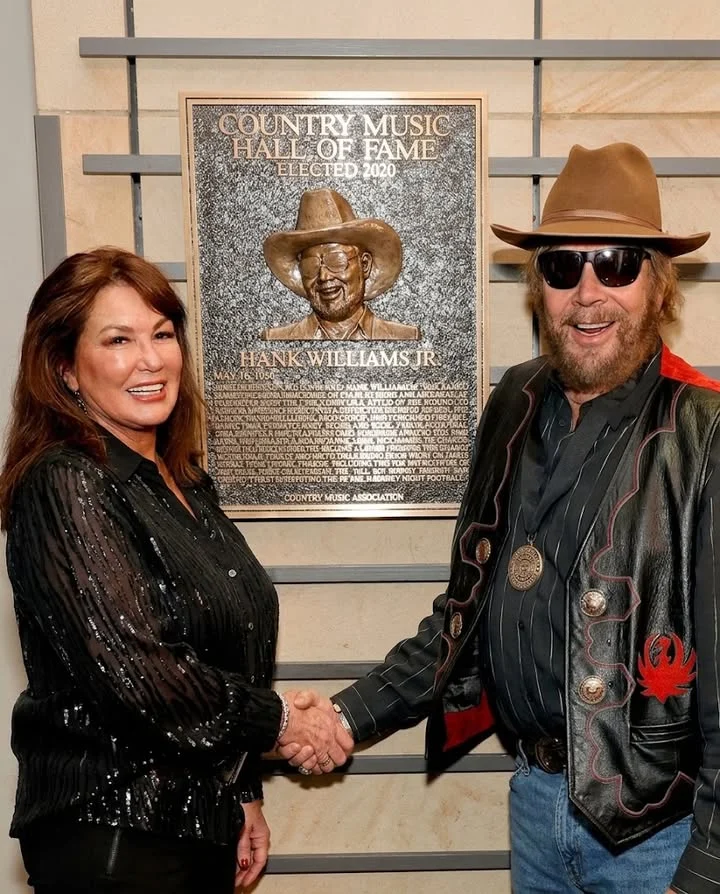
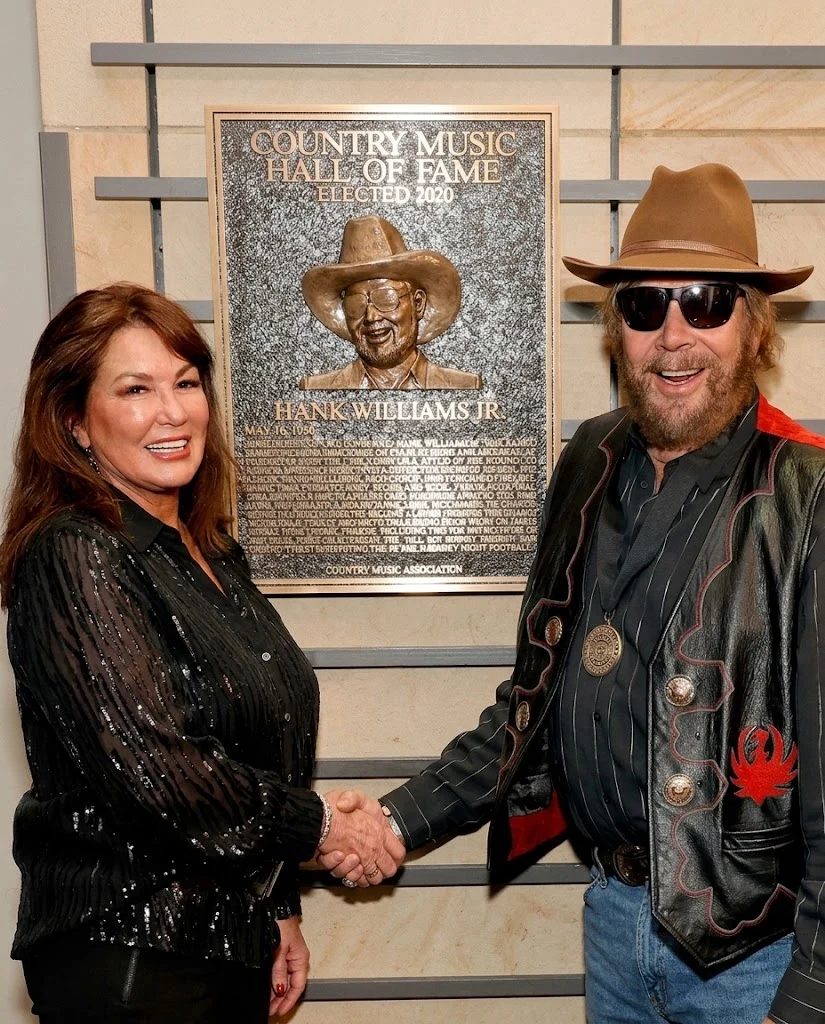
When the cameras disappeared and the corporate deals fell away, Mary Jane Thomas did not run to a microphone. She stood at the front door of their Tennessee home and made a quiet decision that helped Hank Williams Jr. survive the loudest storm of his career.
In October 2011, the country music legend found himself at the center of a sudden and very public crisis. After controversial remarks during a morning television news interview, ESPN removed his famous All My Rowdy Friends intro from Monday Night Football. For more than twenty years, his voice had opened the broadcast and become part of the ritual of American football. The partnership ended almost overnight. Sponsors backed away. A fierce media backlash followed.
Outside the Williams home, people demanded apologies and explanations. Critics treated the uproar as the final chapter of a long career. Inside the home, the story was different. Mary Jane Thomas, Hank’s wife of more than two decades, did not appear before the cameras. She did not trade arguments with reporters. Instead, she set a firm boundary at their front door in Tennessee and refused to let the national outrage cross it.
Hank had long been known for a wild and unpredictable spirit. He carried the weight of country music’s most famous last name and spent years building the Bocephus myth. During those tense months, Mary Jane became his anchor. Married in 1990, she knew the man behind the sunglasses.
She did not see a canceled superstar. She saw a husband who needed a safe place to land.
Her calm presence absorbed the anger from outside and gave him something the media would not offer. It gave him room to breathe. That quiet stability at home became the foundation for a decisive turn in his career.
Rather than retreat into exile or plead for his network television spot, Hank put the frustration into his music. Within days of the ESPN firing, he wrote and recorded a new song called Keep the Change. It was a fiery and unapologetic response to the controversy. With network backing gone, he released the track directly to fans through his own website. The answer was immediate. In two days, Keep the Change drew more than 180,000 independent downloads. He had lost a corporate television deal, but his core audience had not left him.
That grassroots victory pointed toward his next musical chapter. It led to his 2012 album Old School New Rules, released on his newly formed independent label Bocephus Records. The project marked a deliberate return to traditional outlaw country, free from the demands of sponsors and network executives. The storm of 2011 had pushed him back toward his purest artistic instincts.
None of that creative resurgence would have been possible without the solid ground Mary Jane provided when the foundation seemed to be crumbling. Like the resilient women of the American West, she stood her ground when the winds howled. She allowed him to be vulnerable in private so he could remain unbowed in public. The controversy carried a heavy toll, but it did not break his spirit.
The Monday Night Football theme eventually returned to television years later, a sign of the enduring cultural power of his music. Yet the true victory of that turbulent season was not about football or network redemption. It was about a man who found his way back to his guitar when the industry turned its back. He was sustained by a woman who made sure his home remained a place where the music never had to stop.