
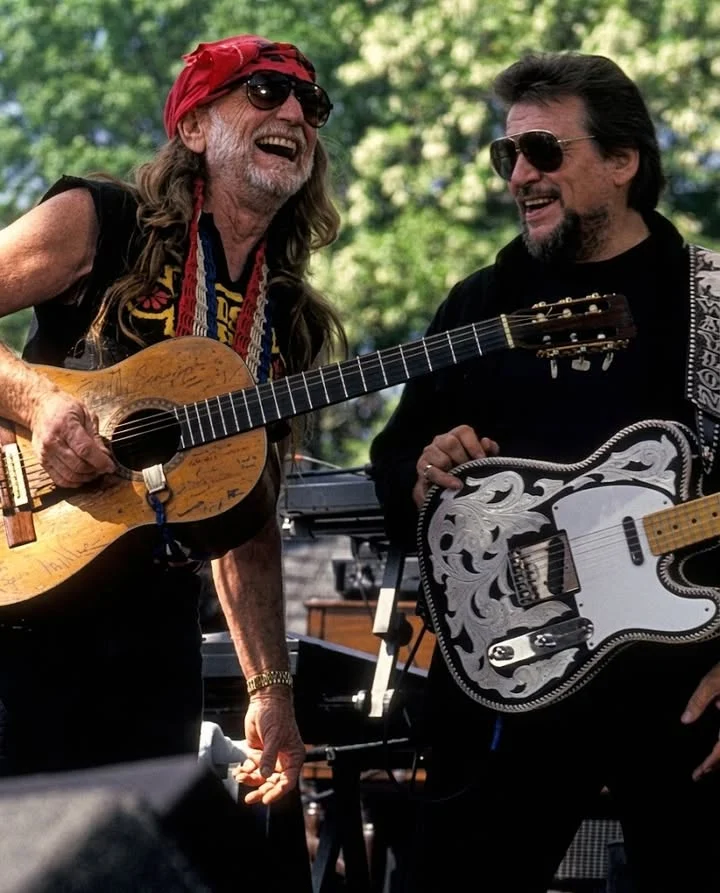
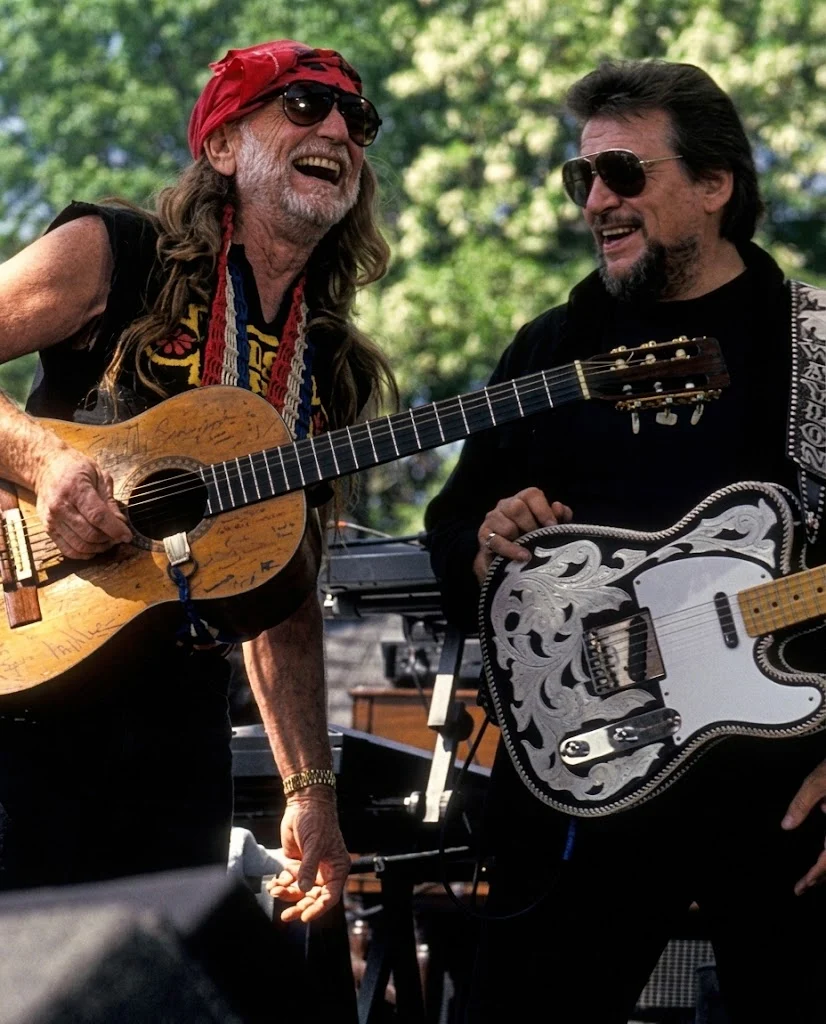
The moment a raw country album crossed one million copies in 1976, the polished Nashville establishment discovered that its locked doors could no longer hold. Waylon Jennings and Willie Nelson had been told their sound would never sell. Instead they turned rejection into a platinum rebellion.
That breakthrough came with Wanted! The Outlaws, the collaborative compilation that also featured Jessi Colter and Tompall Glaser. It became the first country music album in history to be certified Platinum. More than a million copies moved, shattering the old illusion that unapologetic country music could not be profitable. Everyday listeners were hungry for the truth.
Waylon and Willie refused the smooth rhinestone suits and heavy orchestrated strings that defined the era’s superstars. They kept faded jeans, grew out their hair, used their own road bands in the studio, and sang with a gritty honesty that mirrored working-class life. They were outcasts who found fierce brotherhood in shared frustration.
Yet the platinum triumph hid the heavy price of the road. In the early 1970s Waylon was physically and mentally exhausted, touring relentlessly in a cramped bus from one smoky honky-tonk to another just to keep the lights on. Standard recording contracts of the time paid terrible royalty rates, so those grueling quiet nights on the endless highway were his real way to make a living.
Willie had reached his own breaking point. A stalled solo career and a recording town that did not understand his unique vocal phrasing left him frustrated. After his Nashville home burned to the ground in 1970, he briefly retreated to Texas. Those long miles were not a victory lap. They were a daily fight to hold onto musical identity while the establishment refused to open its doors.
That bond of survival had been captured years earlier during a 1969 poker game at the Fort Worther Motel in Texas. Waylon was reading the morning paper when he saw an advertisement promoting Tina Turner as a “good-hearted woman loving two-timing men”. He recognized a brilliant hook and brought the idea to Willie, who was in the middle of an all-night card game. In that ordinary room the two men laid out of the poker game for a few hands and spontaneously co-wrote “Good Hearted Woman”. Willie’s wife wrote the lyrics on a notepad as they worked out the melody.
The song was born from real life and eventually became the CMA Single of the Year and a defining anthem of the Outlaw movement. When Waylon creatively added Willie’s vocals to a solo live recording of the track for the 1976 compilation, the chemistry was undeniable.
Their rebellion was never only anger. It was a psychological escape for everyone who felt left behind. When “Luckenbach, Texas” dominated the country charts and crossed into the Billboard Pop Top 25, it gave a weary generation permission to return to the basics. Soon the same industry that once tried to smooth out their sound handed them a Grammy Award for “Mammas Don’t Let Your Babies Grow Up to Be Cowboys”. It was authenticity beating expectations.
They just stood their ground until the rest of the world finally caught up.
Waylon and Willie never compromised their souls to fit the mold of stardom. Their brotherhood redefined American pop culture and permanently altered the business of country music. The industry eventually gave them platinum records and towering awards, but the music was forged in those quiet grueling miles when no one else was listening.