
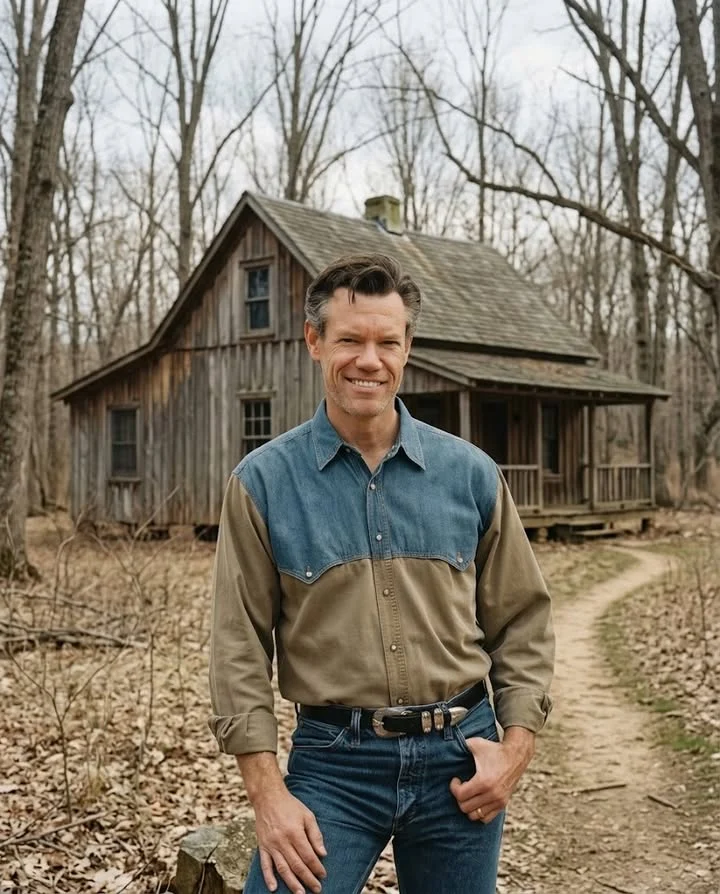

In 2016, a room full of country music royalty went silent as Randy Travis rose from his wheelchair. The man who had once washed dishes in Nashville gripped a microphone and began a halting version of “Amazing Grace.” He had already lost the ability to walk and speak after a massive stroke. Yet on that night, his spirit refused to be quieted.
That moment did not begin in a spotlight. Before his 2016 induction into the Country Music Hall of Fame, Travis spent his early years scraping by at the Nashville Palace. He cooked and washed dishes. He stepped out from the kitchen just long enough to hold a silver microphone for a few songs, then returned to the sink.
Nashville initially rejected him. In the early 1980s, the industry leaned toward slick pop-crossover sounds. Executives told a young Randy Traywick that his deep drawl sounded “too country” and would not sell on modern radio. His traditional style was treated as a relic.
He kept his sound. In 1986, Warner Bros. took a chance and released Storms of Life. The album sold millions of copies and launched the neo-traditional movement. It pulled country music back toward acoustic guitars, fiddles, and unadorned storytelling. Songs like “On the Other Hand” and “Diggin’ Up Bones” proved that audiences still hungered for authenticity.
For decades, his warm baritone became the voice of working-class heartbreak and enduring faith. Hits such as “Forever and Ever, Amen” and “Three Wooden Crosses” made him a living institution. He bridged the era of George Jones and the modern country superstars who followed.
Then in July 2013, the music stopped. A viral infection in his heart led to viral cardiomyopathy. Within days, Travis suffered a massive stroke. It took away his ability to walk and his ability to speak and sing. The voice that had anchored a genre was suddenly silenced.
Behind hospital doors, the fight was more desperate than the public knew. Travis had flatlined and fallen into a deep coma. Emergency brain surgery was needed to relieve swelling. Doctors told his wife, Mary Davis, that he had a one to two percent chance of survival. They gently asked whether it was time to take him off life support.
“Mary went to his bedside and pleaded for a sign. The singer squeezed her hand, and a single tear fell down his cheek.”
That small movement in an intensive care unit shaped everything that followed. Recovery was grueling. Years of physical and speech therapy were needed just to regain basic motor functions. Travis had to learn how to live in a body that no longer obeyed him. His presence in country music never faded.
Fellow artists kept honoring his catalog. They waited for the day he might return to the public eye. That day came in 2016 at his formal induction into the Country Music Hall of Fame. The same industry that once told him he did not fit now stood in reverence. Garth Brooks welcomed him. Mary stood beside him and delivered the acceptance speech, recounting the physical toll of the previous three years.
Then came the moment that outlasted every platinum record. Travis struggled against the devastation of his illness and slowly stood from his wheelchair. The room fell still. Someone handed him a microphone. With immense effort, he sang a halting and deeply moving rendition of “Amazing Grace.”
“It was no longer about vocal perfection. It was the sound of a man who refused to let his spirit be quieted.”
It was only a few verses, but it carried the weight of everything he had survived. The industry once said his voice belonged to another time. In that room, it became the only voice that mattered. The resilience it took to reach that microphone, and the quiet battles fought in hospital rooms long before that night, remain the hardest chapter of a story still unfolding.