
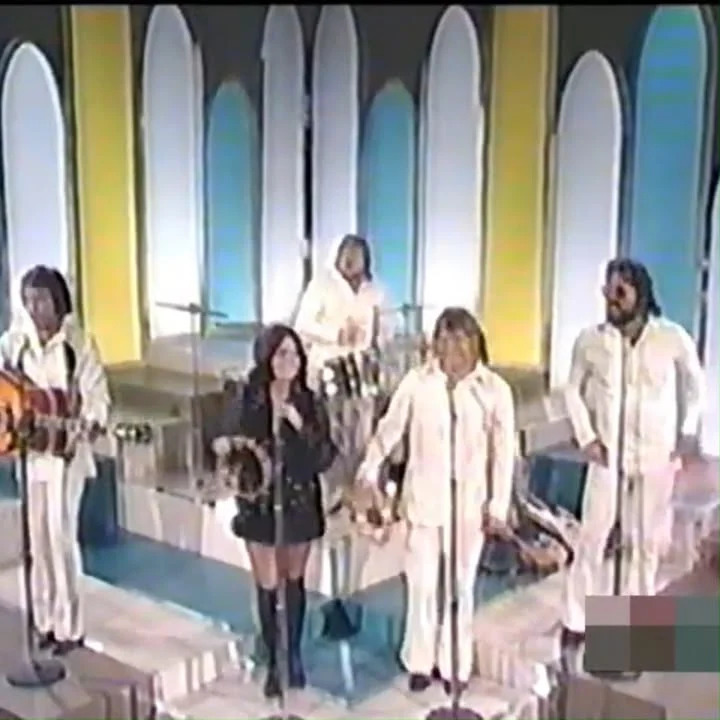
There is a moment in Kenny Rogers & The First Edition song Heed the Call where the hook lands like a hand on the shoulder, warm and insistent. It arrives not as a command but as an invitation, the kind that makes strangers glance at one another and nod. I happened on the track during a late-hour listening session, the kind where the world outside grows quiet and the music begins to speak in full paragraphs. The harmonies rose in layered tiers, the vocal settled into its pocket, and the message felt both urgent and unhurried. Rise up. Link arms. Do the decent thing. Without knowing its release date, you could feel its era written into every phrase. This is late 1970 America, where a chorus can double as a town hall and a pop single can carry the weight of a civic sermon.
“Heed the Call doesn’t preach from a pulpit—it speaks from a porch, making moral courage sound like something ordinary people can do together.”
The single arrived during a concentrated burst of creative energy for Kenny Rogers & The First Edition. By that point, the group had already traversed a winding musical path from psychedelia-tinged pop into country-rock and narrative balladry, earning airtime on radio formats that rarely shared playlists. Heed the Call emerged as a single from their 1970 Reprise LP Tell It All Brother, a record produced by Rogers alongside Jimmy Bowen and arranged in parts by Larry Cansler for strings. These production details help place the track’s distinctive blend of punch and polish. It climbed the pop chart as a bona fide Top 40 entry, a performance that signals a song traveling across formats as easily as it crosses state lines.
Much of the song’s power rests in the writing. Credited to Kin Vassy, Heed the Call compresses the sentiment of community into a structure that invites group singing without veering into sloganeering. The lines land with the clarity of a banner and the cadences of a campfire hymn. That is a narrow ridge to walk, and the group keeps its footing with steady intention. The hook does not shout; it beckons. It asks you to lean in rather than step back.
The arrangement reveals a band fluent in dynamics. The rhythm section moves with a pulse that is neither rock-club aggressive nor church-choir restrained. The drums sit forward enough to convey urgency but never bulldoze the vocal blends. The electric bass places downbeats like guideposts, slightly rounded at the edges, allowing the whole track to breathe rather than hammer. Acoustic strums provide a steady grain beneath the band; hand percussion and tambourine flicker at the edges; a restrained backline adds contour without stealing focus. If you imagine the mix on a physical board, the fader marked “drama” sits at medium. Never hushed. Never bombastic.
Rogers lead vocal holds the center with that signature gravel-and-velvet quality, patient through the verses, while the First Edition voices knit around him in luminous thirds and fifths. The sound approaches a civic chorus more than a star-and-sidekicks arrangement. When the hook returns, you can hear the slight lift in the upper voices, a gentle tilt that makes the refrain feel like a field swept by light. It is the kind of detail you catch when you lean in with good headphones, and the payoff arrives in overtones that seem to bloom after each phrase. There is a gospel aroma in the block harmonies, hinting at the Sunday morning lift that popular music in 1970 often borrowed to make Saturday night radio feel like an open door.
Context matters here. Tell It All Brother arrived in November 1970 on Reprise Records, with Rogers increasingly asserting himself not just as a frontman but as a studio decision-maker. That period, framed by earlier singles like Ruby, Don’t Take Your Love to Town and Something’s Burning, shows a group reshaping its identity after the psychedelic spark of Just Dropped In. Heed the Call fits that arc perfectly. It is earnest without being stiff, pragmatic in tone, and universal in aim. The track answers the album’s confessional opener with a more communal register, as if telling the truth is step one and showing up is step two. That pairing gives the record a conceptual spine without turning it into a concept album.
The recording itself carries a particular tactile quality. The snare has a crisp, papery attack, like a quick page turn. The bass sustains just long enough to round each measure. Guitars, clean and slightly chorused or doubled, trace the chords with friendly insistence rather than flash. When a keyboard colors the harmony, it arrives as support rather than declaration; a piano figure appears like a helping hand, not a spotlight grab. Nothing in the mix feels airless. Room reverb allows the voices and percussion to breathe, as if captured in a space designed for togetherness rather than isolation. That spatial sense explains why the refrain lands as an invitation. The recording carries a modest ambience that places the listener a few rows back from the singers, near enough to feel the breath, far enough to sense the room.
Jimmy Bowen brought a knack for commercial clarity, and Rogers narrative instincts ensured every part served the message. The band demonstrates notable restraint throughout. No gratuitous soloing, no attempt to turn a community anthem into a virtuoso showcase. If a lead line peeks out, it underlines the harmony rather than eclipsing it. That discipline pays off: the song feels shorter than it is because nothing distracts from its arc.
The lyric finds dignified urgency without dressing itself in panic. Heed the Call implies consequence, but the mood remains constructive, persuasive. The verses frame the stakes; the refrain offers the path. It is the difference between a scolding and a summons. In 1970, that tone must have felt like a relief, especially in a year buzzing with broadcasts that often sounded like alarms.
Try this small listening exercise. Focus on the consonants of the group vocal near the end. Notice how the h in heed leaves a soft exhale before the vowel blooms, and how the l in call is held just a fraction longer than speech. These choices turn language into rhythm. This is where communal singing lives, at the seam between text and time.
Micro-stories often prove a song’s staying power. A friend once played Heed the Call over a slideshow at a neighborhood fundraiser. By the second chorus, people who had not met before were singing harmonies as if they had practiced. Another time, I watched a college class, most students born decades after 1970, snap into focus the moment the refrain hit. They did not know the backstory, but they recognized the posture. Show up. Help out. Hold the line. A late-night DJ told me he keeps it cued for snowstorm coverage because it frames the news with calm resolve rather than sirens.
On modern listening setups, the blend remains clear and inviting. On more revealing audio gear, the inner lines of the harmony and the crispness of the percussion come forward, especially in the upper mids where the voices paint their vowels. The record’s age does not hinder its presence. If anything, the slightly analog patina warms the edges, trading hyper-detail for human texture.
There is a welcoming front step in the intro, a hand on the shoulder in the verse, and a larger circle of neighbors every time the chorus returns. The pacing keeps each section short enough to feel like a breath, long enough to gather everyone’s voice. The fade on the single mix feels like a crowd still singing as you walk away.
Because the track sometimes appears on later compilations, listeners occasionally mistake it for a solo Rogers cut from the mid to late 1970s. It isn’t. It belongs to the First Edition era, reflecting a band identity even as it foreshadows the steadiness that would define Rogers solo hits later in the decade. On some reissues and digital platforms, the credit reads Kenny Rogers & The First Edition, sometimes with composer Kin Vassy noted. Either way, the shared identity matters. This is a group sound with a single leader, not a soloist with a backup choir.
There is also a fun discographical footnote: the track appears in the sequencing of Tell It All Brother, which itself sits between other First Edition releases from 1970 and 1971, a remarkably productive window. Hearing the LP straight through, you notice how Heed the Call answers the title track’s confessional tone with a more communal register. That pairing gives the record a conceptual spine without turning it into a concept album.
I sometimes think of Heed the Call as a civic carol. Not because it mentions holidays or seasons, but because it carries the same ritual invitation: gather, sing, remember who you are to one another. In an era when playlists atomize attention and feeds organize us into ever smaller rooms, this piece of music suggests a larger table. Its craft, the contour of the melody, the balance of the mix, the measured propulsion of the backing band, keeps that table sturdy.
Listeners who approach Rogers expecting only the gambler’s wink or the story-song twist might be surprised by the steadiness here. The narrative is not about a drifter, a card table, or a grand reveal. It is about the small heroism of participation. The way the voices meet at the center underlines that message. Harmony, in the literal sense, becomes the argument.
That may be why Heed the Call has aged well. While some topical songs collapse under the weight of their moment, this one abstracts just enough to cross decades without losing its point. You can place it between contemporary tracks in a setlist themed around community, or you can wedge it between classics from the late 1960s and early 1970s, and it will sound like it belongs. It is not the loudest record of 1970, nor the most ornate, but it is one of the most useful. Useful in the sense that it offers a workable posture for ordinary life.
As for practicalities, anyone wanting to sing it with friends will find the structure forgiving and the range welcoming. Simple chords, clean melodies, room for unison and harmony alike. You don’t need formal guitar lessons to carry the bones of it, though anyone with arranging instincts will enjoy thickening the lines for a larger group. If you want a deeper dive, pull up the track on a streaming service and compare it against other First Edition cuts from the period. You’ll hear how the group toggled between intimacy and uplift with surprising economy.
In the end, the mark of a durable single is whether it can absorb new circumstances without breaking. Heed the Call does that. It keeps its shape while accepting our own times into its frame. When the refrain returns, the invitation remains fresh. Do the next good thing with whomever is beside you. That is not just nostalgia. It is instruction. Quiet, steady, and still useful.