
The most permanent monument Dolly Parton ever built does not stand under stage lights. It lives in the quiet choices that changed the future of her own family. The world knows her as a rhinestone-wrapped global icon. Her relatives know her as the woman who made sure hunger would not follow them into adulthood.
Parton grew up in a rustic one-room cabin in the Smoky Mountains of East Tennessee. She was the fourth of twelve children. Her father Robert Lee paid the local doctor who delivered her with a bag of cornmeal. That stark Appalachian sharecropping reality shaped her long before she held a microphone.
Winters in Locust Ridge were harsh. Providing for fourteen people under one roof demanded relentless labor. Her parents worked tirelessly just to keep shoes on their children’s feet. Parton learned early that a lack of money was never a lack of character.
A lack of money was never a lack of character.
When she boarded a bus for Nashville the morning after her high school graduation in 1964, she carried a cardboard suitcase and a silent vow. If she broke through the heavy doors of country music, the next generation of Partons would never know that kind of hollow hunger.
As her songwriting catalog expanded and royalty checks arrived, Parton built more than record labels and theme parks. She carefully constructed an unconditional financial shield around her extended family. Over the decades that protection took deliberate and practical shapes. She refused to hand out empty charity. She provided startup capital so relatives could establish their own independence.
With her quiet backing, siblings and cousins opened family restaurants, launched independent art projects, and built specialized woodworking shops in East Tennessee. She gave them resources to work for themselves with pride.
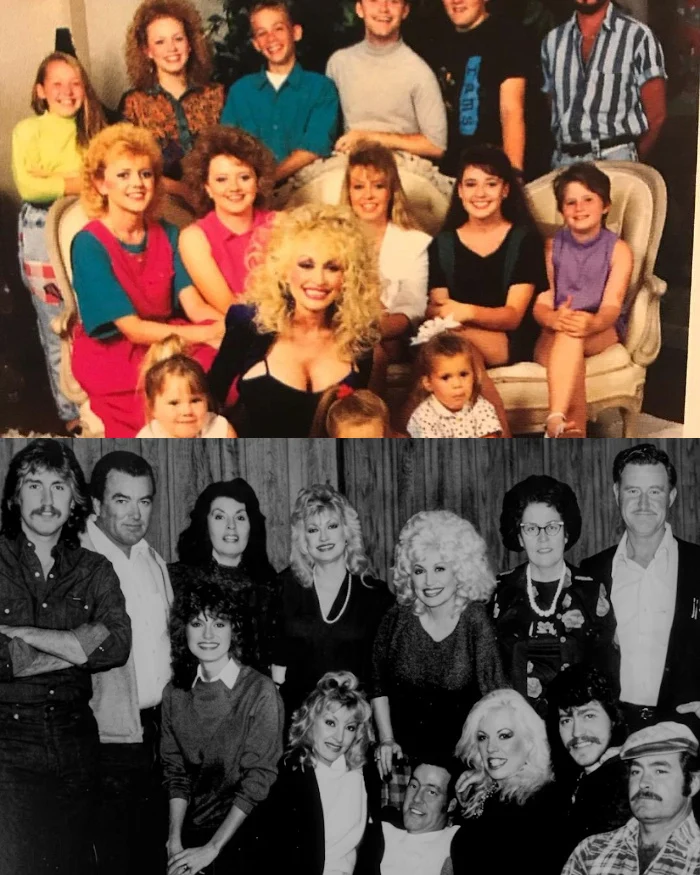
Parton and her husband Carl Dean never had children of their own. She affectionately embraced her nieces and nephews as her “niece-babies and nephew-babies.” She stepped into the role of matriarch and quietly funded college tuitions for dozens of young relatives. Because of those checks written behind closed doors, a new generation could earn degrees in education, business, and law without the crushing burden of student debt.
For relatives who wanted to remain closer to her musical roots, she created steady, well-paying careers inside her own companies. When she opened Dollywood in 1986, it was not just a commercial venture. It became a direct employment pipeline for her family. Her late brother Randy and other siblings found a long-term artistic home performing and working at the park. That grounded the massive Pigeon Forge attraction in authentic family history.
Beyond education and enterprise, Parton serves as a quiet safety net when life turns fragile. When unexpected health crises strike within the expansive Parton clan, she is known to discreetly cover hospital bills. She lifts the devastating weight of medical emergencies before they can overwhelm a household.
By removing the financial barriers that once trapped her parents, she allowed family members the freedom to design their own futures. She gave them the security to take risks that were never an option in a one-room cabin.
Parton has written thousands of songs documenting the patched clothing and bare cupboards of her youth. She turned her survival story into enduring American art. Yet because of her choices, those songs are now history rather than a continuing reality for those who share her last name.
A college diploma held by a niece or a thriving local business operated by a nephew carries far more weight to her than any platinum record or industry accolade.
The woman the public sees under stadium lights used her voice to conquer the world. But she used the quiet power behind that voice to permanently rewrite the ending of her family’s story.